
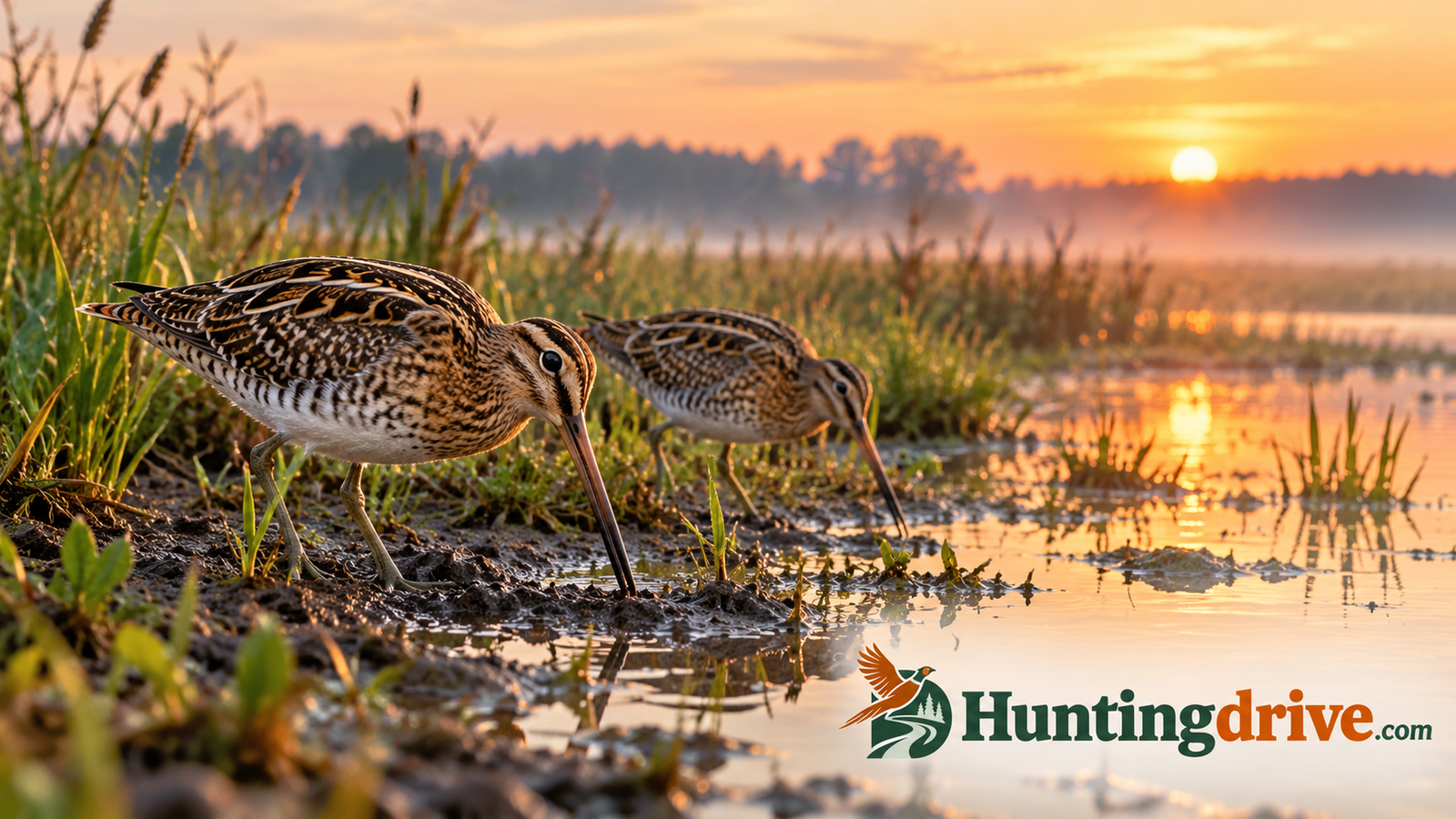
What Is Snipe Hunting? The Prank, the Bird, and the Real Sport Behind Both
Part campfire legend, part genuine wingshooting challenge. Here is everything you need to know about the snipe hunt, from the oldest practical joke in the woods to the real bird hunters chase through wet fields.
Ask ten people what snipe hunting is and you will get two very different answers. Some will grin and tell you about the night an older cousin handed them a pillowcase and a flashlight and sent them into the dark to catch a creature that does not exist. Others, mostly the ones in waders, will tell you it is a real and surprisingly difficult kind of wingshooting aimed at a small, mud-loving shorebird with a bill like a pencil.
Both answers are right, and the overlap between them is what makes the topic so much fun. The prank borrowed its name from a real bird that is genuinely hard to find and even harder to hit. Over generations the joke grew so famous that many people forgot there was ever a real animal behind it.
This guide walks through both worlds. You will learn where the legend started, how the classic prank is played, what the actual bird looks like, how real hunters approach it, what rules apply, and how it stacks up against other kinds of hunting. If you are brand new to the outdoors, you may also want to read our beginner walkthrough on how to get into hunting before you head out.
The Short Answer: Two Meanings, One Name
Snipe hunting means one of two things depending on who is talking and where they are standing.
| Meaning | What it involves | Is the snipe real? |
|---|---|---|
| The prank | A group sends a newcomer into the woods at night with a bag and a light, telling them to catch a “snipe.” The rest of the group quietly leaves. | No. The creature in the story is invented. |
| The sport | Legal wingshooting for Wilson’s snipe, a migratory game bird, usually in wet fields, marshes, and flooded meadows. | Yes. It is a real shorebird with a regulated season. |
The prank is a classic fool’s errand. It depends on the target being trusting, unfamiliar with the outdoors, and a little too eager to fit in. The sport is a legitimate pursuit with licenses, bag limits, and a loyal following among hunters who like a challenge more than a full game bag.
If someone invites you to a “snipe hunt” at summer camp, check whether anyone is carrying a shotgun. If they are carrying a pillowcase, you are the main event.
Why does the same name cover both? Because the real bird is famously elusive. When people wanted a believable imaginary animal for a prank, a bird that is rarely seen, blends into mud, and explodes into the air when disturbed made a perfect stand-in. The joke only works because the truth behind it is plausible enough to fool someone.
Why the topic still matters
Plenty of hunters have never heard of the real thing, and plenty of non-hunters have fallen for the joke. Understanding both sides helps you spot the prank, appreciate the bird, and decide whether the sport might be worth trying. It also gives you a good story, which in hunting camps is almost as valuable as gear.
Whether you want to spot a real snipe or just enjoy the marsh, quality optics change everything.
Where the Snipe Hunt Prank Came From
Nobody can point to the first person who ever sent a friend into the dark after an imaginary bird, but the trick is old. Versions of it appear in American folklore going back to the nineteenth century, and it was well established in rural communities, military barracks, and youth groups long before anyone put it on television.
The classic script
The details change from place to place, but the shape of the prank is remarkably consistent:
- A group of experienced campers, hunters, or older kids chooses a newcomer, often called a greenhorn or a rookie.
- They describe the snipe in glowing, slightly ridiculous terms. It is nocturnal, shy, fast, and best caught by someone patient and brave.
- The newcomer is given a sack, a pillowcase, or a bucket, and sometimes a flashlight.
- Instructions are specific and absurd. Hold the bag open low to the ground. Shine the light into it. Bang two sticks together or call out a made-up phrase to drive the snipe toward the bag.
- The rest of the group “circles around to flush the birds” and quietly walks back to camp, leaving the newcomer waiting alone in the dark.
The punchline arrives when the victim finally works out that nobody is coming. In the best versions, they return to camp to find everyone laughing around the fire, and they are expected to take it well and later pull the same trick on the next newcomer.
Why it spread so widely
The snipe hunt thrived because it asks for almost nothing. There is no equipment, no setup, and no skill needed on the part of the pranksters. All it requires is a trusting target, a believable story, and a dark place to stand. It also fits neatly into the culture of initiation that exists in scout troops, summer camps, hunting clubs, fraternities, and military units. Being fooled was seen as a mild rite of passage, and being let in on the joke meant you were part of the group.
The imaginary animals
Over time, storytellers decorated the legend with invented details. The snipe was said to have legs shorter on one side so it could run around hillsides, or to be drawn to a particular sound, or to come out only on moonless nights. Different regions added their own flourishes, and some groups swapped in other fictional creatures altogether. The snipe, though, remained the most famous, partly because the name sounds like something a person might actually hunt.
The imaginary snipe in the prank has nothing biologically in common with the real bird beyond the name. The real bird is not nocturnal in the dramatic way the story suggests, and it does not run up hillsides on mismatched legs.
The idiom has even escaped the woods. People say they were sent on a “snipe hunt” when they chase down something pointless at work, or when a coworker sends them to find a tool that does not exist. In that sense the phrase has become shorthand for a wild goose chase, a fool’s errand with a bit of mischief attached.
A reliable headlamp keeps everyone safe on the walk back to camp, whatever tale you tell.
Meet the Real Snipe: Wilson’s Snipe Up Close
Here is the part that surprises people: there really is a bird called a snipe, and it is a fascinating one. In North America the species hunters and birders talk about is Wilson’s snipe, scientifically known as Gallinago delicata. It was once lumped together with the common snipe of Europe and Asia, but ornithologists now treat the North American bird as its own species.
What it looks like
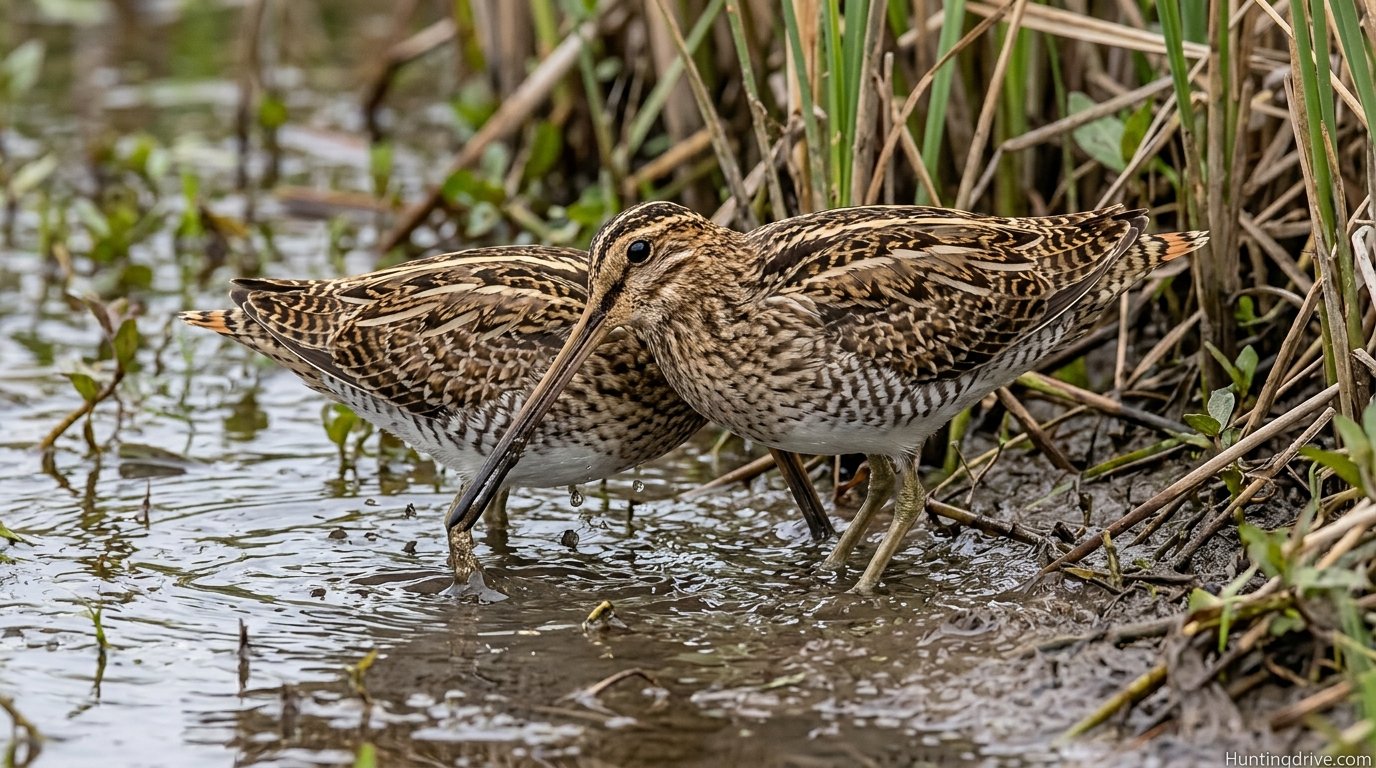
A Wilson’s snipe is a plump, compact shorebird roughly the size of a large robin or a small dove, with a body built for life in soft mud. The features that stand out are:
- The bill. Long, straight, and about two and a half inches in length, it makes up a surprisingly large share of the bird’s profile. It is flexible at the tip, which lets the snipe feel for and grip worms and larvae deep underground.
- The eyes. They sit high and far back on the head, giving the bird a wide field of view even while it is probing with its face in the mud.
- The plumage. Striped and mottled in browns, buffs, and creams, it looks exactly like dead marsh grass and shadows. A still snipe in cover is close to invisible.
- The legs. Short and greenish, they are well suited to wading through soft ground but make the bird look compact and low.
- Size: Roughly the length of a large songbird, with a long bill that does most of the work.
- Diet: Earthworms, insect larvae, and other small invertebrates from wet soil.
- Habitat: Wet meadows, marsh edges, flooded fields, and muddy shorelines.
- Behavior: Secretive, often solitary or in loose groups, freezing until the last moment.
The sound of a snipe
One of the most remarkable things about this bird is the sound it makes without using its voice. During the breeding season, males fly high over their territory and then dive. Air rushing over their stiff outer tail feathers produces a soft, wobbling hum that carries across open ground. Birders call it winnowing. It is eerie, ghostly, and easy to mistake for something else entirely if you do not know what you are hearing. Some of the old stories about strange night noises in marshes may well trace back to this sound.
Snipe around the world
Snipe are a worldwide family. Europe and Asia have the common snipe and the smaller jack snipe, and other species live in South America, Africa, and Asia. Hunters in parts of Europe have pursued them for centuries, often with pointing dogs, and the bird has a long standing reputation among wingshooters as a sporting challenge.
A solid North American field guide helps you tell a snipe from a dowitcher or a woodcock at a glance.
Is Real Snipe Hunting Legal?
Yes. In the United States, Wilson’s snipe is classified as a migratory game bird, which means it can be hunted during a regulated season. Hunters pursue it in many states, and the federal framework generally allows a bag limit of several birds per day. Exact seasons, dates, and limits are set each year, so you should always check your state wildlife agency before heading out.
What most hunters need
Requirements differ by state, but a typical snipe hunter should expect to need some combination of the following:
- A valid state hunting license.
- Registration in the federal Harvest Information Program, which many states handle at the time you buy your license.
- Proof of hunter education, if your state requires it for your age or experience level.
- Any additional state migratory bird permits, where they apply.
Regulations change. Season dates, bag and possession limits, shooting hours, allowed ammunition, and special area rules are published by your state wildlife agency and updated regularly. Treat any general guide, including this one, as background and confirm the details locally.
How it differs from waterfowl rules
Snipe often share wet habitat with ducks, so hunters sometimes assume the same rules apply to both. They do not always. Federal duck stamp requirements, for example, are tied to waterfowl, while snipe fall under separate migratory game bird rules. On the other hand, many public wetlands and refuges require nontoxic shot for all hunting, no matter the species. If you plan to hunt on public land, read the area-specific rules carefully.
Is it popular?
Compared with deer, turkey, or ducks, snipe hunting is a niche pursuit. Many hunters treat snipe as a bonus bird while hunting other game, rather than a primary target. That is part of its charm. There is rarely crowding, the pressure is low, and the hunters who do pursue snipe tend to be passionate about the challenge.
Many states require blaze orange in certain situations. A bright vest is cheap insurance.
Why Snipe Are So Hard to Hit
Ask any hunter who has tried it and you will hear the same thing: the snipe has a reputation, and it earned every bit of it. The bird combines a tiny target, jittery flight, perfect camouflage, and terrain that makes every step a negotiation. Put those together and even good shots go home with a lighter bag than expected.
The zigzag escape
When a snipe is flushed, it does not simply fly away. It bursts from cover with a harsh, raspy call, often described as a scratchy “scaipe,” and immediately starts darting left and right in sharp, erratic jinks before settling into a more direct flight. That first part of the flight is the hardest. Many hunters say the bird is gone before the gun is fully mounted.
Camouflage and freezing
Snipe rely on stillness. They often sit tight in cover until a hunter is nearly on top of them, then flush at the last moment. Their striped plumage blends into dead grass so well that you may walk within a few feet without ever seeing one. The surprise of the flush itself rattles plenty of hunters and contributes to a lot of misses.
Small size, low margin for error
A snipe is a small target with a body about the size of a fist. A pattern that would be generous on a duck can slip around a snipe entirely. Hunters generally rely on light loads with small pellets so the pattern is dense, but that also means there is little room for sloppy aim.
Terrain that fights back
Snipe live in wet, muddy, uneven ground. You may be stepping over tussocks, wading through shallow water, or sinking into soft soil, all while trying to stay balanced enough to mount and swing a shotgun. A poor footing leads to a poor shot. It is part of the reason many snipe hunters rank it among the most technical small-game shots they take.
What makes snipe challenging
- Fast, erratic first few yards of flight
- Excellent camouflage
- Soft, tiring ground
- Tiny target
What makes it rewarding
- Low hunting pressure
- A real test of reflexes
- Fits easily alongside other hunts
- Memorable, flavorful table fare
This difficulty is also a big reason the prank works. A bird that is invisible until it explodes out of the ground and then vanishes in a blur is just mysterious enough that a gullible newcomer might believe it can be caught in a pillowcase.
Shooting glasses are a basic safety item. Flushing birds and flying debris make them essential.
Where and When to Find Snipe
Finding snipe is mostly a matter of finding the right kind of wet ground at the right moment in migration. The bird does not stay put the way a resident game animal does. It moves with weather, water levels, and food supply.
Habitat: look for soft, shallow, food-rich mud
Snipe feed by probing, so they want ground that is soft enough for their bill to enter easily and rich enough to hold worms and larvae. Good places to look include:
- Wet meadows and pastures with short, patchy cover and saturated soil.
- Edges of marshes and ponds where mud meets short grass.
- Flooded agricultural fields and shallow impoundments managed for wildlife.
- Ditches, seeps, and slow creek bottoms with muddy margins.
- Rice fields and other managed wetlands in regions where they are common.
Overly deep water and thick, tall cattails are usually less productive. Snipe prefer places where they can walk, probe, and still see predators coming.
Timing: it follows migration and weather
Wilson’s snipe breeds across northern parts of the continent and moves south for winter. Hunting seasons usually run from fall into winter, with dates set by flyway and state. Cold snaps tend to push birds south, and a sudden freeze can concentrate them in the few spots that remain unfrozen. Flooding and rain can scatter them across more ground, while dry spells squeeze them into the remaining wet pockets.
If you hunt other game in the same season, plan around the overlap. Many hunters check their deer hunting season dates alongside small game and migratory bird dates so they can build a schedule that makes the most of each weekend afloat in mud.
Time of day
Snipe feed through much of the day, and they can be found in productive spots from morning into late afternoon. Overcast, damp days often keep birds active and holding in the open. Bright, windy days may push them tighter into cover. As with most shorebirds, trying a few different habitat edges is better than camping on one square of mud.
Using the landscape to your advantage
- Walk into the wind when you can. It slows the flush slightly and gives you a better chance to track the bird.
- Scout in advance if possible. Look for probe holes, whitewash, and birds flushing as you approach.
- Return to productive spots. If a field held birds once, it is worth another visit after weather changes.
A compact rangefinder or binoculars help you read the ground before you step into it.
Gear for a Day in the Bog
Snipe hunting does not require much specialized equipment, but the few items that matter really do. Wet, cold, and muddy conditions punish poor gear choices, so it pays to prepare.
The firearm and load
Most snipe hunters use a standard shotgun, and gauge is a matter of preference. Twelve and twenty gauges are both common, and many hunters like a lightweight, quick-handling gun because they are walking a lot and shooting fast. Light loads with small shot are the traditional choice, because the bird is small and the range is usually short. Many hunters prefer shot sizes in the smaller end of the range so there are enough pellets in the pattern to find a darting target. If you are hunting public wetlands, check whether nontoxic shot is required.
Choke selection
Because shots are generally close and the bird jinks quickly, open chokes are the usual recommendation. A very tight choke produces a pattern that is too narrow at short range. If you already hunt waterfowl, the logic is related but not identical, and our guide on what choke for duck hunting is a useful starting point for understanding how choke and range work together.
Footwear and clothing
Wet feet end hunts early. Waterproof boots or hip waders are common in marshy country, and a good pair of insulated, moisture-wicking socks makes a big difference over hours of walking. See our rundown of the best hunting socks for ideas on keeping feet dry and warm. Dress in layers, since you will warm up while walking and chill down when you stop.
Hands matter too. Cold, wet fingers make for sloppy shooting, so a good pair of gloves with enough dexterity to handle a trigger is worth the money. Our guide to the best hunting gloves covers options that balance warmth and feel.
Other essentials
- Eye and ear protection. Non-negotiable.
- A game vest or bag. Snipe are small, so a few pockets or a mesh pouch is plenty.
- Blaze orange. Required in some situations and wise in all of them.
- A dog, if you have one. Not required, but a good retrieving or flushing dog can recover downed birds from tricky cover.
- Water, a first aid kit, and a way to communicate. Wet country can be remote.
| Item | Why it matters | What to look for |
|---|---|---|
| Boots or waders | Soft ground and shallow water are the norm. | Waterproof, good tread, comfortable for long walks. |
| Socks | Cold, wet feet cut the day short. | Moisture-wicking, cushioned, warm in damp conditions. |
| Gloves | Hands go numb quickly in cold marsh air. | Water-resistant with trigger-finger dexterity. |
| Eye and ear protection | Basic shooting safety. | Impact-rated lenses, comfortable earmuffs or plugs. |
| Vest or bag | Carry birds and spare gear. | Light, with room for a few small birds. |
Good waterproof boots or waders are the single best upgrade for wet-ground hunting.
How Hunters Actually Pursue Snipe
The most common style of real snipe hunting is simple: walk slowly through promising habitat and be ready when a bird jumps. It sounds easy, and the walking part is. The hard part is staying alert, balanced, and safe while doing it.
Walking them up
Move at a measured pace, stopping now and then to scan the ground ahead. Snipe often sit tight, so slow, deliberate movement tends to produce more flushes than rushing. Pay attention to open mud, short grass, and the edges where cover changes. When a bird flushes, resist the urge to fire immediately at the first jink.
Shooting technique
Experienced hunters often wait a beat until the bird has finished its first dodges and begins to level out. At that point the flight line is more predictable and the shot is much more makeable. Keep the gun in a ready position, keep your feet under you, and swing smoothly through the bird rather than stabbing at it.
- Mount early. A gun already in a ready position saves precious time.
- Mark the bird. Watch where it flies and, more importantly, where it falls.
- Take only safe shots. Never shoot toward companions, vehicles, buildings, or livestock.
Hunting with partners
Two or three hunters walking in a loose line can cover more ground and produce more flushes, but safety becomes more important. Agree beforehand on spacing, shooting zones, and who is on the end of the line. Wearing bright colors and communicating clearly prevents accidents.
Working with dogs
Dogs can be a major help. A good flushing or pointing dog finds birds you would walk past, and a retriever recovers downed birds that vanish into mud or tall grass. Since snipe are small and camouflaged, losing a bird in cover is common without a dog. Not every hunter uses one, but those who do tend to recover more birds and enjoy the work more.
Common mistakes first-timers make
Most beginners lose birds for the same handful of reasons, and nearly all of them are fixable with a little preparation:
- Shooting too fast. The urge to fire at the first twist of the flush is strong. Letting the bird settle into its line, even for a heartbeat, improves your odds more than any piece of gear.
- Hunting the wrong ground. Walking through dry grass or deep standing water wastes hours. Look for damp, soft, short-cover edges where a bill can actually probe.
- Ignoring footing. A stumble in the middle of a swing ruins the shot. Plant your feet before you mount the gun, and step on firm tussocks where you can.
- Walking too loudly or too quickly. Birds that hold tight will flush at the last second no matter what, but a slow approach gives you a steadier position when they do.
- Giving up on a downed bird. A snipe that falls in thick cover can disappear in seconds. Mark it, stay put, and search in a widening circle.
Give yourself a few outings to find your rhythm. Snipe hunting rewards patience and repetition, and the first successful shot, after a handful of humbling misses, tends to feel better than a limit of easier birds.
Retrieving and respect for the bird
Make every effort to find a downed bird. Mark the spot, take your time, and search methodically. Snipe are small and easy to lose, and a respectful hunter does not give up after one quick look. Ethical hunting means giving each bird the care it deserves.
Practice with clay targets before the season. Mixing up crossing angles and quick, close shots helps build the reflexes snipe demand. It also keeps your gun handling sharp.
Repeated shots add up. Good earmuffs or electronic hearing protection make a lasting difference.
Cleaning and Cooking Snipe
One reason serious snipe hunters keep coming back is the table. The meat is dark, rich, and tender, with a flavor often compared to other fine game birds. The only catch is that there is not much of it. A snipe is small, so a handful of birds make one satisfying meal rather than a freezer full.
Field care
Good meat starts in the field. Cool birds as soon as possible, keep them out of direct heat, and avoid piling them in a sealed bag in a warm vehicle. A breathable game vest or mesh bag lets air circulate. If the weather is warm, a cooler with ice packs keeps birds fresh until you can clean them.
Cleaning
Because snipe are so small, many hunters simply breast them out. Pull the skin and feathers back from the breastbone and cut out the two breast halves along the keel. If you want the legs, they are tiny but flavorful, and some cooks like to cook the birds whole. Wash your hands, tools, and surfaces thoroughly and follow standard food safety practices for wild game.
Cooking ideas
The meat is lean, so quick, high-heat methods usually work better than long, dry cooking. Popular approaches include:
- Pan-seared breasts. A hot pan, a bit of butter, and a short cook time. Finish with a simple pan sauce.
- Bacon-wrapped bites. Wrapping with bacon adds fat and keeps the meat moist on the grill or in the oven.
- Whole roasted birds. Small birds can be roasted quickly with herbs and a little fat, then served on toast to catch the juices.
- Skewers. Alternate pieces with onions or peppers for a quick grill dinner.
Always follow food safety guidance for wild game birds and cook to a safe internal temperature. Overcooking dries out lean meat quickly, so a reliable thermometer is useful.
Expect to need several birds per person if snipe is the main course. Many hunters serve it as an appetizer or combine it with other game for a mixed plate.
A heavy cast iron skillet gives small game birds a fast, hot, even sear.
The Snipe Hunt Prank in Modern Life
Even as the sport remains a small corner of the hunting world, the prank has become a permanent part of outdoor culture. You will still find it at scout campouts, family hunting camps, college outing clubs, and workplace stories. It appears in movies and television shows, and nearly everyone has heard some version of it.
Is it harmless fun?
Often it is, but not always. A good prank is one where everyone ends up laughing together, including the target. A bad prank leaves someone cold, frightened, lost, or humiliated. The same story that is funny around a fire can feel very different to a nervous kid alone in an unfamiliar forest.
Safety considerations
If you ever plan a snipe hunt as a joke, think carefully about the following:
- Age and comfort. Younger or anxious participants may be genuinely frightened by being left alone in the dark.
- Terrain and weather. Cold, rain, cliffs, water, and wildlife all turn a harmless trick into a real hazard.
- Supervision. A responsible adult should always know where everyone is and be able to retrieve them quickly.
- Consent and culture. If the group culture treats pranks as hazing, it is time to rethink the tradition.
A good-natured version
- Short and close to camp
- A friend or leader quietly nearby
- Everyone laughs together at the reveal
- The target is welcomed into the group
A version to avoid
- Far from camp, in unfamiliar terrain
- Left alone for a long time
- Targets someone who is anxious or very young
- Humiliation instead of friendship
A better way to share the tradition
Many outdoor groups now tell the legend as a campfire story rather than carrying it out as a prank. The story-first approach keeps the humor and the history without any of the risk. You can even use it as a gateway: tell the legend, then reveal that there is a real bird and a real sport behind it. People tend to remember that twist.
A cozy camp chair keeps everyone comfortable while the tall tales roll.
Rules, Ethics, and Safety for Real Snipe Hunters
Like any form of hunting, snipe hunting comes with responsibilities. Following the rules protects the bird population, keeps public lands open, and keeps you and your companions safe. If you are new to all of this, start with our guide to getting into hunting, which covers hunter education, licensing, and building experience step by step.
The legal checklist
- Know the season. Dates vary and change from year to year.
- Know the limits. Daily bag and possession limits exist for a reason.
- Carry required documents. Licenses, permits, and any required registrations.
- Respect shooting hours. Migratory bird rules often restrict hunting to specific times.
- Follow ammunition rules. Nontoxic shot is required in many places.
- Mind your gun. Rules for migratory bird hunting commonly limit the shotgun’s capacity, so confirm what applies to you.
- Know the land. Private land requires permission, and public areas have their own regulations.
Firearm safety basics
The four fundamental rules apply everywhere: treat every gun as loaded, keep the muzzle pointed in a safe direction, keep your finger off the trigger until you are ready to shoot, and be sure of your target and what is beyond it. In soft, slippery terrain, add one more habit: keep your safety on and the muzzle controlled while crossing ditches, fences, and mud.
Ethics and conservation
Ethical hunters take only what they will use, make every effort to recover downed birds, and leave the habitat as they found it. Wetlands are fragile and in many places declining, and hunters have historically been major funders of wetland conservation through licenses, stamps, and excise taxes. A responsible approach to snipe hunting contributes to that tradition.
Basic outdoor safety
- Tell someone your plan and your expected return time.
- Carry a charged phone and consider a backup communication device.
- Watch for hypothermia and fatigue in cold, wet conditions.
- Be careful around deep mud and moving water.
A compact first aid kit belongs in every hunting pack, especially in remote wet country.
Snipe Hunting Compared to Other Kinds of Hunting
If you are weighing whether snipe hunting is worth your time, it helps to see where it fits among other pursuits. It is not for everyone, but it has a distinct personality.
| Style | Pace | Target | Typical setting | Best for |
|---|---|---|---|---|
| Snipe hunting | Slow walking, sudden action | Small, erratic shorebird | Wet fields, marsh edges | Hunters who love a shooting challenge |
| Waterfowl hunting | Sitting and calling | Ducks and geese | Blinds, ponds, rivers | Decoy, calling, and dog enthusiasts |
| Upland bird hunting | Steady walking with or without dogs | Grouse, pheasant, quail, and others | Fields, brush, forest edges | Walkers who enjoy dog work |
| Deer hunting | Long, quiet waits | Large game | Woods, fields, stands | Patient, precision-minded hunters |
Snipe and upland hunting
Snipe hunting feels most like walk-up upland hunting. You are on foot, covering ground, and reacting to a sudden flush. If that style appeals to you, our overview of what upland hunting is explains the broader world of walking after game birds, which snipe hunters often enjoy as a natural next step.
Prank snipe hunt versus real snipe hunt
| Feature | Prank snipe hunt | Real snipe hunt |
|---|---|---|
| Goal | Fool a newcomer | Harvest a game bird legally |
| Tools | Bag, flashlight, imagination | Shotgun, license, waders, safety gear |
| Time of day | Night | Daylight, within legal hours |
| Outcome | Laughter and a story | A few birds and a challenging day |
| Rules | Social etiquette and common sense | State and federal regulations |
Is snipe hunting right for you?
Pros
- Low crowds and low pressure
- A true test of shooting skill
- Minimal gear compared with many hunts
- Excellent eating
- A great story to tell
Cons
- Small bag sizes
- Wet, muddy, tiring conditions
- Difficult shots
- Birds can be hard to find without scouting
A lightweight hunting pack keeps water, layers, and safety gear within reach on a long wet walk.
Frequently Asked Questions About Snipe Hunting
What is snipe hunting?
It has two meanings. One is a classic prank in which a newcomer is sent into the dark to catch an imaginary animal. The other is the real sport of hunting Wilson’s snipe, a migratory game bird, during a regulated season.
Is the snipe a real animal?
Yes. Wilson’s snipe is a real shorebird found across North America, and related snipe species live on other continents. The creature in the prank, with its mismatched legs and its habit of walking into pillowcases, is invented.
Where did the snipe hunt prank start?
No one knows the exact origin, but the prank is part of American folklore with roots stretching back to the nineteenth century. It spread through hunting camps, scout groups, and rural communities as a rite of passage for newcomers.
Is it legal to hunt snipe?
In many places, yes. Wilson’s snipe is a migratory game bird with a regulated season in much of the United States. You will typically need a hunting license and registration in the Harvest Information Program, and you must follow your state’s season dates and limits.
What does a snipe look like?
It is a compact, plump shorebird with a very long, straight bill, short legs, and striped brown and buff plumage that blends into marsh grass and mud. Its eyes sit high on its head, giving it a wide view while it feeds.
Why are snipe so hard to shoot?
They flush suddenly from cover and fly in sharp, erratic zigzags before settling into a straighter path. Combined with their small size, excellent camouflage, and the muddy terrain, that makes them a demanding target even for experienced shooters.
What kind of habitat do snipe prefer?
They favor soft, wet ground where they can probe for food, including wet meadows, marsh edges, flooded fields, muddy shorelines, and shallow impoundments. Very deep water and tall, dense cattails are usually less productive.
What gear do I need for snipe hunting?
A shotgun with an open choke and appropriate loads, waterproof footwear, good socks and gloves, eye and ear protection, blaze orange where required, and a light game bag. A dog can help but is not required.
Do I need a duck stamp to hunt snipe?
The federal duck stamp requirement applies to waterfowl, and snipe fall under separate migratory game bird rules. That said, state requirements differ and rules on specific public lands may vary, so confirm what applies to you with your state wildlife agency before hunting.
Is snipe good to eat?
Many hunters think so. The meat is dark, rich, and tender, though there is very little of it on each bird. Quick, high-heat cooking methods like pan searing or grilling with bacon work well.
Is the snipe hunt prank dangerous?
It can be if it is done carelessly. Leaving someone alone in dark, unfamiliar terrain, especially a child or an anxious person, can cause real fear or even physical harm. If you tell the story at all, keep it close to camp, keep it supervised, or simply tell it as a campfire legend.
How do I get started with hunting in general?
Start with hunter education, learn your local regulations, and find an experienced mentor if possible. Our guide on how to get into hunting walks through the steps in plain language.
Conclusion: A Legend With Real Feathers
Snipe hunting is one of those rare topics where the joke and the truth share a name. On one side is a harmless, sometimes not-so-harmless, tradition of sending newcomers into the dark after a creature that does not exist. On the other is a quiet, challenging sport built around a small, secretive, wonderfully camouflaged bird that most people have never seen.
If you came here because someone invited you on a snipe hunt, you now know to keep one eye on the person holding the pillowcase. If you came here out of curiosity about the real thing, you have learned what the bird looks like, where it lives, how hunters pursue it, what rules apply, and what it takes to enjoy a day in wet, muddy country. Whichever way you approach it, take your time, respect the bird and the land, and bring good company.
And if you decide to try the real sport, prepare well. Dry feet, warm hands, protected eyes and ears, and a good understanding of your local regulations will make your first trip far more enjoyable than the pranksters ever promised.
Browse hunting essentials that keep you comfortable, safe, and ready when the first snipe flushes.