
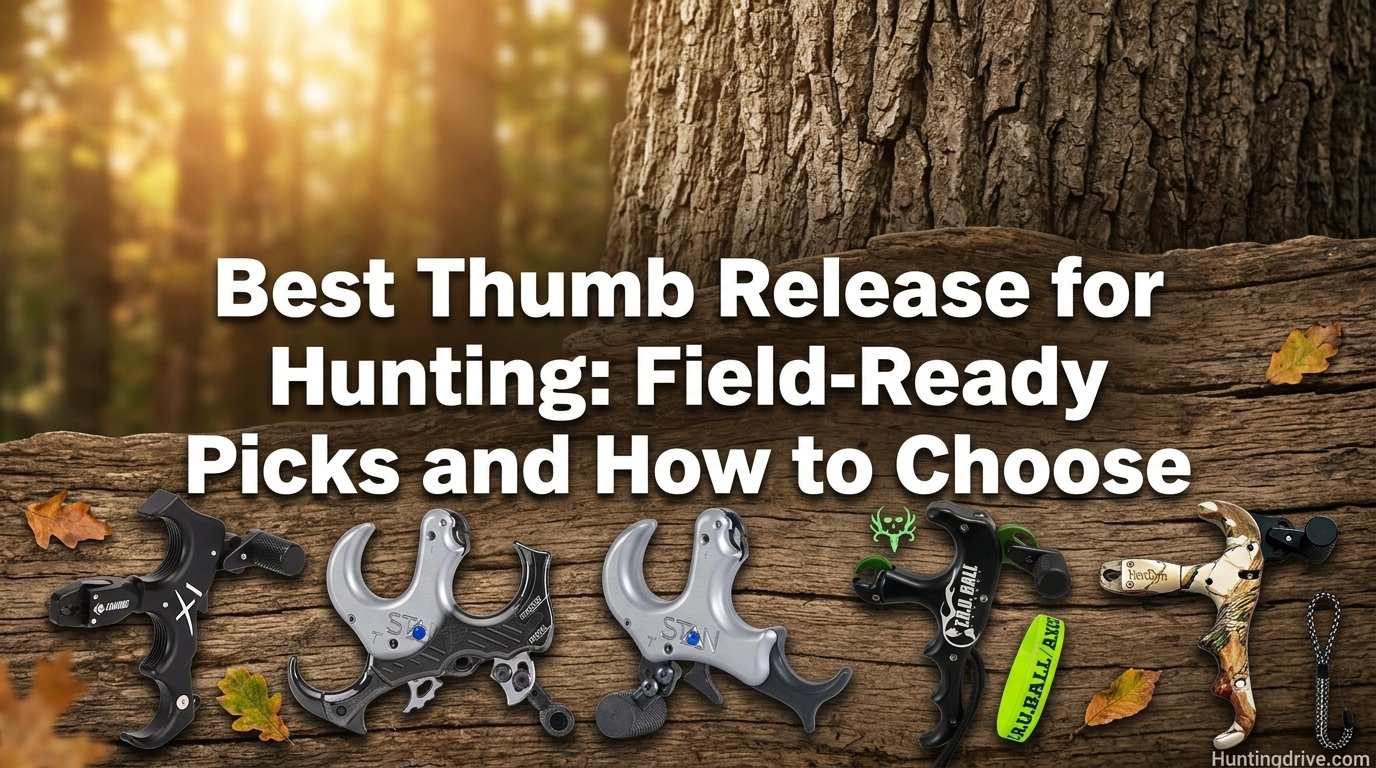
Best Thumb Release for Hunting: 10 Field-Ready Picks and How to Choose
A thumb release can turn a nervous, punchy shot into a clean, surprising one. If you hunt from a stand, a blind, or on the ground and want a smoother way to let the string go, this guide walks through ten releases worth your attention and the details that decide which one fits your hand.

What a Thumb Release Actually Does
A thumb release is a handheld bow release with a trigger your thumb presses or pulls back. Instead of squeezing with your index finger, you hold the release against the string, draw, anchor, and let a thumb-activated trigger do the work. The string loop is held by a hook or jaw, and the trigger frees it when your thumb moves.
That small change in which digit does the job is the whole point. The thumb is steadier under pressure for many archers, and the motion tends to feel more like a gentle push or back-tension release than a finger squeeze.
How the mechanism works
Inside the head of most thumb releases is a simple sear system. The string loop sits in a hook or between jaws, and a spring-loaded trigger holds that hook closed. When your thumb moves the trigger past its set point, the hook opens and the loop slips free. Everything that makes one release feel better than another comes down to how crisp, predictable and adjustable that moment is.
Most designs share the same parts: a head with the hook, a body or barrel you hold, a trigger your thumb rests on, and a strap that wraps your wrist or connects to your D-loop. Knowing these parts helps you read product listings and understand why two releases that look alike can feel very different at full draw.
Who benefits most
Thumb releases are a natural fit for hunters who struggle with early trigger punches, anyone who has felt a flinch creeping in at the moment of truth, and archers who want a release that can be held and aimed without the finger constantly hovering over a hair-trigger. They are also popular with hunters who like to hold a release in hand between shots rather than wear it on the wrist all day.
Why Hunters Choose a Thumb Release
Target panic and punching the trigger are the usual enemies. When the index finger is both aiming and firing, it can get twitchy right as the pin settles. A thumb release spreads that job around, so many bowhunters find follow-through becomes calmer and the shot breaks as a surprise.
Hunters also like the hold-and-clip feel. Most thumb releases attach to a wrist strap or a D-loop strap, and they swing free until you need them. If you are new to the sport, our guide on how to get into hunting covers the gear basics that make a release choice easier.
The trade-off is a learning curve. Your first few sessions will feel different, and you will want to spend time at the range before you take one into the woods.
Calmer shots under pressure
Anyone who has had a buck step into range knows how fast the body reacts. Heart rate climbs, breathing gets shallow and fine motor control goes sideways. A thumb release gives you a different path to the shot: rather than tightening a finger, you steadily increase pressure with your thumb and let the trigger break when it is ready. For many archers that makes the shot feel more like a process and less like a reaction.
Better follow-through
Because the release breaks while your hand is still moving back, the hand often travels naturally behind the head after the shot. That motion is a good sign. It means you did not freeze or snatch at the trigger, and it helps keep the bow arm and sight steady until the arrow is gone.
Where it falls short
A thumb release is not magic, and it is honest to say so. If your form has other problems, such as a shifting anchor or a collapsing back, a new release will not fix them. You also need to accept a few weeks of adjustment. If you want to hunt this season and have no range time, an index-finger wrist release you already know may be the smarter choice for now.
How We Judged These Releases
Hunting asks more of a release than a backyard range does. It has to work with cold fingers, in a rattling stand, and when adrenaline is up. We looked at the following:
- Trigger feel: a clean break with adjustable travel and tension, so the shot surprises you.
- Fit: hand size and how the head, barrel or body sits in your palm.
- Hold style: a thumb barrel, a four-finger body, or a compact stick that is easy to carry.
- Durability: materials, hook quality and how well the moving parts handle dirt and moisture.
- Value: what you get for the price, from budget to premium.
Trigger feel and adjustability
The first thing to look at is whether you can change how the trigger behaves. Travel, tension and trigger position let you match the release to your thumb. A release that cannot be tuned may still be excellent, but you need to be sure it fits as it comes out of the box.
Comfort and hand fit
Hand size varies far more than people admit. A body that feels perfect to one archer can feel cramped or stretched to another. We paid attention to the shape of the body, how the thumb rests, and whether the design leaves room for people with larger or smaller hands to find a workable hold.
Durability in real conditions
Hunting means mud, rain, dust, frost and the occasional drop from a stand. Metal construction and a sealed or simple mechanism are good signs, while loose, rattling parts are red flags. We also considered how easy a release is to wipe down and inspect in the field.
Price and long-term value
Cheaper is not worse, and expensive is not always better. A low-cost release can be a perfectly good learning tool, and a premium release can pay for itself in comfort and consistency across many seasons. We grouped the picks by price tier so you can focus on the group that fits your budget.
Quick Comparison of Our Picks
Use this table to narrow down before you read the details.
| Release | Style | Good for |
|---|---|---|
| Spot Hogg Whipper Snapper | Thumb | Serious bowhunters wanting a premium feel |
| Tru-Fire Synapse | Thumb | Hunters who like a well-known brand |
| STAN Onnex | Thumb | Fine-tuning trigger feel |
| Ball Bone Collector T-Rex | 4-finger | A secure hold with a familiar grip |
| B3 Archery Exit Hunter | Thumb | Treestand and blind hunters |
| TAEYONK Thumb Release | Thumb | Budget-friendly practice and hunting |
| LWANO X1 | Thumb | Starter option for new archers |
| JIANZD 4-Finger 360° | 4-finger | Rotating head for easy hook-up |
| NoxDyn 4-Finger | 4-finger | Value pick with a four-finger grip |
| sntxmy Thumb Release | Thumb | Low-cost backup release |
A few patterns show up in the table. Premium options tend to emphasize fine adjustment and a refined shot feel, four-finger designs lean toward a secure full-hand grip, and value releases focus on getting you shooting without a large investment. None of these categories is better in every situation. A hunter who shoots a few times a year might be perfectly happy with a basic release, while someone who hunts every week may prefer a model that can be tuned to the last detail.
When you are ready to narrow things down, ask yourself three questions. Do I prefer to hold the release in hand or wear it on my wrist? Do I want a compact design or a full-hand grip? How much tuning do I want to do? Your answers usually point toward one group of picks below.
Top Premium Picks
These three are the releases most often named when hunters talk about quality thumb triggers.

Spot Hogg Whipper Snapper
Spot Hogg has a loyal following among bowhunters, and the Whipper Snapper is built for hunters who want a refined, dependable trigger. If you plan to carry one release for years, it is a strong candidate.
Who it suits: serious bowhunters who shoot often and want a release they can rely on for many seasons. Hunters who value a refined, deliberate shot tend to appreciate this kind of design, since the trigger is meant to reward steady, patient pressure rather than a quick snap.
What to know: premium releases reward practice. Plan on a few range sessions to find the right trigger setting, and confirm the head works with your D-loop material. If you are unsure about fit, read the listing’s sizing information carefully and compare it to your hand before ordering.
- Respected brand in bowhunting
- Smooth, controlled shot feel
- Premium price tier
- Takes range time to master

Tru-Fire Synapse Thumb Release
Tru-Fire is a familiar name for release aids, and the Synapse brings that experience to a thumb design. It suits hunters who want a trusted brand without hunting through obscure options.
Who it suits: hunters who like the reassurance of a familiar manufacturer and a design that many archers have already used. It is a sensible middle path when you want something more capable than an entry-level release without chasing the most expensive option on the market.
What to know: take your time with the adjustments. Change one setting at a time, shoot a few arrows, and note how the trigger responds. That patient approach will help you find a setup that feels natural, and it keeps you from chasing problems that come from changing too many things at once.
- Well-known release maker
- Comfortable for many hand sizes
- Adjustment takes patience
- Check fit before the season

STAN Onnex Thumb Release
STAN is known for hunting-focused releases, and the Onnex is aimed at archers who like to dial in how the trigger feels. A good choice if you enjoy tinkering until the shot is just right.
Who it suits: tinkerers and detail-minded hunters. If you enjoy adjusting your bow, tuning your sight and testing small changes, a release with plenty of trigger options gives you more to work with. It also suits archers who already know what trigger feel they like and want to reproduce it.
What to know: more options can mean more confusion for beginners. Write down your settings once you find a combination you like so you can return to it if the release gets bumped or reset. Check the product page for the current list of adjustments before buying.
- Tunable trigger feel
- Hunter-oriented design
- More settings to learn
- Priced above basic models
Why these three stand out
The premium tier earns its place with consistency. When a release breaks the same way every time, you stop thinking about it and start thinking about your pin, your breathing and your target. That is the difference between a tool that helps you and one you have to manage.
Each of these three comes from a company that focuses on hunting and archery gear. That matters because it usually means a design built with feedback from people who actually hunt, rather than a generic product that has been rebadged for the market. Premium releases also tend to offer a better range of adjustment, which gives you more ways to match the release to your hand and shooting style.
Who should buy a premium release
If you hunt often, shoot year-round, or simply care about a refined feel, a premium thumb release is a reasonable upgrade. If you are still deciding whether a thumb release suits you, start with a value model and move up once you know what you want from the trigger. That way you spend your money on features you will actually use.
It also helps to match the release to the rest of your kit. A bow with a well-tuned D-loop and a good peep sight deserves a release that can keep up, and a smoother release often makes the rest of your setup easier to evaluate.
Four-Finger Style Picks
Some hunters want the thumb trigger but a more secure grip. Four-finger designs wrap your hand around the body, which can feel steady when you are cold or hurried.

Ball Bone Collector T-Rex 4-Finger
Ball’s Bone Collector line is aimed at hunters, and the T-Rex gives you a four-finger hold in a familiar package. It is a good fit if your hand likes a full grip.
Who it suits: hunters who want a secure, full-hand hold and a release that feels substantial. If you have ever worried about a smaller release slipping when your hands are cold or sweaty, a four-finger grip can feel much more reassuring.
What to know: body size matters. Compare the dimensions in the listing to your hand and think about how the release will sit at your anchor. Practice drawing from a seated position too, since a larger body can feel different when you are cramped in a stand or blind.
- Secure four-finger hold
- Hunter-friendly branding and design
- Bulkier than a compact stick
- Confirm bow loop compatibility

B3 Archery Exit Hunter
The Exit Hunter is built for field use, from a treestand to a ground blind. It is a practical option when you want a hunting-minded release without fuss.
Who it suits: practical hunters who want a straightforward release for stand and blind use. It appeals to people who value a hunting-focused design and do not want to spend time learning a long list of settings before the season.
What to know: lesser-known brands deserve an extra round of testing. Shoot it at several distances, draw it in your hunting clothes and make sure the trigger feels consistent from the first arrow to the last. If anything feels rough, return it while you still can.
- Designed with hunting in mind
- Easy to learn
- Fewer reviews than big brands
- Test fit at the range first
The appeal of a full-hand grip
With a four-finger design, your fingers wrap around the body, and your thumb finds the trigger from a stable base. This can feel reassuring for hunters who worry about dropping a release when their hands are cold, or who prefer to feel the whole release in the palm rather than balanced on a few fingers.
Things to check before you buy
Four-finger bodies come in different sizes, and a body that is too long or too short will change your anchor and trigger position. Read the listing carefully for dimensions and compare them to the span of your hand. Also check how the head attaches to your D-loop, since some designs rotate to make hooking up easier while others sit at a fixed angle.
Finally, think about how the release will be stored in the field. Bulkier bodies can be harder to tuck into a pocket or hang from a lanyard, so decide whether you want it on your wrist, around your neck or in a pouch before you commit.
Value-Focused Picks
You do not have to spend a lot to get started. These releases cost less and still let you learn the thumb-trigger method.

TAEYONK Thumb Bow Release
A budget-friendly thumb release that works for practice sessions and hunting alike. A smart way to try the style before spending more.
Who it suits: newer archers and anyone curious about thumb releases who does not want to commit a large budget. It also works as a practice release that keeps your hunting release clean and unworn during long range sessions.
What to know: inspect the strap and hook right away, and test the trigger repeatedly before trusting it in the field. Budget releases can be excellent teachers, but they are best treated as a stepping stone until you know what you want from an upgrade.
- Affordable entry point
- Simple to use
- Less fine-tuning than premium models
- Check finish and strap quality

LWANO X1 Thumb Release
The X1 is a starter-level option for new archers who want to learn thumb-release form without a big investment.
Who it suits: archers learning the basics of thumb-release form. The simple design makes it easy to focus on the fundamentals: a steady anchor, relaxed grip and slow, increasing pressure on the trigger.
What to know: keep expectations realistic. With fewer adjustments, you may outgrow it as your shooting improves. That is not a flaw; it simply means it has done its job as a learning tool. Make sure it fits your D-loop before you rely on it for hunting.
- Low cost
- Good for learning
- Not a long-term premium release
- Limited adjustment
Starting without overspending
A good first release teaches you the motion of a thumb trigger without punishing your wallet. If you discover that the style is not for you, you have lost little. If you love it, you will know exactly what you want from an upgrade, whether that is more adjustment, a different body shape or a more refined trigger.
What to expect from budget releases
Entry-level thumb releases usually offer fewer adjustments and simpler finishes than premium models. That is fine for learning. Check the strap, the hook and the trigger carefully when the release arrives, and test it thoroughly at the range before it ever goes into the woods. A budget release you have shot hundreds of times is better than a premium one you have barely handled.
Whatever you choose, make sure you hunt with the same release you practice with. Switching to a brand-new release on opening morning is a recipe for frustration.
More Budget Options Worth a Look
Three more low-cost releases round out the list. They are useful as a first release, a spare for your pack, or a way to try four-finger and thumb styles before you commit.

JIANZD 4-Finger 360° Thumb Release
A four-finger release with a rotating head, which can make hooking onto the loop quicker and less awkward.
Who it suits: hunters who like a four-finger grip and want hooking up to be quick. A rotating head can reduce the awkward wrist bending that some fixed-head releases require, particularly when you are connecting in a cramped stand.
What to know: rotating heads add movement, so check for any play or wobble when you draw. Practice connecting and drawing without looking, since that is how you will do it when game is close.
Check Price on Amazon
NoxDyn 4-Finger Thumb Release
A value-driven four-finger release that gives you a full-hand grip without a premium price.
Who it suits: value-minded hunters who want a four-finger body without paying premium prices. It is a sensible choice for a second release, a loaner for a friend or a first release for someone who knows they prefer a full-hand grip.
What to know: measure your hand against the listing and consider the strap length and adjustment. A comfortable fit is more important than any feature list when you are at full draw.
Check Price on Amazon
sntxmy Thumb Release
A low-cost thumb release that makes a handy backup to keep in your pack or truck.
Who it suits: hunters who want a spare release in the truck or pack, or beginners who just want to try the thumb style at the lowest possible cost.
What to know: treat it as a backup and test it thoroughly before relying on it. Keep it somewhere dry, and compare its feel to your main release so you are not surprised if you ever have to switch in a pinch.
Check Price on AmazonHow to use a backup release
Many experienced hunters carry a spare release in their pack or truck. It is cheap insurance against a dropped, lost or broken release, and it lets a hunting partner shoot if theirs fails. A second release that you have practiced with is worth far more than one you have never touched.
Trying different styles
Low-cost four-finger and thumb models also let you experiment. Spend a few sessions with each and notice what your hand prefers. You may find that you like the rotating head on one, the grip on another, or the simplicity of a compact stick on a third. That experience will make your next purchase much more confident.
Keep in mind that low-cost products can vary from one batch to the next. Inspect each release as soon as it arrives, check that the trigger moves cleanly, and return it if anything seems loose or rough.
Thumb Releases vs. Other Styles
Choosing a thumb release means giving something up. Here is how the main styles stack up for hunting.
| Style | Strengths | Watch-outs |
|---|---|---|
| Index-finger wrist release | Easy to learn, quick to clip on | Prone to punching the trigger |
| Thumb release | Calm, controlled shot; reduces finger-flinch | Takes practice to master |
| Hinge release | Back-tension shot, very smooth | Steeper learning curve and safety care |
If you spend long hours on stand, a thumb release can also feel more natural to hold at full draw than a heavy wrist-strap trigger.
Thumb release vs. index-finger release
Index-finger releases are quick to learn and easy to use, which is why they are so common. Their weakness is that the finger you aim with is also the finger that fires. Under pressure, that can lead to punching the trigger or flinching.
Thumb release vs. hinge release
Hinge releases rely on back tension, which can deliver an extremely smooth shot but require discipline and careful safety habits. Thumb releases sit between the two. They are friendlier than a hinge to learn, yet they still help separate your aim from the shot.
Which should you choose?
If you already shoot well with an index release and have no punching problem, you may not need to switch. If you are fighting target panic or want a calmer shot, a thumb release is a sensible next step. Whichever you pick, give it enough range time before you rely on it in the field.
Fit and Setup: Getting It Right Before Opening Day
A release that is a half-inch off will never feel right. Start with the basics.
- Strap length: adjust so the trigger sits under your thumb at full draw with a relaxed wrist.
- Trigger tension and travel: start light and adjust until the shot surprises you.
- Anchor point: keep it consistent so your face and string contact never change.
- D-loop compatibility: confirm the hook or jaw opening matches your loop material.
Spend a few sessions at the range with the release you plan to hunt with, and shoot it in your hunting clothes. Cold-weather layers change your anchor more than you expect, so protect your hands too. Our picks for the best hunting gloves are a good place to start.
Step-by-step fitting routine
Begin at home with the bow unstrung from your anchor, or with a partner nearby if you need help checking your draw. Put the release on and hold it at your anchor point. The trigger should rest where your thumb can reach it without stretching or curling awkwardly. If you need to reach, adjust the strap length or the head angle.
Next, set the trigger to a light but safe tension. Draw at the range with your normal clothing and shoot at a close target with no pressure. Over a few sessions, increase distance and adjust the trigger until the shot feels like a surprise rather than a decision.
Common fit problems
- Strap too long: the release flops around and your anchor drifts.
- Strap too short: your wrist cramps and the trigger feels cramped.
- Head angle off: the hook binds the loop and the release feels gritty.
Fix these before hunting, because they are easy to solve on a calm day at the range.
Using a Thumb Release in the Field
Practice is practice and the woods are the woods. A few notes help the two meet.
From a treestand or saddle
Keep the release clipped to the wrist and out of the way while you climb. If you hunt from a saddle, our article on what is saddle hunting explains the setup, and the same attention to gear placement applies to your release.
From a ground blind
Space is tight, so check that your release does not snag fabric or the window frame when you draw.
In cold weather
Thin liners help you feel the trigger. Warm feet matter too, so see the best hunting socks for long sits. Plan your outings around local rules, and check when deer hunting season opens near you.
Handling the release between shots
When you are sitting in a stand for hours, you want the release secure but ready. Many hunters clip it to a lanyard, wear it on the wrist or keep it in a chest pocket. Choose one method and use it every time so your hand knows exactly where to go when game appears.
Drawing without noise
Movement and sound can spoil a hunt. Practice drawing slowly and smoothly with your release in a hunting position, and check that the hook does not scrape the loop or bounce against the riser. A quiet release is a small detail that can make a big difference.
Hunting in different environments
Open fields, thick timber and tight blinds each change how you hold your bow. Practice from positions that match how you hunt, whether that means kneeling, sitting or shooting at awkward angles. That is where a comfortable release shows its value.
It is also smart to rehearse a few real-world scenarios. Draw from a seated position. Draw with your jacket on. Draw while turning slightly toward a target. The more your release feels natural in these situations, the more confident you will be when the real moment arrives.
Matching a release to your hunting style
The right release depends as much on how you hunt as on how you shoot. A release that is perfect on a quiet range can be annoying when you are squeezed into a blind or hiking miles with a pack. Use the guide below as a starting point, then test your choice in the positions you actually hunt from.
| Hunting style | What matters most | Good direction |
|---|---|---|
| Treestand or saddle | Secure storage, quiet hook-up, easy draw while seated | A release you can clip to a wrist or lanyard and reach without looking |
| Ground blind | Compact body that will not snag fabric | A smaller thumb release or a four-finger body you have tested in tight space |
| Spot and stalk | Light weight, fast connection, reliable in dust and wind | A simple, durable design that is easy to wipe clean |
| Cold-weather sits | Feel through gloves, a firm hold | A full-hand grip you have practiced with your gloves on |
Hunting from a stand
Stand hunters spend hours still, then have seconds to act. Your release should be attached somewhere that never changes, whether that is your wrist or a lanyard around your neck, so your hand finds it without thought. Practice connecting to your D-loop while seated and from the exact angle you will use when a deer steps out. If the release has a rotating head, test whether that makes hooking up quieter and easier in a confined space.
Hunting from a ground blind
Blinds limit your movement, so a release that sticks out or catches on a window flap can cost you the shot. Bring your bow and release to the blind before the season and draw through every window opening. Pay attention to how the body clears the frame and how your elbow sits. Compact designs often win here, although a comfortable four-finger body can work well if you have practiced with it.
Spot and stalk hunting
When you are moving, dust, brush and sweat are everything. Choose a release that is simple, easy to clean and quick to connect. Keep it in a place where it will not fill with grit, and check the trigger before you start your stalk. A release that feels crisp in the truck can feel different after a long climb, so give it a quick test whenever conditions change.
Making the final call
If you remain undecided after reading the descriptions, narrow your list to two releases, one premium and one value. Shoot both for a couple of weeks. Notice which one you reach for without thinking, which one gives you more confidence at full draw, and which one feels better when you are tired. That simple test, repeated across a few sessions, usually reveals a clear favorite. And if the answer is the budget release, you have saved money and still got the shot you wanted.
Whichever release you choose, store it where you can find it on opening morning, keep a spare nearby and enjoy the season. A well-chosen thumb release will fade into the background and let you focus on the hunt itself.
Care, Safety and Common Mistakes
A thumb release is a small, precise tool. Keep it clean, keep it dry, and wipe off dirt after a wet hunt. Check the hook, the trigger and the strap for wear before every season.
- Gripping too hard: a tight grip causes a jerky release.
- Setting the trigger too light: it can fire early. Increase tension until it feels controlled.
- Skipping range time: new releases need new muscle memory.
- Ignoring wear: replace frayed straps or damaged hooks right away.
Cleaning and storage
After a wet or dusty hunt, wipe the release with a soft cloth and let it air dry. Avoid heavy oils unless the manufacturer recommends them, since oil can attract grit and gum up the trigger. Store the release in a dry place away from extreme heat or cold.
Inspection routine
Before every hunt, check that the hook closes fully, the trigger returns to its start position and the strap has no frays or loose stitching. If something feels different from last time, stop and figure out why before you hunt with it.
A word on responsible shooting
A release is only one part of a safe, ethical hunt. Know your effective range, take only shots you are confident in and follow all local regulations. If you are brand new to the sport, our guide on how to get into hunting is a good place to build a safe foundation.
Frequently Asked Questions
What is the best thumb release for hunting?
It depends on your hand and budget. Premium picks like the Spot Hogg Whipper Snapper, Tru-Fire Synapse and STAN Onnex are popular, while TAEYONK and LWANO offer lower-cost entry points.
There is no single winner, because hand size, hunting style and budget all change the answer. If you want a refined feel and plan to use it for many seasons, start with the premium group. If you prefer a full-hand grip, look at the four-finger options. If you are new to thumb releases, a value model is a low-risk way to learn before you upgrade.
Are thumb releases good for beginners?
They can be, but expect a learning curve. A budget model is a sensible way to learn the motion before upgrading.
Yes, with realistic expectations. They take more patience than an index release, but many new archers learn good habits early when they start with one. Begin with light practice at short range, focus on a relaxed grip and give yourself several sessions before you judge it.
Thumb release or index-finger release: which is better?
Neither is universally better. Thumb releases help many archers avoid punching the trigger, while index releases are quicker to learn.
Think of it as a trade-off. Index releases are simple, familiar and fast. Thumb releases may help you avoid punching the trigger and often promote a calmer shot. If you shoot well and enjoy your index release, you do not have to change. If you are fighting a flinch, a thumb release is worth trying.
What is a four-finger thumb release?
It is a thumb-trigger release with a body shaped for your whole hand to wrap around, which many hunters find secure and steady.
It combines a thumb-activated trigger with a body you hold using all four fingers. Many hunters like the secure, balanced feel, especially in cold conditions. The trade-off is that the body can be larger, so confirm that the size suits your hand.
How do I choose the right size?
Match strap length and head position to your hand so the trigger rests naturally under your thumb at full draw.
Start by comparing the listing dimensions to your hand and considering how long your draw is. At home, hold the release at your anchor and see whether your thumb finds the trigger without stretching. Strap adjustments help, but they cannot fix a body that is clearly too large or small.
Can I use a thumb release in cold weather?
Yes. Use thin gloves or liners so you can still feel the trigger, and practice with them on.
You can, but plan ahead. Thin gloves or liners keep your thumb sensitive while protecting against numbness, and a full-hand grip may feel more secure. Practice with exactly the gloves you plan to wear, since a thicker layer can change your trigger feel and anchor.
How much should I spend?
Set a budget that matches how often you hunt. Frequent hunters often benefit from premium builds, while newer archers can start with value models.
Match the budget to how often you will use it. Occasional hunters can do well with a value release that has been tested properly. Hunters who shoot year-round may appreciate the smoother adjustments and finish of a premium model. Either way, the best release is the one you have practiced with.
Will a thumb release fit any bow?
Most work with standard D-loops, but check the hook opening and your loop material before you buy.
Most releases work with standard D-loops, so the real question is the connection. Check that the hook opening suits your loop material and thickness, and make sure the release does not bind or catch. Bring your bow to the range and test the connection before you hunt.
How do I stop punching the trigger?
Focus on back tension and a relaxed grip, use lighter pressure, and let the shot surprise you.
Slow down. Aim first, then build steady pressure with your thumb rather than snapping at it. Many archers find it helps to practice with a lighter trigger setting, shoot at a blank bale with eyes closed to focus on the feel, and finish each shot with a deliberate follow-through.
How often should I inspect my release?
Before each season and any time it takes a hard knock. Look at the hook, trigger action and strap.
Do a quick check before every hunt and a thorough inspection at the start of each season. Look at the hook, the trigger return, the strap stitching and any moving parts. If you drop it or it takes a hard knock, test it at the range before trusting it again.
Can I use a thumb release for other kinds of hunting?
Archery hunting of all kinds uses releases. If you branch out, read about what is upland hunting to see where different gear applies.
Thumb releases are made for archery, so they apply wherever you hunt with a bow. For other types of hunting, gear needs are different, but good preparation always matters, and it helps to understand how different styles fit together.
Final Thoughts: Pick the Release That Fits Your Hand
The best thumb release for hunting is the one that feels natural at full draw, holds up in the field and lets the shot break without you forcing it. Premium choices like the Spot Hogg Whipper Snapper, Tru-Fire Synapse and STAN Onnex reward serious bowhunters, four-finger options like the Ball T-Rex give a secure grip, and budget picks let you try the style with little risk.
Pick one, tune it at the range, and take it into the season with confidence.
Find Your Thumb Release on Amazon