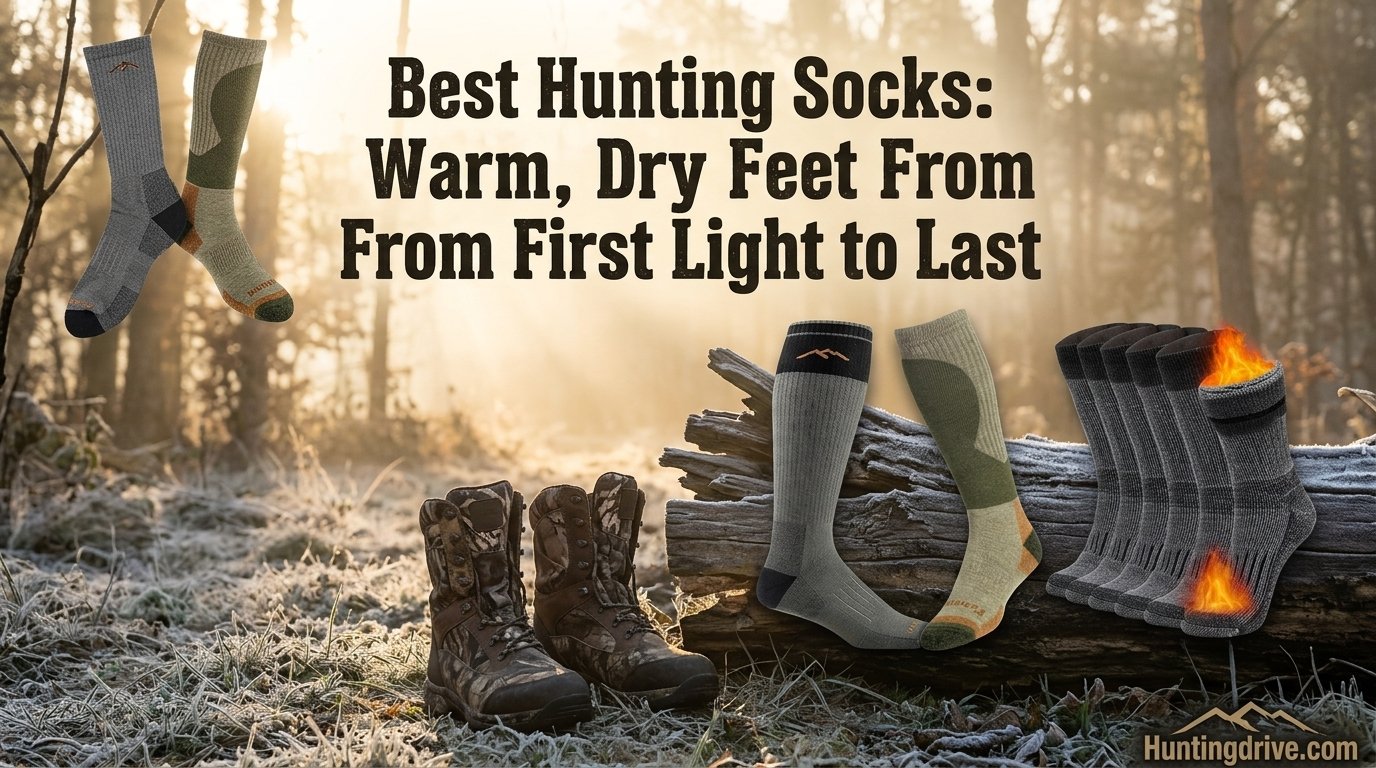
Best Hunting Socks: Warm, Dry Feet From First Light to Last

1. Why Hunting Socks Matter More Than You Think
Cold, damp feet end more hunts than bad weather or bad luck ever will.
You can carry the best rifle or bow and still head back to the truck by noon if your toes go numb. A good hunting sock manages moisture, cushions every mile, and holds heat when you sit still on a stand. Regular cotton socks do none of that. They soak up sweat, hold it against your skin, and turn into an ice pack by mid-morning.
Think about what your feet go through on a typical hunt. You walk a mile or two in the dark, often uphill, so your feet sweat inside insulated boots. Then you stop, climb into a stand or settle behind a blind, and that sweat starts cooling. Within twenty minutes the moisture you generated on the hike becomes the reason your toes ache. The sock is the only layer that touches that moisture first, which is why it decides whether you stay out or quit early.
Socks also protect against the quiet problems that sneak up over a season: hot spots, blisters, black toenails from downhill pressure, and the soggy skin that makes everything worse. A hunter who has dealt with a blister on day two of a week-long trip will never again treat socks as an afterthought. Spending a little more on the right pair is the cheapest comfort upgrade in your whole kit.
New to the sport? Our guide on how to get into hunting covers the basics, and socks are one of the cheapest upgrades that pay off right away. Pair them with a solid set of hunting gloves and your extremities are mostly handled.
2. Our Top Picks at a Glance
We looked at ten socks across warmth, durability, fit, and value. Here is how they stack up.
Before the table, a note on how we judged them. Warmth matters, but so does what happens when the sock gets wet, how it holds up after repeated washing, and whether it stays put inside a boot over a long walk. We also weighed price against lifespan, because a sock that lasts four seasons often costs less per hunt than a cheaper pair that wears out in one. Finally, we considered who each sock is really for. A heated sock is brilliant for a stand hunter and wasted on a hunter who climbs ridges all day, so every pick below comes with a clear “best for” label.
| Sock | Best For | Material | Weight |
|---|---|---|---|
| Kenetrek Canada Midweight | Overall boot comfort | Merino blend | Midweight |
| Darn Tough Hunter Heavyweight | Durability | Merino blend | Heavyweight |
| Smartwool Hiking Liner | Liner layer | Merino | Light |
| Carhartt Arctic Heavyweight | Deep cold on a budget | Wool blend | Heavyweight |
| Heat Equation Alpaca Merino | Soft warmth | Alpaca/merino | Midweight |
| ActionHeat AA Battery Heated | Stand sitting | Wool, battery | Heated |
| Alvada Merino Thermal | Everyday value | Merino | Midweight |
| RealTree Heavyweight Merino | Camo-branded warmth | Merino | Heavyweight |
| HOT FEET 4-Pack | Stocking up | Wool blend | Midweight |
| HOLLOW Alpaca Boot | Odor resistance | Alpaca | Heavyweight |
3. Kenetrek Canada Midweight Over-the-Calf
Kenetrek is a boot maker first, so these socks are shaped around how hunting boots actually fit. The over-the-calf height keeps the cuff from sliding into your boot, and the midweight cushion works for most seasons without overheating on the climb.
In real use, the first thing you notice is the lack of bunching. Cheap socks creep down at the heel and pile up under your arch after a few miles; these stay anchored thanks to a snug elastic arch band and a heel pocket that actually matches a human heel. The cushioning is concentrated on the sole and shin, where tall boots rub, and kept thinner across the top of the foot so your boot does not feel cramped.
They breathe well enough for an uphill approach, then hold enough warmth for a couple of hours on the ground in cool weather. For frozen late-season sits you will want to pair them with a heavier outer layer or add a heated option, but as a single-sock system for fall hunting they are hard to fault. If you wear stiff mountain boots, this is the sock to try first.
Who should skip it: Hunters who run very hot or hunt mostly in warm early-season conditions may find a midweight sock more than they need. It is also a premium purchase, so if you only hunt a few days a year, a cheaper multi-pack might make more sense. But if you spend real time on your feet in rough country, the extra cost is quickly forgotten after the first long day without a blister.
Fit tip: Size carefully. These socks are designed to be snug, so if you sit between sizes, choose based on your boot volume. A sock that is too loose will wrinkle and rub, while one that is too tight will stretch thin and lose cushioning.
- Boot-tuned fit
- Good cushion in key zones
- Works across seasons
- Premium price
- Not enough for extreme cold alone

A boot-maker’s take on the do-it-all hunting sock.
Check Price on Amazon4. Darn Tough Hunter Over-the-Calf Heavyweight
Darn Tough built its name on durability, and the hunter heavyweight is thick, dense, and made to take punishment. If you hike steep country or do long sits in late season, this is the one that will keep its shape after dozens of washes.
The density is what you feel first. The knit is tight, the loops are thick, and the sock almost holds its own shape when you take it off. That density traps a lot of warm air, which is why people reach for it when temperatures drop into the teens. It also resists the thinning at the heel and toe that kills lesser socks after a couple of seasons.
The trade-off is volume. A heavyweight sock needs a boot with real room, ideally a half size up or a model designed for insulation. If your boots already fit snug, the thick knit can squeeze your foot and reduce circulation, which feels colder than a thinner sock would. Try them with your actual boots, in the evening when feet are slightly swollen, before committing to a long trip. For many hunters, this is the pair that comes out of the drawer on opening morning of cold-weather seasons and stays on until the last day.
Who should skip it: Anyone with tight boots or poor circulation in the cold should be careful, because thick socks can restrict blood flow. They also take longer to dry on a cabin heater or in a pack, so if you hunt wet climates for days, bring more than one pair and rotate them.
Long-term value: Hunters who buy these tend to keep them for years. The tight knit resists pilling and thinning, and the sock keeps its cushioning far longer than budget alternatives. When you divide the price by the number of seasons, the cost per hunt is often lower than cheap socks that need replacing every year.
- Very long-lasting
- Excellent warmth
- Stays in place
- Too warm for early season
- Takes longer to dry

Built for cold mornings and long seasons.
Check Price on Amazon5. Budget and Everyday Wool Picks
Not every sock has to cost a fortune. The Carhartt Arctic Heavyweight brings serious thickness for the money, the Alvada Merino Thermal is a strong all-round value, the RealTree Heavyweight Merino adds camo styling to real warmth, and the HOT FEET 4-Pack lets you rotate fresh pairs all week. Stocking up matters for trips like the ones you plan around deer season, when a damp pair at dawn can ruin day two.
The Carhartt Arctic Heavyweight is the pick when the forecast looks miserable and the budget is tight. It is thick, cushioned, and simple, and while it will not have the refined fit of a boot-maker sock, it holds up for farm chores, ice fishing, and winter hunts alike. The Alvada Merino Thermal sits in the sweet spot for hunters who want real merino without paying top dollar; it works for most mid-season days and washes well.
The RealTree Heavyweight Merino is aimed at hunters who want a camo-branded sock that does not feel like a novelty item. The merino keeps feet warm even when they get damp, which is exactly the situation a creek crossing or wet field creates. And the HOT FEET 4-Pack solves a problem many people ignore: rotation. Having four pairs means you can swap in a dry set at lunch, sleep in a clean pair, and still have one left for the drive home.
One practical use for the budget picks is a “camp sock” system. Wear your best merino pair in the field, then change into a cheap, clean, dry pair the moment you return to camp or the truck. Your field socks get time to air out, your feet get a rest, and nothing in your kit gets worn out faster than it needs to. Budget socks also make good sleep socks, which helps in unheated cabins and tents.
If you are shopping for a group, such as a family trip or a hunting party, multi-packs are also an easy gift or shared purchase. Everyone gets a reliable sock, and nobody feels like they were left with the wrong gear on a cold morning.


6. Heated Socks for Long Sits
When you are motionless in a tree stand or saddle, your body makes almost no heat. That is where the ActionHeat AA Wool Battery Heated Socks earn a spot. Slip in fresh AA batteries and you get a gentle warm-up on the coldest sits. They are a great fit for saddle hunting, where you hang for hours with little movement.
Battery heated socks are not a replacement for good insulation; they are an addition. Think of them as a boost for the hours when your circulation slows and the cold seeps in from the ground or the stand floor. Start the heat before your feet get cold, because it is far easier to hold warmth than to recover it. Many hunters run them on low for the first hour of a sit and save the higher setting for the final stretch.
Keep a spare set of AA batteries in an inside pocket, since cold drains cells fast. Check that the battery pack sits comfortably against your calf and does not press into the boot cuff. And remember that heated socks still need a dry foot: wicking wool keeps moisture away from skin so the warmth stays useful.
Who should skip it: If you hunt on the move, such as spot and stalk or long-distance walking, the bulk of the battery packs and the extra heat can cause sweating, which makes feet colder later. Heated socks are best when you know you will be stationary for a long time.
Safety note: Never place a battery in a wet boot or leave a battery pack in extreme cold for long periods. Follow the manufacturer directions for the specific model, and stop use if you feel unusual burning or numbness.
- Active warmth when still
- Wool base layer
- Simple AA power
- Batteries add bulk
- Not ideal for hard hiking

7. Alpaca Options: Soft, Warm, Low-Odor
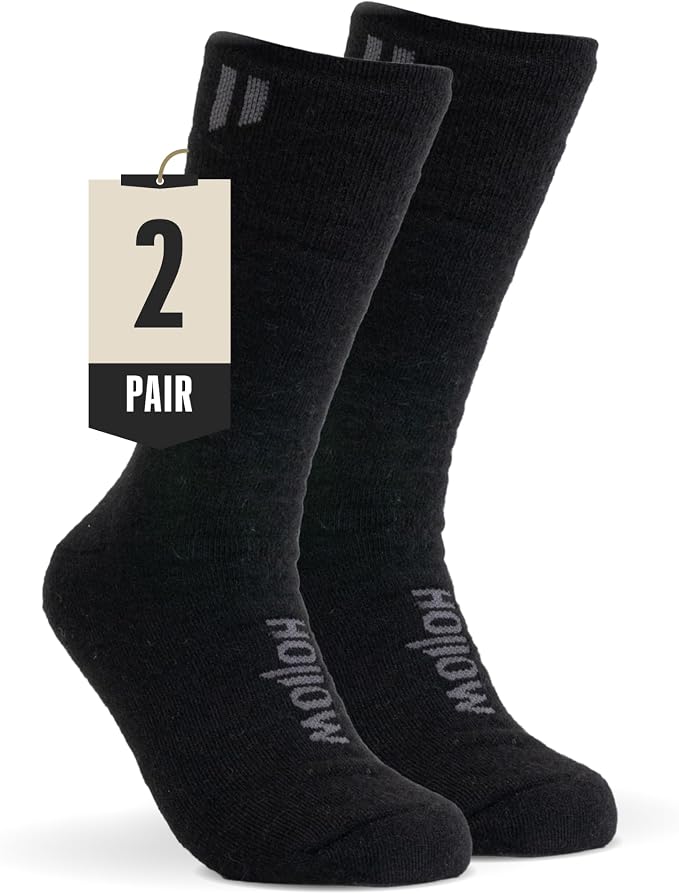
Alpaca fiber is hollow, which traps heat well, and it resists odor better than most wool. The Heat Equation Alpaca Merino blends both fibers for softness, while the HOLLOW Alpaca Boot Sock leans fully into alpaca for hunters who stay out multiple days and cannot wash gear between sits.
Alpaca has a different feel from sheep wool: silkier, less itchy, and warmer by weight because each strand is hollow. Hunters who find standard wool scratchy often settle happily into alpaca. It also tends to stay fresher through long weekends, which is a real benefit in a cabin full of boots. The downside is price and, in some blends, slightly lower abrasion resistance, so rotate pairs and avoid pulling them on with rough hands.
For hunters who want a natural, odor-free option for multi-day trips, alpaca is hard to beat. If you share a tent or cabin, your hunting partners will appreciate it too. Try one pair as a trial, then add more as you learn how they feel in your boots.

8. Fabric Guide: Merino, Alpaca, Synthetics
| Fabric | Warmth | Moisture | Odor |
|---|---|---|---|
| Merino | High | Wicks, warm when damp | Low |
| Alpaca | High | Breathable | Very low |
| Nylon/Spandex blend | Adds stretch | Dries fast | Moderate |
| Cotton | Poor | Holds sweat | High |
Look for at least 50% natural fiber with some nylon for durability and spandex for stretch. Avoid cotton entirely.
Merino fibers are fine enough to feel soft on skin, and they absorb a surprising amount of moisture vapor before they feel wet. That is why a merino sock feels warm even after a sweaty climb. Alpaca adds a smoother surface that sheds dirt and resists odor. Nylon is the structural backbone, giving heels and toes their strength, while a bit of spandex or elastane keeps the sock from sagging.
Be cautious with socks marketed as simply “thermal” without a fiber breakdown. Some are mostly acrylic, which insulates but traps odor and does not manage moisture as well. Read the label: a good hunting sock tells you exactly what is in it.
9. Choosing Weight and Height
Lightweight socks suit warm early-season hunts, midweight is the safe default, and heavyweight belongs in sub-freezing sits. Height matters too: over-the-calf keeps socks from bunching in tall boots, while crew height suits low-cut hunting shoes. For rugged mountain and upland hunting, midweight over-the-calf is hard to beat.
A simple rule: choose the lightest sock that keeps you warm on your longest still moment, not your hardest hike. If you are walking in, you can always strip a layer. If you are sitting for hours in a stand, you need the warmth. Also consider boot insulation. A 800-gram insulated boot already supplies a lot of warmth, so a midweight sock is plenty. An uninsulated leather boot needs a heavyweight sock to compensate.
| Conditions | Sock Weight | Boot Type |
|---|---|---|
| Warm, early season | Light | Breathable hiking boot |
| Cool, active hunting | Midweight | Light insulated boot |
| Cold, long sits | Heavyweight | Insulated boot with room |
| Extreme cold | Liner + heavyweight or heated | Pac or large insulated boot |
10. Layering Your Feet
A thin liner like the Smartwool Hiking Liner Crew wicks sweat away from skin, and a heavier sock goes over it. Liners cut blisters and speed up drying. Just make sure your boots have room: stuffing thick layers into a snug boot squeezes circulation and makes feet colder.
The best layering system is simple: a thin merino liner against skin, a midweight or heavyweight sock over it, and nothing else. Avoid adding a third layer unless your boots are oversized. If you tend toward sweaty feet, a light dusting of foot powder before pulling on liners helps, and changing your liner at lunch is a fast way to feel brand new.

11. Care and Longevity
Wash inside out in cool or warm water, skip fabric softener, and air-dry when you can. Carry a spare dry pair in a zip bag. Swap socks at midday on long hunts, and on shed trips like shed hunting where you cross creeks and wet grass, bring two spares.
Never dry socks directly on a heater or fire; high heat can shrink wool and damage elastic. Turn them inside out, shake out debris like burrs and seeds, and hang them somewhere airy overnight. If a sock gets a hole, patch it early with a darning stitch before it spreads. A properly cared for premium pair lasts several seasons, which makes the higher upfront price easy to justify.
12. How to Choose the Right Pair
- Best overall: Kenetrek Canada Midweight
- Most durable: Darn Tough Hunter Heavyweight
- Best for sitting: ActionHeat heated socks
- Best budget warmth: Carhartt Arctic or HOT FEET 4-Pack
- Best odor control: HOLLOW Alpaca
Match the sock to your coldest, longest day, not your average one, and try them with your actual boots before opening day.
If you are still unsure, use this decision path. First, decide whether you are mostly moving or mostly sitting. Movers should favor merino midweights from Kenetrek or Alvada, because they breathe and cushion without overheating. Sitters should look at heavyweight options like Darn Tough or Carhartt, and consider adding the ActionHeat for the coldest weeks. Second, check your boot room: if your boots are snug, stay with midweight and use a thin liner rather than a thick sock. Third, think about trip length. Weekend hunters can get by with two pairs; anyone heading out for a week should buy a multi-pack like HOT FEET so laundry never becomes a problem.
Finally, remember that the best sock is the one you will actually wear. Comfort in the store or living room usually predicts comfort in the field. Buy early, wash once, and test them on a long walk so any surprises show up long before opening morning.
13. Early Season vs. Late Season Sock Strategy
Early season hunts often start warm and end hot. In those conditions you want breathable light or midweight merino that dumps heat and dries quickly. Wearing heavyweight socks in warm weather is a fast path to sweaty, blistered feet. As temperatures drop through the fall, step up weight gradually and add liners. By the final weeks, a heavyweight pair or heated option is standard equipment for most hunters.
Plan for weather swings too. A morning that starts near freezing can reach sixty by afternoon, so pack both a warm pair and a light pair, and change when the day changes. Keeping a dry bag with spares in your pack means you never have to guess.
14. Common Sock Mistakes Hunters Make
- Wearing cotton: It holds sweat and turns cold quickly.
- Overstuffing boots: Thick socks in a tight boot cut circulation.
- Skipping spares: One damp pair can end a trip.
- Wrong size: Too big bunches, too small stretches thin and tears.
- Ignoring boot fit: Test socks with the boots you will actually hunt in.
- Waiting to warm up: Add heat or layers before your feet get cold.
Most of these come down to preparation. A quick test at home on a weekend walk will reveal almost every problem before it matters.
15. Preventing Blisters and Cold Feet All Day
Start with a clean, dry foot and trim your toenails. Pull socks up smooth with no wrinkles at the toes or heel. Lace boots firmly through the ankle but looser across the forefoot, so your toes can wiggle and blood can flow. Take short breaks on long walks to check for hot spots, and treat them right away with tape or a blister pad. During sits, wiggle your toes and flex your feet every few minutes to keep circulation moving, and rest your boots off the cold ground on a pad or platform.
If you are building up to a bigger trip, such as a western hunt, break in both boots and socks together for several weeks. And when you are planning your season dates, check our guide on when deer hunting season starts so you can time your gear shopping before the rush.
16. Best Socks by Hunting Style
Different hunts ask different things of your feet, so it helps to match the sock to the style.
Deer and Stand Hunting
Long sits mean low circulation and cold creeping up from the platform. Heavyweight merino or alpaca, plus a heated option on the coldest mornings, is the winning combination. Choose over-the-calf height so the cuff stays under your pant leg and drafts stay out.
Mountain and Western Hunting
Here, durability and blister control come first. You are climbing, descending, and sidehilling for miles, and downhill pressure pushes toes into the front of the boot. A midweight over-the-calf with strong heel and toe reinforcement, like the Kenetrek, is ideal. Carry a spare pair and a thin liner for wet crossings.
Waterfowl and Wet Conditions
Cold water and wading boots demand warmth and quick moisture management. Heavyweight wool or alpaca keeps working when damp, and a spare dry pair for the ride home is non-negotiable. If you use neoprene waders, a thick sock is usually needed because neoprene compresses over time.
Upland and Walking Hunts
Lots of steady walking over uneven ground means heat and sweat. Light to midweight merino with a liner does the job. Our guide to upland hunting explains why mileage is the main factor here, and why keeping feet dry matters more than keeping them toasty.
17. Buying Checklist and Budget Guide
- Fiber content: Aim for merino or alpaca with nylon for strength.
- Height: Match the sock to your boot shaft.
- Cushion zones: Look for padding on the heel, ball, and shin.
- Fit: Snug with no wrinkles and no pinching.
- Seam quality: A flat or hand-linked toe seam prevents rubbing.
- Warranty: Some brands replace worn pairs, which changes the value math.
- Pack size: Multi-packs lower cost per pair.
| Budget Level | What to Expect | Good Fits |
|---|---|---|
| Entry | Solid warmth, basic fit, shorter lifespan | HOT FEET 4-Pack, Carhartt Arctic |
| Mid | Real merino, better moisture control | Alvada Merino, RealTree Merino |
| Premium | Boot-tuned fit, long life, refined knit | Kenetrek, Darn Tough, alpaca blends |
A reasonable approach is to buy one premium pair for your hardest days and a multi-pack of budget socks for everything else. That way you protect your feet where it counts without overspending.
18. Sizing and Fit for Women, Youth, and Wide Feet
Many hunting socks are sold in unisex sizing, which can fit men well but leave women and younger hunters with extra fabric at the heel or toe. If you wear a smaller size, look at the size chart rather than relying on shoe size alone, and consider a sock one size down if the heel pocket sits too low on your foot. For youth hunters, avoid sizing up for “growing room,” because loose socks cause blisters and cold spots. Buy the correct size and replace it as feet grow.
Hunters with wide feet or high arches should pay attention to stretch. A sock with a spandex blend and a flexible arch band will adapt better, while a rigid heavyweight can feel constricting. Always try new socks with the exact boots you plan to hunt in, and wear them for at least an hour around the house before committing.
- Narrow feet: Choose snug blends with strong arch bands.
- Wide feet: Choose stretch-friendly midweights and size up in boots, not socks.
- High volume calves: Look for generous over-the-calf cuffs that do not roll down.
19. Socks, Insoles, and Boots: Building the Whole System
Socks are one piece of a foot-warming system. Your boots, insoles, and even your pant cuffs all play a part. A quality insole adds support and insulation from the cold ground, which means your socks do not need to do all the work. A boot with the right insulation rating for your climate matters even more: a 400-gram boot may be plenty for active fall hunting, while a 1000-gram or pac-style boot is better for sub-freezing sits.
Fit is the glue that ties these pieces together. Boots that are too tight make every sock feel too thick, while boots that are too loose let socks slide and bunch. When shopping for boots, bring the socks you will hunt in and try them on in the afternoon. Leave a thumb width of space in front of your longest toe and make sure your heel does not lift when you walk uphill.
Finally, don’t forget moisture control outside the boot. Gaiters keep snow and debris out, waterproof boots protect from wet ground, and wicking base layers keep sweat from running down your legs into your socks. When every layer works together, you stay warm and comfortable far longer than any single product can manage.
20. Packing Socks for Multi-Day and Travel Hunts
On a week-long trip, laundry is rarely an option, so pack smart. A good rule is one pair per day for the first three days, then rotate and air-dry after that, plus two emergency pairs sealed in a waterproof bag. Merino and alpaca make this strategy far easier because they stay fresher between wears. Roll socks tightly to save space, and keep a dedicated “dry bag” in your pack for the next day’s pair.
Flying to a hunt? Pack your socks in your carry-on with your boots if you can. Lost luggage is a nightmare, but arriving without warm socks is worse. In camp, hang worn pairs on a line or stick them in the top of a sleeping bag to dry overnight. Avoid placing wet socks directly against a hot stove, and never leave them in a pocket where they stay damp.
- Pack at least one spare per day of hunting.
- Keep one dry pair sealed for emergencies.
- Store sleep socks separate from field socks.
- Bring a small bottle of detergent for sink washing.
- Pack extra batteries if using heated socks.
21. How Your Feet Lose Heat (and How Socks Stop It)
Understanding the science makes it easier to choose well. Feet are far from your core, and when you get cold your body narrows blood vessels in your extremities to protect vital organs. That means feet are the first place to lose warmth, and the last to get it back. Heat leaves in three main ways: conduction through contact with cold ground or boot soles, convection through air movement, and evaporation from sweat.
Socks fight each of these. Thick, dense fibers slow conduction, a snug knit limits air movement, and wicking fibers like merino pull sweat away before it can chill you. Dry air trapped inside the fibers is the real insulator, which is why a crushed, wet sock performs so poorly. Keeping that trapped air intact is the goal of every good hunting sock, and it explains why changing into a dry pair feels almost magical on a cold day.
This also explains why more is not always better. Squeezing a thick sock into a tight boot compresses the trapped air and restricts blood flow, which cuts both sources of warmth at once. Room to wiggle your toes is as important as insulation.
22. Head-to-Head Matchups
Kenetrek vs. Darn Tough
The Kenetrek wins on boot-specific fit and versatility, while the Darn Tough wins on raw warmth and longevity. Choose Kenetrek if you move a lot and want a do-it-all sock. Choose Darn Tough if you sit in the cold and want a sock that survives years of use.
Carhartt vs. RealTree
Both are heavyweight and budget-friendly. Carhartt offers a classic work-sock feel, while RealTree uses merino for better moisture management. If you will be wet or sweaty, the merino edge is worth it; if you just need cold-weather bulk, the Carhartt is hard to argue with.
Heat Equation vs. HOLLOW
The Heat Equation blends alpaca with merino for a balanced, softer feel. The HOLLOW goes all in on alpaca for maximum odor control and warmth. Pick the blend for everyday use and the pure alpaca for multi-day trips.
| Matchup | Pick If You… | Winner For |
|---|---|---|
| Kenetrek vs. Darn Tough | Move vs. sit | Fit vs. warmth |
| Carhartt vs. RealTree | Sweat vs. stay dry | Bulk vs. wicking |
| Heat Equation vs. HOLLOW | Want blend vs. pure alpaca | Comfort vs. odor control |
| ActionHeat vs. any wool | Sit vs. hike | Active heat vs. simplicity |
23. Hunting Sock Myths, Busted
- “Thicker always means warmer.” Not if it cuts circulation or crowds your boot.
- “Wool is itchy.” Fine merino and alpaca feel soft; itch comes from coarse, cheap wool.
- “Cotton is fine for short hunts.” Even a short sit can chill damp cotton quickly.
- “Heated socks replace insulation.” They add to it; they do not replace it.
- “Expensive socks are a gimmick.” Premium pairs often last several times longer.
- “Any sock works if the boots are good.” Boots and socks work as a pair; a poor sock undermines a great boot.
Most of these myths survive because the cost of being wrong is small until the day it is not. A single cold, wet hunt is usually enough to convince anyone to upgrade.
24. Troubleshooting Common Sock Problems
Socks slide down: The size is too large, the cuff is too short, or the elastic is worn. Move to a smaller size or an over-the-calf cut.
Blisters at the heel: Usually a loose heel pocket or a boot that lifts when you walk. Try a snugger sock and re-lace with a heel-lock knot.
Toes go numb on stand: Often too much sock for the boot, or a boot that is too tight. Remove a layer, wiggle toes often, and add heat only if needed.
Socks smell terrible: Switch to merino or alpaca, rotate pairs, and wash with a gentle detergent. Skip fabric softener.
Holes in the heel or toe: Check for rough boot interiors and trim toenails. Retire thinned socks as spares or camp wear.
Wool shrinks in the wash: Use cool water and air-dry. Hot dryers are the most common cause of shrinkage.
25. Liner Socks Deep Dive
A liner is a thin, snug sock worn under your main sock. Its job is to move sweat off your skin and cut friction, so the outer sock can handle insulation. The Smartwool Hiking Liner Crew is a good example: a fine merino knit that sits close to the foot without adding bulk. Because the liner takes the rubbing, your outer sock slides over it instead of against your skin, which is the main reason blisters drop so sharply.
Liners shine on long hikes, wet days, and trips where your feet will sweat inside insulated boots. They are less useful if your boots are very snug. Consider carrying two liners so you can change into a dry one midday, which feels remarkably refreshing and takes seconds. Liners also dry quickly overnight, so they are easy to rotate in camp.
If you have never used one, test the combination at home first. Put on the liner, then your main sock, then your boot, and walk for thirty minutes. If you feel pressure or tightness, switch to a lighter outer sock instead of removing the liner.
26. When to Buy: A Seasonal Shopping Plan
Good socks sell fast right before opening day, and sizes often run out. Buy early, ideally a month or two before your first hunt, so you can test and return if needed. Late summer is a smart time to stock up, since you can break pairs in on warm-weather hikes. Many retailers also run sales near the end of winter, which is a good time to pick up replacements for next season.
| Time of Year | What to Do |
|---|---|
| Late summer | Buy and break in new pairs |
| Early fall | Test with boots and finalize sizes |
| Mid season | Add spares and heated options if needed |
| Late winter | Replace worn pairs on sale |
If you are planning around the calendar, our guide to when deer hunting season opens can help you set your shopping deadline.
27. Gift Guide: Hunting Socks as Presents
Socks make a smart gift for hunters because they are practical, always needed, and easy to size. A premium pair like the Kenetrek or Darn Tough feels like a real treat, while a multi-pack is useful and affordable. Pairing socks with a small accessory, such as a thumb release from our best thumb release guide or a good pair of gloves, turns a simple gift into a complete package.
- For beginners: A merino midweight and a liner pair.
- For stand hunters: Heavyweight wool plus heated socks.
- For travelers: A multi-pack and a dry bag.
- For campers: Alpaca boot socks for cold nights.
If you are unsure of the size, choose a brand with stretch and a clear size chart, and include a gift receipt.
28. Real-World Scenarios: What to Wear When
Cold Dawn Stand Sit
Wear a thin liner and a heavyweight merino sock, and keep heated socks ready if you will sit more than two hours. Pack a spare dry pair for the walk out.
Long Mountain Climb
Use a midweight over-the-calf with a liner and carry a spare pair. Change at the summit or at a rest stop to keep feet dry on the descent.
Wet Creek Crossing Day
Choose merino or alpaca, because they keep insulating when damp. Carry a dry pair in a sealed bag and swap as soon as you cross.
Warm Early-Season Hunt
Wear a light merino sock, skip the liner unless your feet sweat, and prioritize breathability over cushion.
Multi-Day Backcountry Trip
Bring two field pairs, one camp pair, and one emergency pair. Rotate daily and air them out each night.
29. Wool and Alpaca Sourcing: What the Labels Mean
Not all wool is equal. Fiber fineness, measured in microns, decides how soft a sock feels: lower numbers feel softer and itch less. Merino typically sits in the fine range, which is why it works against bare skin. Alpaca fibers are smooth and hollow, which adds warmth without weight. Labels like “merino blend” can hide a low percentage of real wool, so check the fiber breakdown rather than the front-of-package marketing.
If sourcing matters to you, look for brands that mention responsible wool standards, traceable supply chains, or mulesing-free merino. Many outdoor sock makers publish this on their product pages. Choosing a durable sock is also a sustainable choice in itself: one pair that lasts five seasons creates far less waste than five cheap pairs.
- Look for: Clear fiber percentages and a durable nylon core.
- Be wary of: Vague terms like “thermal fabric” with no breakdown.
- Bonus points: Warranties and published sourcing practices.
30. Breaking In Socks and Boots Together
New gear should never debut on opening day. Plan a break-in routine of at least a week. Start with short walks around the house in your new socks and boots, then move to an evening walk of two or three miles. Add weight with a pack as the days go by. Pay attention to hot spots, pressure on the toes, and heel lift, and adjust lacing or sock choice before they become blisters.
Wash new socks once before first use. This relaxes the fibers, removes manufacturing residue, and lets you see how they hold their shape. If a sock shrinks or pills badly in the first wash, return it while you still can. Rotate pairs during break-in so you learn how each one feels in different conditions.
- Wash socks once and air-dry.
- Walk indoors for an hour.
- Take a two-mile outdoor walk.
- Repeat with a loaded pack.
- Adjust lacing and sock weight as needed.
31. Field Tips From Long Seasons Outdoors
- Change socks at midday: Even on mild days, a dry pair feels like new feet.
- Warm your boots first: Keep them indoors overnight, not in a cold truck.
- Tuck pant legs carefully: Avoid creating a pressure point at the top of the boot.
- Wiggle often: Moving toes every few minutes keeps blood flowing.
- Stay hydrated and fed: Your body makes less heat when it is under-fueled.
- Elevate feet at rest: Lifting them off the ground cuts conduction.
- Dry boots nightly: Pull insoles and open the tongue.
These small habits add up. Hunters who treat feet as part of the equipment list, rather than an afterthought, tend to stay out longer and enjoy every hunt more.
32. Off-Season Storage and Care
When the season ends, give your socks a proper send-off. Wash them in cool water, air-dry fully, and inspect each pair for thinning or holes. Repair small holes early and retire pairs that are past saving as camp or garden socks. Store clean socks in a dry, breathable container with a cedar block or similar moth deterrent, because wool is a favorite food for pantry moths.
Avoid sealed plastic bags for long storage, since trapped humidity can cause mildew. Label pairs by weight so you can grab the right one on opening day. A quick inventory in late summer shows what needs replacing, and it keeps you from scrambling at the last minute when sizes are scarce.
33. Sock Fit by Boot Type
The best sock changes with the boot you wear. Insulated rubber boots, leather mountain boots, lace-up pacs, and lightweight hikers all have different interior volume, stiffness, and heat retention. Matching the sock to the boot is one of the easiest ways to improve comfort without spending more money.
Insulated Rubber Boots
Rubber boots trap sweat because they do not breathe. A moisture-wicking merino or alpaca sock is essential, and a thin liner helps move sweat away from the skin. Choose a midweight sock for most days and a heavyweight only when the boot is roomy. Rubber boots also run cold from the ground up, so a good insole pairs well with a thick sock.
Leather Mountain Boots
Stiff leather boots demand a sock with strong heel and toe cushioning and a snug fit so the foot does not slide. The Kenetrek and Darn Tough styles shine here. Break the boots in with your chosen sock before any serious trip, because stiff leather can create hot spots if the sock and boot are not matched.
Pac-Style Winter Boots
Pacs often have a removable liner and a lot of room. Heavyweight wool or alpaca socks work well, and you can add a heated sock for stand sits. Because the liner holds moisture, pull it out each night to dry and keep a spare pair of socks ready for the next morning.
Lightweight Hikers and Trail Shoes
These breathe well but offer little insulation. Light or midweight merino with a crew height works best, and a liner helps if you are crossing damp ground. Do not overload a low-cut shoe with a thick sock, because tight toes get colder, not warmer.
A simple test applies to every boot: after lacing up, your toes should move freely, your heel should stay planted, and nothing should pinch across the top of the foot. If any of those fail, change the sock weight before you change anything else.
34. Heated Sock Battery Care and Safety
Battery heated socks like the ActionHeat only work as well as their power source. Cold weather drains batteries faster than most people expect, so a few good habits make the difference between a warm sit and a dead pack by mid-morning.
Start With Fresh Cells
Always load new or fully charged batteries before heading out. Partly used cells may seem fine at home but fade quickly in freezing temperatures. Carry a spare set in an inside pocket close to your body, where they stay warmer and keep more capacity.
Use Heat Wisely
Turn the heat on before your feet feel cold, run on low for the first stretch, and switch to high only for the coldest hour. This stretches battery life and prevents overheating. If you start sweating, turn the heat off; moisture is a bigger enemy than cold.
Protect the Hardware
Keep battery packs dry, and never submerge them. Inspect wires and connectors for damage before each trip. Avoid wearing the socks with damaged wiring, and follow the manufacturer directions on washing and storage. Remove batteries before washing, and air-dry the socks fully.
Know When to Stop
If you feel burning, tingling, or unusual numbness, stop using the socks and let your feet cool. People with reduced sensation in their feet should be especially cautious, since they may not notice overheating. When in doubt, ask a medical professional before relying on heated gear.
- Pack spare batteries in a warm pocket.
- Test the socks at home before the hunt.
- Remove batteries during storage.
- Replace socks with worn wiring.
35. Build a Hunter’s Foot-Care Kit
A small foot-care kit takes up almost no room and can save a hunt. Keep it in your pack year-round so it is always ready. Think of it as insurance: you hope you never need it, but when you do, nothing else will do.
- Spare socks: One midweight pair and one liner pair in a sealed bag.
- Blister pads or moleskin: For hot spots before they break open.
- Athletic tape: Handy for toes and heels.
- Foot powder: Helps control moisture on long days.
- Small scissors or nail clippers: For quick trims and cutting tape.
- Antibiotic ointment and bandages: For minor scrapes.
- Chemical toe warmers: A backup for unexpected cold.
- Zip bag: To keep wet socks away from dry gear.
Check the kit before each season. Replace anything used up, test that adhesive pads still stick, and make sure your spare socks still fit. Add a laminated card with quick instructions if you hunt with friends or family who may need to help.
When a hot spot appears, act right away. Stop, dry the foot, apply a pad or tape, and put on a clean sock. A two-minute fix keeps a small irritation from becoming a trip-ending blister. Hunters who carry a kit tend to use it rarely, but the confidence of knowing it is there changes how you plan long days.
36. Socks for Different Climates and Regions
Hunting happens everywhere from humid southern swamps to frozen northern forests, and sock needs shift with each region. Understanding the typical conditions where you hunt helps you buy once and buy right.
Cold and Snowy North
Heavyweight merino or alpaca, liners, and a heated option for stand hunting are standard. Moisture control matters, because snow melts into boots and chills the foot. Keep spare pairs in a sealed bag.
Mountain West
Large temperature swings and long climbs call for midweight merino with reinforced heels and toes. Layer a liner and carry a spare pair so you can adapt from warm afternoons to freezing mornings.
Humid Southeast
Heat and humidity cause sweat, so light to midweight merino with strong wicking is best. Choose breathable fabrics and change socks at midday. Bugs and brush also make tall socks useful for added protection.
Midwest Farmland and Woods
Conditions swing from mild to bitter within a season. A flexible system of light, mid, and heavyweight pairs covers most days. Muddy fields and wet grass reward quick-drying fibers.
Coastal and Wetland Areas
Wet feet are the main risk, so choose wool or alpaca that insulates when damp. Pack extra pairs and keep them dry in a waterproof bag.
Wherever you hunt, remember the same core idea: keep feet dry, fit snug but not tight, and carry a spare pair. Everything else is fine tuning.
37. How Long Should Hunting Socks Last?
A good sock is an investment, so it helps to understand lifespan and cost per use. Budget socks may wear out in a single season of regular use, while premium pairs often last several seasons. The difference shows up first in the heel and toe, where friction thins the fabric, followed by the cushioning, which flattens and loses insulation.
| Sock Tier | Typical Lifespan | Warning Signs |
|---|---|---|
| Budget multi-pack | 1 to 2 seasons | Thin heels, bagging, pilling |
| Mid-range merino | 2 to 3 seasons | Flattened cushion, small holes |
| Premium boot sock | 3 or more seasons | Loose elastic, thin heel |
To estimate value, divide the price by the number of days you expect to wear the sock. A premium pair worn thirty days a season for three seasons is ninety days of use, which often beats a cheap pair that only lasts thirty. The comfort and blister protection are a bonus you cannot easily price.
You can extend life by rotating pairs, washing gently, air-drying, and trimming toenails. Retire thin socks to lower-stakes jobs like yard work or camp wear. When a sock no longer holds its shape or cushions your foot, replace it before it fails in the field.
38. Pairing Socks With Your Layering System
Warm feet depend on a warm body. When your core cools, your body pulls blood away from your hands and feet to protect vital organs, so even the best socks cannot keep up if the rest of your layers fail. A smart layering system keeps your core warm so your feet get all the blood flow they need.
Start with a wicking base layer that keeps sweat off your skin. Add an insulating mid layer, such as fleece or wool, and finish with a windproof, quiet outer layer. Do not forget your legs: insulated pants or long underwear keep blood in your lower limbs warmer and reduce the work your socks have to do. Pair this with warm hands too. Our review of the best hunting gloves covers the other half of keeping your extremities comfortable.
Pay attention to the openings. Tuck pant cuffs over or under boots so snow and air stay out, and use gaiters in wet or snowy conditions. A hat and neck gaiter hold in heat at the top of the body, which indirectly warms your feet. Even a hot drink in a thermos can lift your comfort noticeably on a cold sit.
Finally, adjust as you go. Remove layers on the climb in to avoid sweating, and add them back the moment you stop. Sweat that soaks your base layer chills the whole system, including your feet.
39. Smart Online Buying Tips for Hunting Socks
Most hunters buy socks online, which makes smart shopping essential. Start by reading the full product description, not just the title. Check the fiber content, sock height, weight, and size chart. Look at recent customer photos to see how socks look after real use, and read reviews that mention fit with specific boot types.
Be careful of reviews that praise warmth in mild weather but say nothing about durability. Look for comments from people who hunt in similar conditions to yours, and note any recurring complaints, such as sizing running small or elastic wearing out. If many reviewers mention the same flaw, take it seriously.
Know the return policy before ordering, and buy more than one size if the seller allows easy returns. Compare multi-pack prices, since the per-pair cost often drops substantially. Finally, avoid buying only on discount: a deeply discounted sock that does not fit costs more than a full-price sock that does.
- Check fiber percentages carefully.
- Match height to your boot shaft.
- Read reviews from similar climates.
- Confirm the return policy.
- Order early for sizing flexibility.
40. Opening-Day Sock Checklist
Before the season starts, run through a simple checklist to make sure your feet are ready. A few minutes of prep can prevent the kind of problems that ruin a hunt.
- Inspect every pair for holes, thin heels, and worn elastic.
- Test-fit socks with your actual hunting boots.
- Pack at least one spare pair per hunting day.
- Add liners if you hunt wet or sweat heavily.
- Charge or load batteries for heated socks and bring spares.
- Restock your foot-care kit with pads, tape, and powder.
- Pack a sealed bag for wet socks.
- Lay out your gear the night before, including socks and insoles.
- Warm your boots indoors overnight.
- Check the forecast and choose sock weight accordingly.
Treat this list like a pre-flight check. When your feet are comfortable, you can focus on the hunt itself: the glassing, the patience, the quiet moments before first light. It is a small investment of time that pays back every day you are afield.
41. Sock Materials Beyond Wool
Wool and alpaca get most of the attention, but other materials show up in hunting socks and are worth understanding. Nylon is the workhorse of durability. It forms the structure of the heel, toe, and cuff, and it helps a sock keep its shape after many washes. Spandex or elastane adds stretch and recovery, so the sock hugs the foot without bagging. Polyester and acrylic appear in many budget socks, offering warmth and quick drying but weaker odor control.
Synthetic-heavy socks can be a good fit for hunters who wash often and want a low price. They dry faster than wool and can be tough, but they tend to hold smells and feel clammy when sweaty. Wool-synthetic blends try to capture the best of both, with natural fibers on the inside for comfort and synthetic yarns on the outside for strength.
Some specialty socks use silk liners for extra softness, or bamboo viscose for a silky feel. These can work in mild conditions, but they usually do not match wool for warmth when wet. For serious cold, stay with merino or alpaca as your primary fiber, and use other materials as supporting players.
| Material | Strength | Weakness |
|---|---|---|
| Nylon | Durability | Little insulation alone |
| Spandex | Stretch and fit | None for warmth |
| Acrylic | Low cost, warm | Odor, weaker moisture control |
| Silk | Soft liner feel | Poor when wet |
42. Frequently Overlooked Features
When comparing socks, small design details can matter as much as fiber. Look for a seamless or flat toe seam, which prevents the rubbing that causes blisters on long walks. A deep heel pocket keeps the sock seated, and a y-shaped heel follows the natural shape of the foot. An arch support band hugs the middle of the foot and prevents slippage.
Mesh ventilation zones on the top of the foot help release heat during hard hiking, while cushioned shin padding protects against boot tongue pressure in tall boots. Reinforced toe and heel zones extend life in the places where socks wear out first. A stay-up cuff with gentle elastic keeps the sock in place without leaving deep marks.
Finally, consider left and right specific designs. Some premium socks are shaped for each foot, which improves fit and reduces bunching. They can cost a bit more, but hunters with sensitive feet often find the difference worth it.
- Flat toe seam for blister prevention.
- Deep heel pocket for stability.
- Arch band to prevent slipping.
- Shin padding for tall boots.
- Ventilation zones for hot days.
43. Hunter Stories: Lessons Learned the Hard Way
Ask any experienced hunter about foot trouble and you will hear stories. One common tale: a hunter heads out on opening morning in brand-new boots and a thick new pair of socks. By noon, a blister the size of a coin has formed on the heel, and the rest of the trip is miserable. The lesson is simple: test everything before the hunt.
Another familiar story involves cotton socks on a cold, damp stand sit. The first hour feels fine, but as the day goes on, feet turn numb, and the hunter climbs down early with nothing to show for it. Switching to merino made the same stand comfortable for hours, which changed how that hunter approached every later trip.
A third lesson comes from multi-day trips. A hunter packs only two pairs for a five-day hunt, and a wet creek crossing on day two soaks one pair. With no spare, the rest of the week is spent wearing damp socks and rationing dry ones. After that trip, extra pairs became the first item on every packing list.
The pattern is clear. Most foot problems are preventable with small choices: good fiber, correct fit, enough spares, and a bit of testing. These are not expensive fixes, and they pay off every time you head out.
44. Final Verdict: Which Hunting Socks Should You Buy?
After weighing fit, warmth, durability, and value, here is how the picks line up. For most hunters who want a single reliable pair, the Kenetrek Canada Midweight Over-the-Calf is the safest recommendation. It fits boots well, works across seasons, and holds up under real use. For cold-weather hunters who sit for hours and want a long-lasting sock, the Darn Tough Hunter Heavyweight is the standout.
On a budget, the Carhartt Arctic Heavyweight and the HOT FEET 4-Pack deliver real warmth at an easy price, while the Alvada Merino Thermal offers a middle path with true merino. The RealTree Heavyweight Merino suits those who want camo styling and wool warmth. For soft, low-odor comfort, the Heat Equation and HOLLOW alpaca socks are excellent, and the Smartwool Liner is the best way to cut blisters and move moisture. When the cold gets serious and you will be still, add the ActionHeat battery heated socks.
Whichever you choose, remember the basics: avoid cotton, size carefully, carry spares, and test before opening day. A little attention to your feet goes a long way toward making every hunt more comfortable and more successful.
Frequently Asked Questions
What are the best socks for hunting?
The best hunting socks are merino or alpaca blends in a midweight or heavyweight build, with over-the-calf height for tall boots. Kenetrek and Darn Tough are the standouts for fit and durability, while Carhartt and HOT FEET deliver good warmth on a smaller budget. Your ideal pick depends on how much you move versus sit.
Are merino wool socks worth it for hunting?
Yes. Merino stays warm even when damp, wicks sweat from the skin, and resists odor over multi-day trips. It costs more than basic blends, but it lasts longer and keeps feet more comfortable, which is why most serious hunters choose it.
Should I wear two pairs of socks while hunting?
A thin liner under a thicker sock can reduce blisters and speed up moisture transfer. However, two pairs only work if your boots have extra room. Tight boots with doubled socks restrict blood flow and make feet colder.
How thick should hunting socks be?
Use lightweight socks for warm early-season hunts, midweight for most days, and heavyweight for sub-freezing sits. Consider your boot insulation, since a well-insulated boot needs less sock thickness.
Are heated socks good for hunting?
They are excellent for long, still sits in a stand, blind, or saddle, where your body produces little heat. They are less useful for heavy hiking because batteries add bulk and you generate your own warmth by moving.
Do alpaca socks beat wool?
Alpaca is softer, warmer by weight, and less prone to odor. Merino wool is typically more abrasion resistant. Many hunters like a blend to get the benefits of both.
Why should I avoid cotton socks?
Cotton absorbs moisture and keeps it against your skin, which drains heat quickly. It also dries slowly and increases the risk of blisters, so it is a poor choice for any serious hunt.
Should I choose over-the-calf or crew height?
Over-the-calf is best for tall hunting boots because it prevents slipping and bunching. Crew height works with low-cut hunting shoes or hikers.
How many pairs should I pack?
Bring at least one spare per day on multi-day hunts, plus an extra emergency pair in a sealed bag. A multi-pack makes this easy and affordable.
How do I stop my hunting socks from smelling?
Choose merino or alpaca, rotate pairs, and air them out each night. Wash with a mild detergent and avoid fabric softener, which can trap odor.
How often should I replace hunting socks?
Replace them when the cushioning flattens, the heel thins, or holes form. Premium pairs may last several seasons with good care.
Can I wear hunting socks for hiking or work?
Absolutely. Quality wool socks work for hiking, snow chores, and work boots, which makes them a smart multi-use purchase.
Conclusion
The right hunting socks keep you in the field longer, which is where good things happen. Start with one dependable midweight pair, add a heavyweight or heated option for the coldest sits, and keep spares in your pack. Your feet will thank you all season.
To recap, think in layers and conditions. A reliable midweight like the Kenetrek or an Alvada handles most days. A heavyweight like the Darn Tough or Carhartt takes over when the temperature drops. Liners, spare pairs, and heated socks fill in the gaps on the toughest outings. If you are still building your kit, explore our guides to the best hunting gloves and getting into hunting next, so every part of your layering system works together.