
What Is Shed Hunting? The Complete Guide to Finding Fallen Antlers
Every year, deer, elk, and moose drop their antlers and leave them scattered across the landscape. Here is how people find them, why it has become such a popular late-winter ritual, and how you can get started the right way.
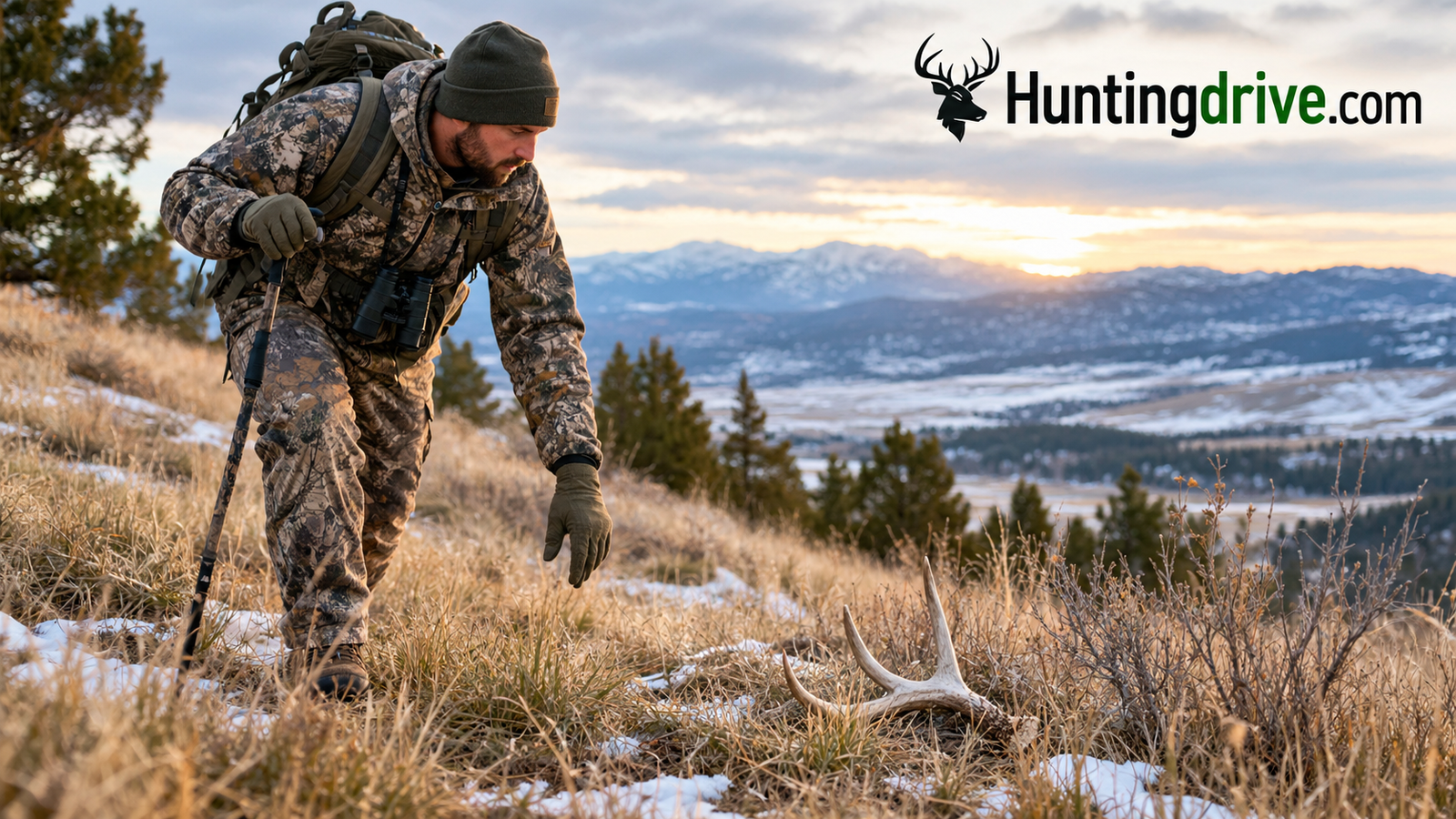
If you have ever watched someone walk slowly across a brushy hillside in the last weeks of winter with their eyes locked on the ground, you may have wondered what they lost. The honest answer is that they lost nothing at all. The deer did. Shed hunting is the pastime of searching woods, fields, canyons, and mountain basins for the antlers that bucks, bulls, and other members of the deer family drop naturally each year. There is no tag to draw, no season to wait on, and no weapon involved. All you need is a pair of good boots, a bit of patience, and a sharp eye for a curve of bone that does not quite match the sticks around it.
It is easy to understand why the habit has spread so quickly. Shed hunting fills the quiet gap between the end of one hunting season and the start of the next. It gets you outside when the snow is melting and the first green shoots are pushing up. It teaches you more about how animals actually use a piece of land than most days with a rifle or bow ever will. And every so often, a single fallen antler turns an ordinary walk into a story you will tell for years.
Do not confuse it with snipe hunting, the old camp prank where a newcomer is sent into the dark with a sack and a flashlight. Shed hunting is completely real, and the prize is something you can hold, measure, and hang on a wall. In this guide, we will walk through everything a beginner needs to know: how the shed cycle works, where and when to search, which gear actually earns its place in your pack, how dogs fit in, what the law expects of you, and what to do with the antlers once they are in your hands.
The quick answer
Shed hunting is the outdoor activity of searching for antlers that animals such as whitetail deer, mule deer, elk, and moose have naturally dropped. It usually takes place from late winter into spring, requires no hunting license in most places, and is done on foot, often with a dog, binoculars, and a lot of patience.
What shed hunting actually is
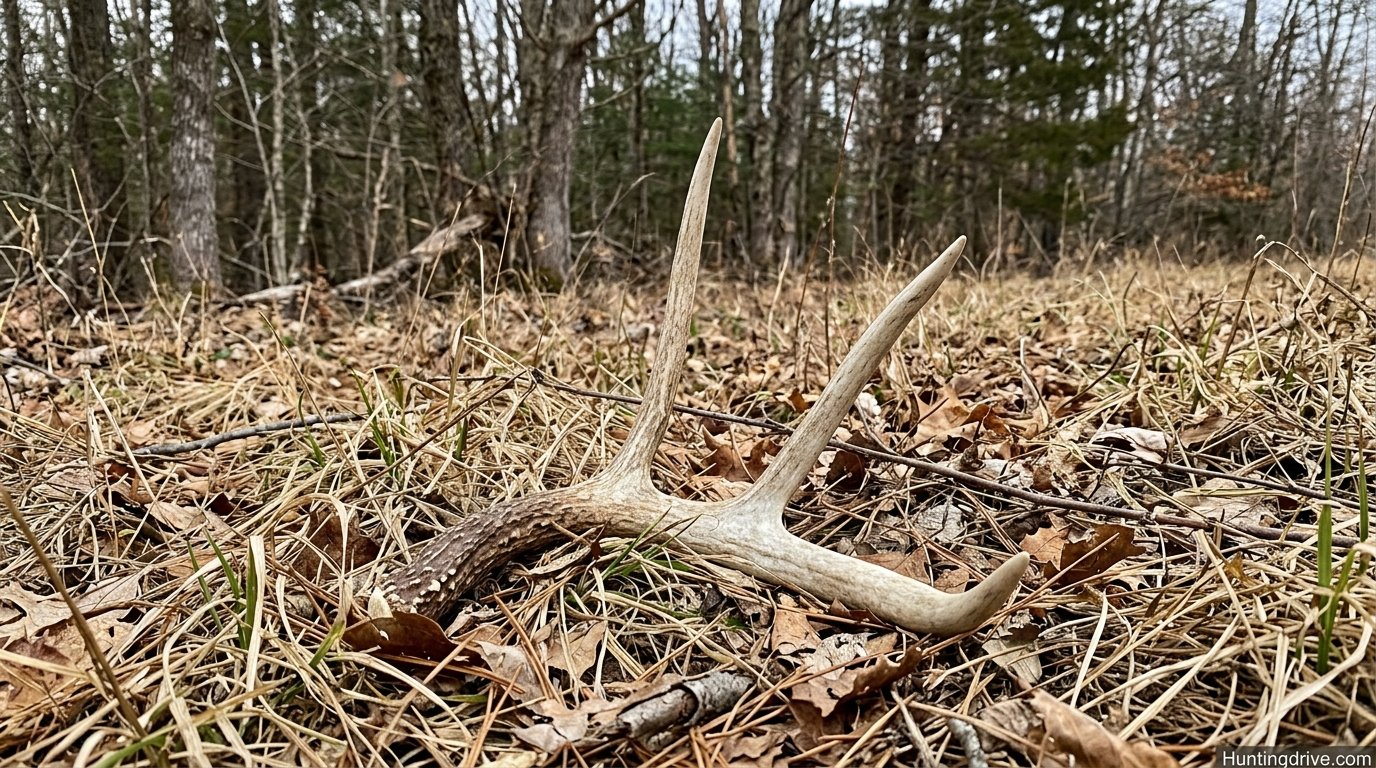
At its simplest, shed hunting means walking the places where antlered animals live and looking for antlers they have let go of. These antlers are called sheds, and the animals that drop them are not harmed in any way. Dropping antlers is a normal part of their yearly biology, the same way a tree drops its leaves. By the time most people head out looking, the animals have already moved on with their lives and are busy regrowing a new set.
The activity goes by a few names. Some people say antler hunting, others say shed hunting, and out west you will hear folks talk about picking up horn, even though the correct word is antler. Whatever the label, the idea is the same: you are collecting something the wild has already finished with.
Why people do it
The motivations are surprisingly varied, and most shed hunters have more than one.
- Scouting. A shed tells you that a particular buck or bull survived the season and where he spent part of the winter. Hunters use that information to plan the following fall.
- Exercise and fresh air. A day of grid-walking a hillside is a real workout, and it happens at a time of year when many people are tired of being indoors.
- The thrill of the find. Spotting a white tine tip poking out of the grass from fifty yards away is a genuine rush, and the feeling does not fade with experience.
- Collecting and crafting. Antlers become lamps, knife handles, chandeliers, dog chews, wall mounts, and jewelry.
- Time with family and dogs. Shed hunting is easy for kids to join, and it is one of the best outlets a retrieving dog can have in the off-season.
Shed hunting versus hunting
Shed hunting is not hunting in the legal sense. You are not pursuing or taking an animal, so in most places you do not need a hunting license to pick up a naturally dropped antler from land where you are allowed to be. That said, rules vary by state and by land manager, and we will cover that carefully in a later section. If you are curious about the other side of the sport and want to build a foundation in the field, our guide on how to get into hunting is a good companion to this one, because the woodcraft you develop searching for sheds carries over directly.
Start with the basicsShop a few essentials for your first season of antler hunting.
View shed hunting gear on AmazonWhy antlers fall off: the science behind the shed
To find antlers well, it helps to understand why they appear on the ground in the first place. Antlers are not horns. Horns, like those on a bighorn sheep or a bison, are permanent and grow continuously from a bony core covered in keratin. Antlers are solid bone that grows from the skull each spring and summer, and then is shed and regrown every single year. They are among the fastest-growing tissues known in any mammal, and the whole cycle is driven by daylight and hormones.
The yearly antler cycle
Growth begins in spring as days lengthen. Bone grows from small bumps on the skull called pedicles, wrapped in a soft, blood-rich covering called velvet. Depending on the species, antlers can add a remarkable amount of length in a single day during peak growth. Elk, the heavyweights of the group, are often described as growing roughly an inch a day at their fastest.
As summer fades into early fall, rising testosterone causes the velvet to dry up and the bone underneath to harden. The animal rubs the velvet off, revealing the polished bone that hunters see in the fall. The antlers are now weapons and display pieces, used for sparring and for impressing does during the rut.
What triggers the drop
After the breeding season, testosterone levels fall sharply. That change signals specialized cells to begin dissolving a thin layer of bone at the base of each antler, right where it meets the pedicle. The connection weakens until it can no longer hold the weight of the antler. Eventually, a jump over a fence, a brush against a branch, or even a simple shake of the head is enough to snap the last connection, and the antler falls away. This process is called abscission, and it is the same general mechanism a plant uses to drop a leaf.
The drop itself is rarely dramatic. Many bucks lose both sides within a day or two of each other, but it is common for one side to fall first and the other to hang on for a few days or even weeks. That is one reason why single sheds are far more common than matched pairs.
Good to know: Because the drop is driven by hormones, the timing depends on the animal’s age, health, nutrition, and the severity of the winter. A stressed or injured buck often drops earlier than a healthy one, and older mature bucks tend to shed sooner than young ones.
What happens to sheds afterward
Antlers are packed with calcium, phosphorus, and other minerals, and the wild knows it. Mice, squirrels, porcupines, and other rodents gnaw on fallen antlers to supplement their diets. Deer themselves will chew sheds on occasion. In rich habitat, a shed can be reduced to a chewed stub in a year or two, and in the right conditions it can vanish almost entirely. This is one of the strongest arguments for getting out early in the season: the competition for your finds is real and it works around the clock.
Learn the biologyPick up a field guide to better understand the animals you are tracking.
Browse deer and wildlife guides on AmazonWhich animals drop antlers (and what their sheds look like)
Whitetail deer get most of the attention, but the family of antlered animals is wider than many beginners realize. Knowing what you are likely to find where you live shapes everything from your search strategy to the gear you carry.
Whitetail deer
Whitetails are the most widespread shed target in North America, found from the northern woods down through farm country and into the Southeast. Their sheds tend to be slender and curved, with tines rising off a main beam. A good whitetail shed can be as small as a few inches or as large as a hefty main beam with several long points, and because the animal is so common, finds are possible in nearly every county where deer live.
Mule deer
Mule deer live across the West in open country, rocky hills, and sagebrush flats. Their antlers fork instead of branching off a single main beam, giving them a distinctive Y-shaped look. Mule deer sheds can be heavy, and the open terrain means a good pair of binoculars pays off quickly.
Elk
Elk sheds are the prize that draws many people to the mountains each spring. They are long, heavy, and often dark on the outside with pale tips. A single bull elk shed can weigh many pounds, and the sheer size makes elk antlers a bigger target than whitetail antlers, though the country they live in is usually much steeper and more demanding.
Moose and caribou
In the far north, moose drop massive palmate antlers, while caribou, the only member of the deer family where females regularly grow antlers, drop theirs on a different schedule. Hunters in those regions enjoy some of the largest shed finds anywhere, but access and logistics make this a more specialized pursuit.
A quick note on pronghorn: Pronghorn antelope do not shed their antlers because they do not have true antlers. They shed the outer sheath of their horns each year, which is a different thing and is collected far less often.
Quick comparison of the main species
| Animal | Typical habitat | Shed look | Difficulty to find |
|---|---|---|---|
| Whitetail deer | Woodlots, farmland, river bottoms, swamps | Slender, curved, with tines off a main beam | Moderate to hard in thick cover |
| Mule deer | Open West, sage flats, rocky slopes | Forked, Y-shaped, often heavy | Moderate; open ground helps |
| Elk | Mountain basins, meadows, timber edges | Long, heavy, dark with pale tips | Hard because of steep terrain and distance |
| Moose | Wetlands, boreal forest, willow flats | Wide and palmate | Hard, remote access |
| Caribou | Tundra and northern forest | Long, swept back, heavily branched | Hard, remote access |
See fartherA good pair of binoculars makes open-country shed hunting far more productive.
Compare binoculars on AmazonThe best time to go shed hunting
Timing is the single biggest factor separating a productive day from an empty one. Go too early and the antlers are still firmly on the bucks. Go too late and the rodents have cleaned up, the grass has grown tall, and the best finds are already gone. The sweet spot depends on your species, your region, and the kind of winter you just had.
General timing by species
The ranges below are rough guides. Shedding happens earlier in some regions and later in others, and a hard winter can push the schedule back by weeks. Your local wildlife agency and nearby trail camera photos are the best way to narrow it down.
| Animal | Typical drop window | Notes |
|---|---|---|
| Whitetail deer | Roughly January through March | Mature bucks tend to drop first; northern deer may hold on longer |
| Mule deer | Roughly late winter into early spring | Heavily influenced by winter severity and elevation |
| Elk | Roughly March through April | Older bulls usually shed earlier than younger ones |
| Moose | Roughly late fall through winter | Mature bulls tend to drop earliest |
| Caribou | Varies; bulls earlier, pregnant cows later | Cows often carry antlers through calving |
Let the animals tell you
The best sign that shedding has begun is a trail camera photo of a buck missing one side. Many experienced shed hunters run cameras on feeding areas through the late season and start searching only once they see antlerless bucks. It saves time and reduces unnecessary pressure on the animals.
Early or late in the window?
There is a good argument for each approach. Going early gives you a head start on rodents and other hunters, but the risk is that you spend a day searching ground that is simply not ready. Going later guarantees that most sheds are on the ground, but vegetation grows quickly in spring and can hide even a large antler. Many people split the difference by scouting early and then focusing their efforts as soon as the first reports of sheds begin to come in.
Connecting sheds to the season ahead
Finding a shed also gives you a head start on next fall. If you know where a buck spent the winter, you can plan trail camera placements, stand sites, and food plots with a lot more confidence. Make sure you know the dates that matter once the weather turns, and check our guide to when deer hunting season opens to line up your preparation with the calendar.
Know when the drop beginsA trail camera on a late-season feeding spot tells you when to start walking.
Shop trail cameras on AmazonWhere to look: reading the landscape like a deer
New shed hunters often make the mistake of walking everywhere equally. Experienced ones do the opposite: they think about where animals spend their time in late winter, and they focus their effort on a small number of high-value places. In winter, animals have two priorities, which are conserving energy and finding food. Almost every productive search area is a result of one or both.
Winter feeding areas
Late in the season, food sources are limited and bucks are in rough shape after the rut. They concentrate on whatever calories are available: leftover corn, standing soybeans, winter wheat, browse in clear cuts, and acorns in oak flats. Antlers often drop where animals are feeding because the animals spend so many hours there, so these areas are always a good place to begin.
Bedding areas
Bucks lie down for most of the day. Because the pedicle connection is weak by this point, a buck standing up from a bed or shaking after a nap can shed an antler on the spot. Bedding cover, especially on south-facing slopes that catch the winter sun, can be one of the most productive places to search, though it needs to be approached carefully so you do not push animals out of their resting places.
South-facing slopes and sunny pockets
In cold climates, deer and elk seek warmth. South-facing slopes melt snow earlier and hold more sun, which means more exposed food and more comfortable beds. In mountain country, these slopes often hold the winter range, and you can find well-used trails crossing them from top to bottom.
Travel corridors and obstacles
Anywhere an animal has to jump, climb, or squeeze through something is a good place for an antler to be jarred loose. Look closely at:
- Fence crossings, particularly low spots where deer routinely jump
- Creek and ditch crossings
- Logs and downed trees along game trails
- Saddles and benches that funnel travel between bedding and feeding
- Gaps in thick cover where trails converge
Edges and transitions
Animals love edges, where one type of cover meets another. A field edge against a woodlot, a thicket against a hayfield, or a hardwood ridge dropping into a conifer swamp are all places where movement is concentrated. Walk the edges slowly, then work a short distance into the cover on either side.
Cover that overlaps with other game
Plenty of the ground that holds winter deer also holds other game, and the skills transfer. Many upland hunters already know the thickets, field corners, and brushy draws that bird dogs love to work, and those same places can hold deer antlers in the off-season. If you are curious about that side of the outdoors, our overview of what upland hunting is shows how much the terrain overlaps.
Think like the animal: Ask yourself where you would feed, where you would rest, and what route you would take between them if you were hungry, tired, and trying to stay out of the wind. The answers often point directly to antlers.
Never lose your placeKeep track of the ground you have covered with a reliable handheld GPS.
Find a handheld GPS on AmazonGear worth carrying on a shed hunt
You do not need much to start shed hunting, which is part of the appeal. A few well-chosen items make the day more comfortable and more productive, though, and some are worth spending a bit more on because you will carry them for hours.
Footwear and socks
Comfortable, supportive boots are the foundation of everything. Late-winter ground is a mix of mud, snow, wet leaves, and frozen ruts, so waterproof boots with good ankle support are a smart choice. Equally important are the socks you pair them with. Wet, cold feet end a day early, and cheap cotton socks are the usual culprit. A good merino blend keeps you warm even when damp. If you want to compare options, our roundup of the best hunting socks is a good place to start.
Gloves
You will be reaching into brush, pushing through briars, and picking up antlers that may be wet or covered in mud. A thin, grippy glove with some water resistance is more useful than a heavy insulated one for most days. Our guide to the best hunting gloves covers a range of styles, and many of the same features that matter in the fall matter in a shed hunt.
Pack and carrying system
A small daypack is usually enough for whitetail country. Elk shed hunters in the mountains often prefer a pack with a frame that can handle heavy antlers. A good pack should hold water, snacks, a first aid kit, extra layers, and the sheds themselves, with compression straps so they do not shift while you walk.
Optics
Binoculars are one of the most valuable tools a shed hunter can own. They let you scan far-off slopes, read the details of shadows and shapes, and confirm or dismiss a find without walking a quarter mile to check it. Compact models are lighter and easier to carry, while larger ones gather more light.
Navigation and safety
Phone apps with offline maps, a handheld GPS, and a paper map as a backup all have a place. Add a headlamp, a lighter or fire starter, a small first aid kit, and a whistle if you will be far from the trailhead.
Quick gear checklist
- Waterproof, broken-in boots
- Moisture-wicking socks, with a spare pair
- Light gloves with good grip
- Layered clothing suited to the weather
- Daypack with water and snacks
- Binoculars
- Trekking pole or walking stick
- Map, GPS, or offline maps
- First aid kit and headlamp
- Blaze orange accent in areas where other people may be out
Carry it all comfortablyA good daypack makes long days on the hillside much easier.
See hunting packs on AmazonSearch techniques that actually work
Walking around hoping to stumble across an antler works about as well as you would expect. A little structure makes a big difference, and nearly every skilled shed hunter relies on the same basic habits.
Slow down, then slow down again
The most common mistake is moving too quickly. Antlers are often partly buried, tucked under grass, or broken up by shadows and sticks. Walk at about half the speed that feels natural and stop frequently to scan. It sounds painfully slow, but a slow search covers ground better than a fast one because your eyes are actually registering what they see.
Learn to see the shape, not the antler
You will rarely see a whole antler lying out in the open. More often, you will notice a small curve, a pale tip, a glint of white, or a shape that is too symmetrical to be a stick. Train yourself to look for these cues:
- A tine tip, which often looks like a smooth, polished point
- A curve that does not match any branch nearby
- A color or texture that stands out, such as a tan, brown, or white that looks different from wood
- Uniform thickness that tapers evenly, unlike most branches
Use the sun to your advantage
Low-angle light early and late in the day casts long shadows and highlights shapes in the ground. A shed that disappears at noon can stand out clearly at dawn or in the hour before dusk. Walk with the sun at your back when you can, so the light falls on what you are trying to see rather than glaring in your eyes.
Walk grids and lines, not wandering loops
Pick an area, define its edges, and walk it in overlapping passes, much like mowing a lawn. Keep the lines close enough that every part is seen at least twice from slightly different angles. Mark where you have been using your GPS track so you do not repeat yourself or leave gaps.
Glass first, then walk
In open country, scan from a high point before you commit. Take a few minutes at the top of a ridge to look across basins and slopes with binoculars. Even if you do not spot an antler, you will learn which areas look promising and where animals are using the ground.
Search both sides of travel obstacles
When you find one shed near a fence or creek crossing, search carefully on both sides. The matching antler may have dropped within a few yards, or the animal may have jumped and knocked the opposite side loose within the same short window. Matching sheds are often closer together than people think, but not always, so extend your search in widening circles.
Return to the same ground
Productive areas stay productive. The same funnels, beds, and feeding spots attract animals year after year, so revisit your best locations each season. You will start to notice small details that were invisible the first time through.
Beginner tip: If you feel like you are walking too slowly, you are probably doing it right. Your first few outings are for building your eye, not for covering miles.
Lighten the loadA trekking pole saves your knees and helps you probe brush and snow.
Shop trekking poles on AmazonShed dogs: a four-legged search team
Of all the tools available to shed hunters, a well-trained dog may be the most powerful. A dog’s nose can detect antlers that are hidden under leaves, buried in tall grass, or tucked into brush that your eyes would never penetrate. A dog also covers ground much faster than a person, and many owners say the shared work is the best part of the whole activity.
Which dogs make good shed dogs?
Almost any dog with a strong nose and a desire to retrieve can learn. Labs, golden retrievers, German shorthaired pointers, and many other sporting breeds do well, but plenty of mixed breeds and even small dogs have become excellent shed finders. The two traits that matter most are drive and a willingness to bring items back to you.
The basics of training
Most training programs follow a simple progression:
- Introduce the scent. Let the dog smell and carry a small piece of antler or a shed so they associate it with something positive.
- Start with easy retrieves. Toss the antler a short distance in plain view and reward the dog for bringing it back.
- Hide it. Place the antler in short grass, then in taller cover, then in brush, increasing the difficulty gradually.
- Add distance and variety. Move to new places so the dog learns to search rather than just remember where it was last time.
- Practice in the field. Plant a known antler before the walk so the dog gets a success early in the day.
Keep sessions short, upbeat, and rewarding. If the dog loses interest, you have probably asked too much too soon.
Responsible use of dogs
A dog that chases deer can push stressed animals off their winter range and burn energy they cannot spare. Keep your dog under good control, obey leash laws where they apply, and stay away from areas where animals are concentrated. Also keep an eye on paws, which can be cut by ice or sharp debris, and do not let the dog gnaw on antlers, since hard chewing can crack teeth.
Train for the fieldRetrieval dummies and training gear help your dog build skills before the season.
View dog training gear on AmazonReading what you find: antler anatomy and what a shed tells you
A shed is more than a trophy. It is a record of a single animal’s year, and once you know how to read it, every find becomes a small piece of information about the land you are searching.
The parts of an antler
Whether you are describing a find to a friend or trying to work out which side an antler came from, it helps to know the basic parts. The diagram below shows a typical whitetail-style shed.
What the details tell you
- Size and mass. Thicker beams and longer tines generally point to an older animal in good condition, though genetics and nutrition also matter.
- Number of points. More points often means a more mature animal, but it is not a perfect indicator of age.
- Color. A fresh shed is usually bright and dark on the outside with a creamy white base. Over time it fades to a chalky white or grey. Sun-bleached antlers that look weathered have been on the ground a long time, sometimes more than a year.
- Chew marks. Gnawing by rodents shows how long the antler has been exposed and how much competition there is in the area.
- Base and burr. A clean, rounded base with the rough ring intact is a sign of a natural drop. A broken or jagged base may mean the antler was snapped in a fight.
Left or right?
To work out which side an antler came from, hold it with the base down and the tines pointing away from you, as they would on a living animal. The brow tine should point forward and toward the center of the head, so if it points to your left, you are holding a left-side antler. Checking this helps when you are trying to match a pair or realize you only have half of a set.
Matching sets
When you find a left and right antler that clearly match in size, shape, and color, you have what hunters call a matched set. They are exciting, but they are less common than single sheds because the antlers often drop at different times and in different places.
Measure your findsA flexible tape makes it easy to record the size of every antler.
Shop antler measuring tapes on AmazonRules, laws, and ethics every shed hunter should know
Because shed hunting does not involve taking an animal, many people assume that anything goes. In reality, the rules are shaped by who owns the land, how the animals are managed, and what protections apply to wintering wildlife. Following them keeps access open and protects the animals you are there to enjoy.
Know the rules where you plan to search
Regulations differ widely. Some states and provinces have no restrictions at all, while others set seasonal closures on certain ranges to protect wintering animals, require special permits, or limit how many sheds can be collected. National parks generally prohibit removing antlers, and many wildlife refuges and some state management areas also restrict collection. Before you go, check the website of the state wildlife agency and the land manager for the area you plan to use. Because rules can change from one year to the next, do not rely on what you heard last season.
Get permission on private land
Private land is a great place to find sheds, but you need to ask first. Landowners are usually receptive when approached respectfully, especially when you offer to share what you find or help with tasks around the property. Walking on land without permission is trespassing, regardless of what you are looking for.
Protect wintering animals
Late winter is the hardest time of year for deer, elk, and moose. Their fat reserves are low, food is scarce, and every unnecessary movement costs energy. Repeatedly pushing animals out of bedding areas can have real consequences. Responsible shed hunters:
- Wait until animals have started moving to spring ranges if local guidance recommends it
- Stay out of areas with closures designed to protect winter range
- Keep a safe distance if they see animals and avoid pursuing them
- Keep dogs close and under control
- Avoid heavy foot traffic in known bedding areas
Leave no trace
Pack out what you pack in, stay on established trails where required, and avoid damaging habitat. Closing gates behind you, avoiding wet and muddy areas that can be easily scarred, and treating the land with respect helps keep it open for everyone.
Be a good neighbor
Popular areas can get crowded in the weeks when sheds begin to hit the ground. Courtesy goes a long way. Do not race for an antler another person is clearly approaching, and do not follow someone to their favorite spots. A friendly wave and a bit of space keep the experience enjoyable for everyone.
Stay organizedKeep notes on permissions, closures, and finds in a weatherproof notebook.
Shop waterproof notebooks on AmazonWhat to do with your sheds once you have them
There is a moment after you carry your first antler back to the truck when you realize you are holding something genuinely beautiful and have no idea what to do with it. Fortunately, the options are wide open.
Use them to plan your hunting
The most practical use for a shed is as scouting intel. A big shed from a particular drainage tells you that a mature animal wintered there. Combine that with trail camera images and observations over the spring and summer and you can build a solid plan for the fall. If you hunt from the trees, sheds can point you toward the best stand or saddle locations. Our explainer on what saddle hunting is shows how many hunters are using mobile setups to take advantage of exactly this kind of information.
Display and decorate
- Mount a matched pair on a plaque or a wooden base
- Build a rustic chandelier or lamp from a collection of sheds
- Hang a single large shed above a mantel or doorway
- Create a gallery wall with sheds from different seasons and places, each labeled with the date and location
Make something useful
Craftspeople turn antler into knife handles, bottle openers, buttons, pen blanks, drawer pulls, and jewelry. Small pieces of whitetail antler can become beautiful accessories with just a few tools.
Sell or trade
Some states allow the sale of naturally shed antlers, and there is a thriving market for them, particularly for large elk and moose sheds. Others restrict or prohibit sales. Check your local regulations before you list anything, and be honest about the condition of what you are offering, because buyers pay more for fresh, unchewed pieces.
Store them properly
Keep sheds somewhere dry, out of direct sunlight, and away from rodents. A plastic tub with a tight lid works well. Sun and weather will bleach and crack antlers over time, so treat finds you want to keep like any other cherished possession.
Show off your findsWall mounts and display plaques turn a good shed into a conversation piece.
Browse antler display mounts on AmazonCommon mistakes, safety, and building a lifelong habit
Every shed hunter makes the same early mistakes, and most of them are easy to avoid once you know about them. A few simple habits can also keep you safe and make the whole experience more enjoyable.
Mistakes beginners make
- Moving too fast. Speed is the enemy of a good search.
- Searching in the wrong places. Open fields with nothing to attract animals rarely hold sheds.
- Going out too early. If the antlers are still on the animals, you are wasting a day.
- Disturbing animals. Repeatedly flushing deer from winter bedding areas is hard on them and hurts your own future chances.
- Ignoring the weather. Cold, wet conditions can turn a pleasant walk into a risky one quickly.
- Forgetting to leave notes. Without a record of where you found things, it is hard to improve year after year.
Safety on the hillside
Shed hunting often takes you far from roads and into rough ground. Tell someone where you are going and when you plan to be back. Carry a charged phone, extra layers, water, and food. Watch for unstable ground, hidden holes, cold creek crossings, and early-season ticks and snakes in warmer regions. In areas where firearms may still be in use for other seasons or for predator control, a bit of blaze orange is smart, and in mountain country, always take avalanche and weather conditions seriously.
Pros and cons of shed hunting
Pros
- Needs very little gear to begin
- No hunting season or tag required in most places
- Great exercise and time outdoors
- Builds scouting knowledge for fall
- Fun for families and dogs
- Antlers can be displayed, crafted, or sold where legal
Cons
- Results can be unpredictable
- Weather and terrain can be harsh
- Rules and closures vary widely
- Competition for popular spots
- Easy to disturb wintering animals if careless
Build a routine that lasts
The best shed hunters treat the activity as a year-round hobby rather than a few frantic weekends. They run trail cameras through winter, keep notes on where animals travel, walk new ground in summer when antlers are growing, and review everything again before the next drop. If you are brand new to the outdoors and want to build the broader skill set, learning how to get into hunting gives you a roadmap that complements everything you learn on a shed hunt.
Be ready for anythingPack a compact first aid kit before heading into remote country.
Shop first aid kits on AmazonFrequently asked questions about shed hunting
What is shed hunting in simple terms?
Shed hunting is the activity of searching for antlers that deer, elk, moose, and similar animals have naturally dropped. It takes place mostly in late winter and early spring and does not involve harming or pursuing the animals.
When is the best time of year to go shed hunting?
The best window usually falls between late winter and early spring, but it depends on the species and your region. Whitetails generally drop between January and March, while elk tend to shed later in the spring. Trail camera photos of bucks missing antlers are the best signal that it is time to start searching.
Is shed hunting legal everywhere?
No. Many places allow it freely, but some states, parks, refuges, and wildlife management areas restrict or prohibit antler collecting, or close certain areas for part of the year to protect wintering animals. Always check with the land manager and your state wildlife agency before you go.
Do deer drop both antlers at the same time?
Sometimes, but not always. Many bucks lose both sides within a day or two, while others drop one side and carry the other for days or weeks. This is why single sheds are more common than matched pairs.
Do deer grow new antlers every year?
Yes. Antlers are shed and regrown annually. They begin growing again in spring and are fully hardened by early fall, ready for the breeding season.
What is the difference between a shed and a regular antler?
A shed is an antler that fell off naturally. Antlers taken from a harvested animal are usually still attached to a piece of the skull, which is why hunters often refer to them as skull-plate or attached antlers. Sheds have a rounded base where they separated on their own.
Can I find sheds without a dog?
Absolutely. Dogs help, but plenty of people find sheds using only their eyes, binoculars, and patience. Walking slowly, focusing on the right habitat, and searching in good light all make a big difference.
Why do I only find one side of a set?
Because the two antlers often drop at different times and different places. The other side may be nearby, but it can also be a long way off, or it may have been gnawed away by rodents. Searching both sides of fences and trails improves your odds of finding the second one.
Do mice and squirrels really eat antlers?
Yes. Antlers are rich in calcium and phosphorus, and rodents gnaw on them heavily. Over time, a shed can be chewed down significantly, which is one reason to get out early in the season.
Can I sell the antlers I find?
In many areas you can, but it depends on local law. Some jurisdictions allow sales of naturally shed antlers, while others restrict or ban it. Verify the rules where you live before you list anything for sale.
Does shed hunting hurt the animals?
It does not hurt them directly, but careless shed hunting can stress animals during the hardest time of year. Staying out of closed areas, keeping a distance, controlling dogs, and avoiding repeated visits to bedding areas helps protect them.
What gear should a beginner buy first?
Start with comfortable waterproof boots, good socks, light gloves, a daypack, and a pair of binoculars. Add a GPS or offline map app and a first aid kit. Everything else can wait until you know how you like to search.
Final thoughts: why shed hunting is worth your time
Shed hunting is one of the simplest and most rewarding ways to spend time in the outdoors. It asks very little of you in terms of money or experience, yet it teaches you to read the land, understand animal behavior, and notice small details that most people walk right past. Along the way, it gives you a reason to keep moving through the lull of late winter, and every antler you find is a small prize that came from nothing more than paying attention.
Start by learning the basics of the shed cycle, pick a few promising areas near you, and go slowly. Respect the animals, the land, and the people who share it. Keep notes, keep learning, and keep going back. Before long, you will find that a pale curve in the grass stops being a surprise and becomes something you expect, and that is when the real fun starts.
Ready to get out there? Put together a basic kit, choose a day when the weather is good, and take your first walk. The antlers are out there waiting.
Ready for your first search?Gear up with everything you need for a successful season of antler hunting.
Shop shed hunting essentials on Amazon