
What Is Saddle Hunting? A Complete Guide to Hunting from a Tree Saddle
Saddle hunting has quietly changed how a lot of people hunt deer, turkey, and bears from the trees. This guide explains what it is, how the gear works, how it compares with a traditional treestand, and what you need to know before you try it.
What Saddle Hunting Actually Is
The short answer
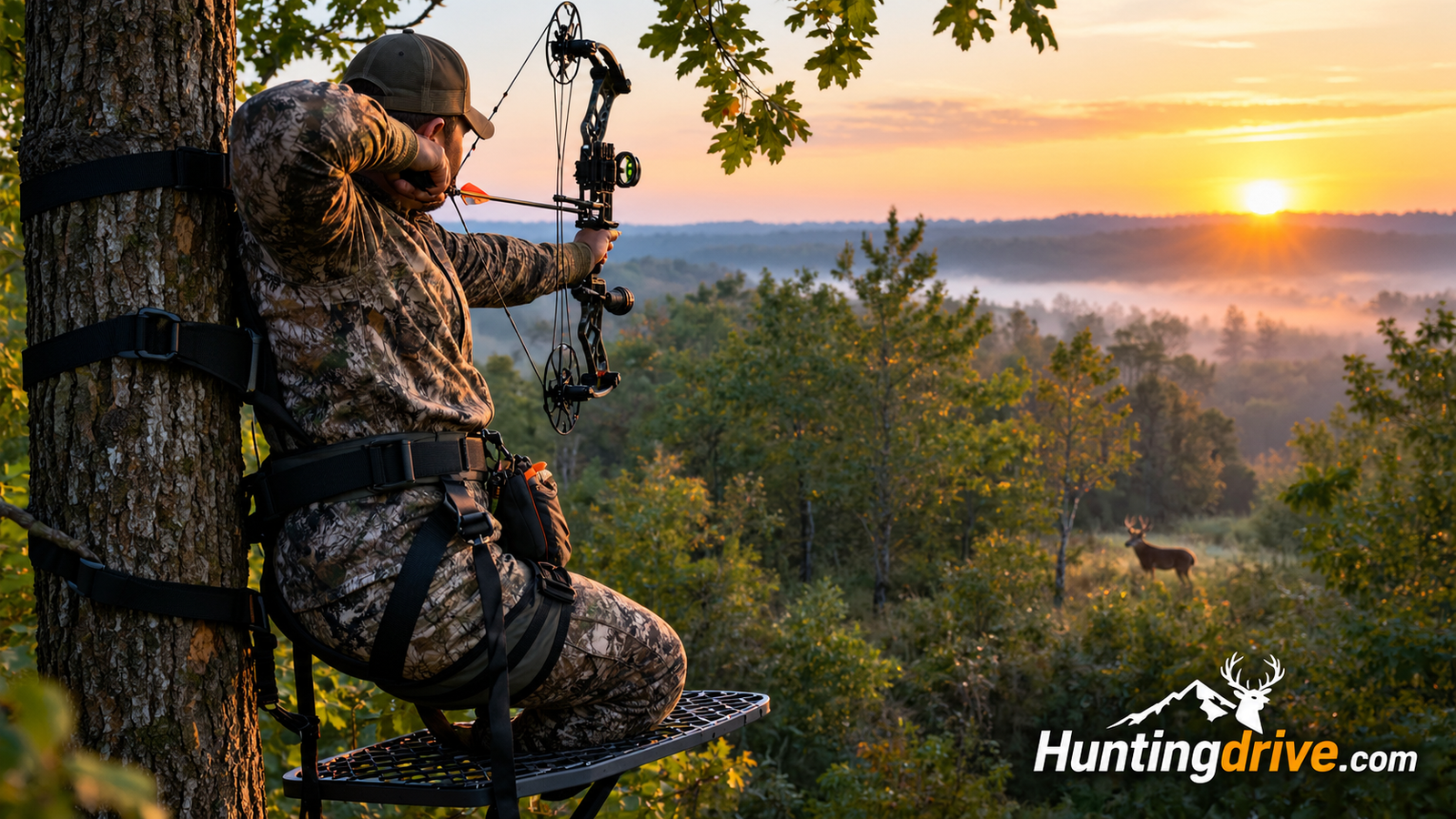
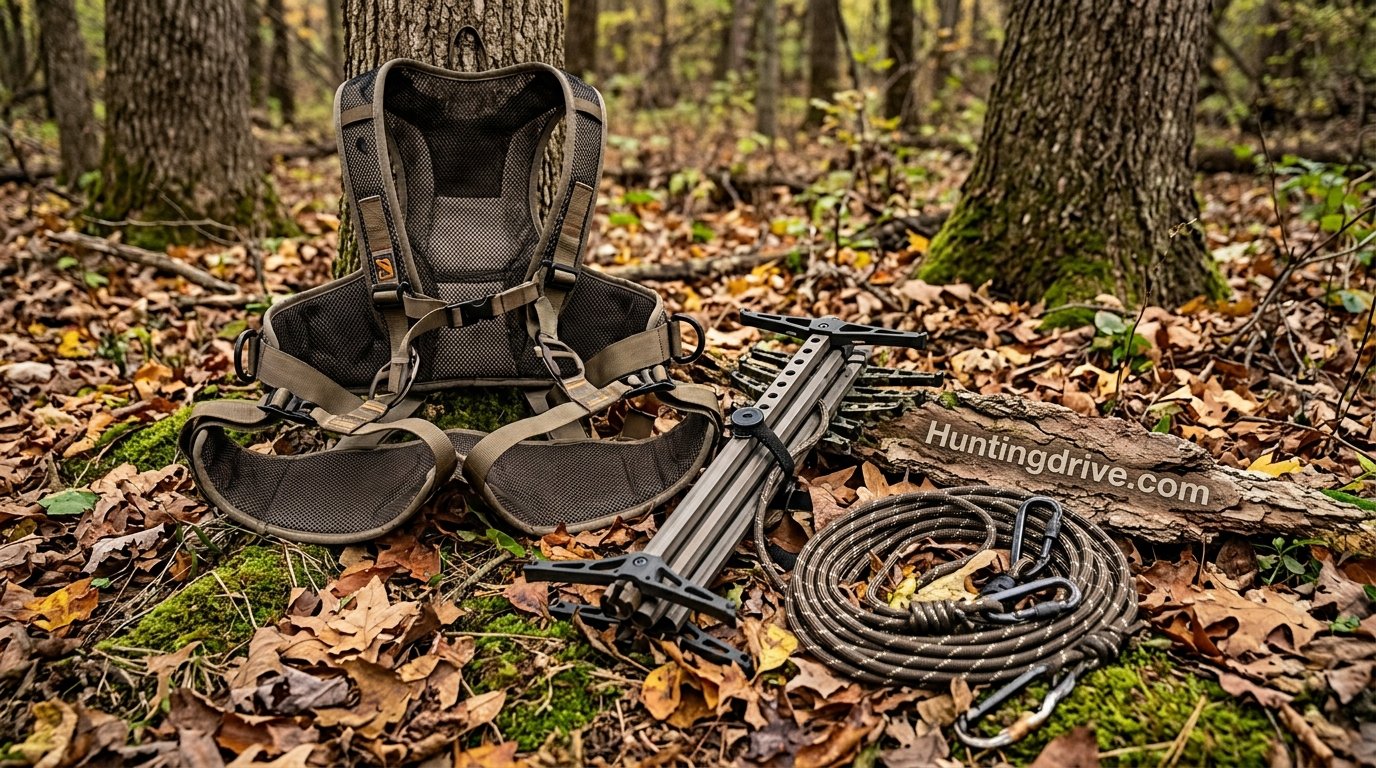
Saddle hunting is a way of hunting from a tree in which you wear a harness-style seat, called a tree saddle, and attach it to the trunk with an adjustable tether instead of sitting on a fixed seat. You climb with lightweight sticks or aiders, stand on a small platform, and lean back into the saddle to hunt hands-free. The whole kit is compact enough to carry on your back, which is why it has become so popular with mobile hunters.
If you have ever watched a tree trimmer work high in a canopy, you have already seen the idea. They wear a supportive harness, they are tied to the tree, and both hands are free to work. Saddle hunting borrows that concept and aims it at a different job: sitting or standing quietly at height, waiting for an animal to walk into range.
The word “saddle” can be a little misleading, so it helps to picture it clearly. A tree saddle is not a seat that bolts to a tree. It is a wearable piece of gear, closer to a padded sit harness than a stand. It wraps around your waist and legs, and it carries your weight through a bridge and tether to the tree. When you lean back, the tether goes taut, and the saddle holds you in place. When you stand up on your platform, you can face any direction because you are not locked into a fixed seat.
What it feels like in the tree
Most people describe the first hour as strange and the second hour as surprisingly comfortable. Your weight is spread across the saddle rather than concentrated on a hard seat, and your legs are free to bend, straighten, or shift. You can sit with your feet on the platform, stand and lean against the saddle, or even rotate around the trunk to cover a shot you did not expect. That freedom is the single biggest selling point.
It also changes the way you think about trees. Instead of hunting only the straight, branch-free trunk where a ladder stand would fit, you can hunt crooked trees, leaning trees, and trees with branches in the way, as long as you can climb them safely and find a clean line to the trunk. For anyone who has ever wasted a morning because the “perfect” tree was twenty yards from where the deer actually travel, that is a big deal.
The vocabulary you will keep hearing
Saddle hunting has its own language, and the terms come up constantly in forums, videos, and gear reviews. Here are the ones worth knowing before you go any further:
- Tree saddle: the harness-style seat you wear. It is the heart of the system.
- Bridge: the connection between the saddle’s attachment points and the tether, which allows the saddle to carry your weight comfortably.
- Tether: the adjustable line that connects you to the tree at hunting height. Its length decides how far you can lean out and how you sit.
- Lineman’s rope: a rope that wraps around the trunk and clips to both sides of your saddle, keeping you attached to the tree as you climb.
- Lifeline: a separate safety line that stays connected to you from the ground up and back down again.
- Climbing sticks and aiders: the lightweight tools you use to climb. Sticks are rigid steps, while aiders are flexible ladders of webbing or rope.
- Platform: the small perch you stand or sit on, usually foldable and light.
- Friction hitch: a knot, often a prusik, that grips a rope under load and slides when unweighted, allowing you to adjust length.
None of that has to be memorized today. By the end of this guide each piece will have context, and the gear list in the middle of the article puts everything into one place.
Where Saddle Hunting Came From
Nobody woke up one morning and invented saddle hunting. It grew out of equipment that already existed in other trades and sports, and it spread because hunters found it solved real problems.
Borrowed from tree work and climbing
Arborists have used climbing saddles for a long time. They are built to carry a person’s weight for hours while leaving the hands free. Hunters who also climbed, worked as tree trimmers, or spent time around rope access noticed the overlap pretty quickly. If a saddle can hold a working climber at the top of an oak all day, it can hold a hunter on a quiet October morning.
The first hunting setups were often home-built or adapted. Hunters took climbing saddles, added a rope, and figured out a platform that was small enough to carry. Early forum threads were full of improvised solutions and a fair number of lessons learned the hard way. Over time, manufacturers started building saddles that were designed specifically for hunting, with quieter fabrics, pockets for calls and rangefinders, and padding that supports a long sit.
Why interest grew
Several things happened at once. Public-land hunting got more popular, and hunters on public land often cannot leave a stand in the woods. Anything you carry in and carry out has to be light. A traditional hang-on stand and its climbing aids can weigh a lot, while a saddle and a pair of platforms can be a fraction of that.
At the same time, more hunters embraced the idea of staying mobile. Deer change their patterns with the wind, the food source, the weather, and the hunting pressure. A permanent stand can be perfect for two weeks and useless for the rest of the season. A saddle hunter can take a stand location, move in an hour, and be set up somewhere new before the wind has a chance to blow the morning’s plan apart.
The community effect
Social media and video platforms did the rest. Hunters began sharing short clips of silent setups, tight shot windows from unlikely trees, and easy walking exits at the end of the day. The gear got more refined as the community got bigger. Specialized companies sprang up, existing outdoor brands noticed, and the idea moved from a niche habit to something you can find in a mainstream outdoor store.
Today there is a healthy ecosystem of saddles, platforms, ropes, sticks, and accessories. There is also a healthy amount of debate, which is a good sign. People care about getting the details right, and that is especially important when the activity involves hanging from a tree.
How a Tree Saddle Actually Works
The easiest way to understand a saddle is to follow the chain of connections from your body to the tree. Every link in that chain matters, and every link is something you can inspect, replace, or upgrade.
The chain, from body to bark
Start at the saddle itself. It wraps around your waist and thighs and has attachment points, usually on each side of your hips. From those points, a bridge runs across the front of your body. The bridge is what your tether connects to, and it is what lets your weight hang comfortably instead of pulling your hips into an awkward angle.
From the bridge, the tether runs to the tree. At hunting height, it wraps around the trunk and returns to you, often through a friction hitch or a mechanical adjuster. If you shorten the tether, you sit closer to the tree and stand more upright. If you lengthen it, you sit further out, with more of a recline. Most hunters adjust it slightly during a hunt to stay comfortable or to change their shooting position.
Three ways you can be positioned
- Standing: your feet are on the platform, the tether has a little slack, and you are upright. This is the typical shooting position.
- Leaning: you shift your weight back into the saddle and let the tether take the load. Your legs are free to relax.
- Sitting: you let your weight settle into the saddle, bend your knees, and rest your feet on the platform. This is the typical waiting position.
Moving between these positions is quiet and quick once you have practiced. Most new saddle hunters spend a few hours at ground level or low in a tree getting comfortable with the transitions before they ever go up high.
Why the tether geometry matters
The angle of the tether has a real effect on how the saddle feels and how you shoot. A tether that is too long lets you swing out from the trunk and can leave you in an awkward position. A tether that is too short pins you tight against the tree and limits your movement. The sweet spot is usually just long enough that you can lean comfortably and shift your feet without the line going slack or tight in unexpected ways.
Many hunters also use a small shooting rail or a bow hanger and learn to set up their platform so the trunk is slightly to one side of their dominant arm. That way the tree does not interfere with the draw or the swing. It is one of those details that you only appreciate after you have missed a shot opportunity because the trunk was in the wrong place.
A note on setups: different manufacturers use different connection systems, and the terms vary a little from brand to brand. Always follow the instructions that come with your specific saddle, rope, and platform, and do not mix components in ways the maker does not approve.
Saddle Hunting vs. Other Types of Treestands
The honest answer to “is a saddle better than a stand?” is that it depends on how you hunt. A saddle is not a replacement for every other option. It is a different set of tradeoffs, and the right choice comes down to where you hunt, how far you walk, and how often you move.
A side-by-side look
| Feature | Tree saddle | Hang-on stand | Climbing stand | Ladder stand |
|---|---|---|---|---|
| Carry weight | Very light | Moderate | Heavy | Not portable |
| Mobility | Excellent | Fair | Good | Poor |
| Setup noise | Low once practiced | Moderate | Moderate to high | High |
| 360-degree shooting | Easy | Limited | Limited | Limited |
| Tree choice | Most trees, including crooked ones | Straight trunks | Straight, branch-free trunks | Straight trunks |
| Learning curve | Steeper | Moderate | Gentle | Gentle |
| Long-sit comfort | Good once dialed in | Fair | Fair to good | Good |
Where a saddle shines
If you hunt public land, walk in a long way, or like to change locations with the wind, a saddle is hard to beat. The weight savings alone can change how far you are willing to go. You also get an edge when the only decent tree at a pinch point is awkward, because the saddle does not care that the trunk leans or that there are branches on one side.
Saddles are also good for hunters who care about stealth. A lightweight, quiet setup is easier to place without spooking nearby deer, and the small footprint of a platform and sticks tends to make less noise than bolting or strapping a large stand to a trunk.
Where a traditional stand still wins
A ladder stand or a big comfortable box blind is the better pick when you are taking a kid hunting, hosting a guest who has never been in a tree, or hunting a food plot you plan to sit on all season. A permanent, roomy seat is easy and forgiving. If someone in your group has a bad back or limited mobility, a saddle may not be the most comfortable option.
If you are new to the entire idea of hunting, a simple, stable setup helps you focus on the hunt rather than the gear. Our guide on how to get into hunting covers the foundations so you know what to prioritize first. Many hunters add a saddle later, after they are comfortable with the basics.
The Core Gear List for Saddle Hunting
A saddle kit looks simple from the outside, but there are several pieces that all need to work together. The list below covers the essentials. You can start with a basic version of each and upgrade as you figure out what you like.
What goes in the pack
| Item | What it does | What to look for |
|---|---|---|
| Tree saddle | Carries your weight and connects you to the tree | Good fit, supportive padding, quiet fabric, clear manufacturer ratings |
| Tether and bridge | Sets your hunting position and lean angle | Adjustability, rated materials, easy-to-learn system |
| Lineman’s rope | Keeps you attached to the tree while climbing | Appropriate length, rated rope, reliable adjustment method |
| Lifeline | Maintains a connection from the ground up | Rated line, secure friction hitch or ascender |
| Climbing sticks or aiders | Gets you up the tree | Light weight, stable steps, quiet attachment |
| Platform | Gives your feet a place to stand | Fold-flat design, solid grip, low noise |
| Carabiners and connectors | Link the system together | Locking gates, load ratings printed on the body |
| Gear hanger or pouch | Keeps your bow, gun, and pack within reach | Secure hold, quiet material, easy access |
Extras that make a difference
- A dedicated backpack: a pack that carries sticks and a platform without rattling is worth the money.
- Helmet or hard hat: some saddle hunters wear a lightweight climbing helmet, especially on steep or cluttered trees.
- Trimming tools: a small hand saw or pruner clears shooting lanes quietly.
- Gloves and a good knife: useful for handling rope and cutting cord when needed. See our roundup of the best hunting gloves for ideas.
- Headlamp: a hands-free light is essential for walking in and climbing out in the dark.
A word on ratings: every load-bearing part of your system should carry a clearly stated rating from its maker. Avoid unrated hardware, and never repurpose gear for something it was not designed to do.
How to Choose Your First Tree Saddle
Picking a saddle is a bit like picking a pair of boots. The best one on paper may not be the best one on your body. Spend time understanding what matters, then try to sit in a few before you commit.
Fit comes first
A saddle that does not fit will not be comfortable, no matter how nice it looks. Waist and leg openings should be snug without pinching. Most makers offer a few sizes, and the sizing charts are usually based on waist measurement and sometimes inseam. Measure yourself before ordering, and if you are between sizes, read reviews from people with a similar build.
Pay attention to how the saddle feels when you add layers. A fit that is perfect in a T-shirt in August may be too tight over insulated pants in December. If you hunt in cold weather, size for your winter layers and use adjustability to tune it down for warmer days.
Support and padding
Your weight sits in the saddle for hours, so padding matters. Some saddles use a firm foam seat, others use a mesh or suspended design, and others use a combination. Firm foam tends to support better on long sits, while lighter designs save weight and pack smaller. If you have a sensitive back or hips, favor a design with broader support under the thighs.
Weight and packability
One of the big appeals of saddle hunting is a lighter load. If you plan to hike far, compare weights, but do not sacrifice comfort for the sake of a few ounces. A saddle you cannot sit in for three hours is a saddle you will stop using.
Noise and fabric
Fabrics vary a lot. Some are soft and nearly silent, while others make a swishing sound against your clothing. Listen to the material before you buy if you can. A quiet fabric helps you stay still and stay hidden.
Questions worth asking before you buy
- Does the saddle have a clear, published weight rating, and does it exceed my body weight with all of my gear?
- Is the system built around a bridge and tether I can adjust easily while seated?
- Are there pockets and attachment points for the things I carry, such as a rangefinder, calls, and a release aid?
- Does the maker provide clear instructions or training material?
- Can I return or exchange it if the fit is wrong?
Budget thinking
Saddles come in a wide range of prices, from simple entry-level options to premium, feature-rich designs. A mid-range model is often the sweet spot for first-timers. It usually has proper padding, decent adjustability, and a solid reputation, without the extras you may not need. Remember that the saddle is only part of the cost. Sticks, a platform, rope, and safety gear all add to the total, so plan the whole kit rather than just the seat.
Climbing Systems: Sticks, Aiders, and Platforms
Getting up the tree is half of the saddle hunting experience. Your climbing system has a big effect on how quiet you are, how much you carry, and how safe you feel on the way up. There are a few common approaches, and each has its fans.
Climbing sticks
Sticks are short, rigid sections with a single step each. You attach them one at a time as you climb, stacking them up the trunk. They are stable, and many hunters like the solid feel under their boots. The tradeoff is weight and bulk. A set of sticks takes up room on your pack and can clank if it is not secured properly.
Some hunters use a method where they place a stick, climb it, and then place the next one above them while staying connected to the tree. The details vary by system, and the technique takes practice. The key point is that you remain attached to the tree at every stage.
Aiders
Aiders are flexible ladders made from webbing or rope with loops or steps. They hang from a point above you and are very light and compact. Aiders are popular with hunters who want to cut weight, because a set can fold up to almost nothing. They take more getting used to, because the steps move under your feet rather than staying fixed against the trunk.
Platforms
Once you are up, a platform gives you a place to stand. They come in a range of sizes and shapes, and many fold flat against your pack. Some wrap around the trunk for extra stability. Others are simple and minimal. A bigger platform is more comfortable but heavier, while a smaller one is easier to carry but can be tiring if you stand for hours.
| Option | Strengths | Tradeoffs |
|---|---|---|
| Climbing sticks | Stable, solid footing, intuitive | Heavier, bulkier, can rattle |
| Aiders | Extremely light, packs very small | Less stable, takes practice |
| Large platform | Comfortable for long standing | More weight to carry |
| Small platform | Light and compact | Can tire your legs |
Tree selection still matters
Saddles are forgiving, but they are not magic. Look for a healthy, living tree that is thick enough to be sturdy and has no obvious rot, loose bark, or dead limbs overhead. Dead branches, sometimes called widowmakers, are a real hazard. Check above you before you climb, and avoid trees with anything that could break loose.
Safety Essentials Every Saddle Hunter Should Know
Hunting from a height carries real risk, and saddle hunting is no exception. The good news is that a well-run saddle system can be very safe. The bad news is that the safety comes from your habits, not from the gear alone. Read this section carefully and treat it as the starting point, not the last word.
Important: this guide is general education. Always follow the manufacturer’s instructions for your exact equipment, and consider taking an in-person class or learning from an experienced saddle hunter before climbing high.
Stay connected, from ground to ground
The most important principle is simple: you should be connected to the tree, or to a safety line attached to it, from the moment your feet leave the ground until they are back on it. Many accidents happen during climbing, transitions, and descents, not while sitting still. That means no unclipped moments when you are changing tools or adjusting gear.
Practice low before you go high
Spend time at a low height, only a few feet off the ground, learning the system. Practice sitting, standing, leaning, adjusting your tether, and going through all the steps of getting in and out. Do this until it feels automatic. A mistake at three feet is a lesson, but the same mistake at twenty feet can be life-changing.
Inspect everything, every time
- Check your rope and webbing for fraying, cuts, glazing, or fuzzy patches.
- Examine stitching on the saddle and on any straps.
- Test carabiner gates to make sure they close and lock.
- Look for corrosion, cracks, or bends in metal parts.
- Retire any item that shows damage or that has been through a significant fall.
Know the limits of your gear
Check the weight rating on every component, and remember to include your clothing, pack, and weapon. Do not guess. If a piece of hardware does not list a rating, replace it with one that does.
Watch the conditions
Wet bark, ice, and high winds can change the safety picture quickly. Rain makes trunks slippery and makes knots behave differently. Strong wind can make a tree sway in ways that are uncomfortable and unpredictable. If conditions look sketchy, it is perfectly fine to skip a sit.
Be ready for the unexpected
- Tell someone where you are hunting and when you expect to be back.
- Carry a charged phone and consider a whistle or other signaling device.
- Know how you would get down if something went wrong, such as a dropped tool or a tangled rope.
- Take any numbness, tingling, or dizziness seriously. Prolonged hanging in a harness can cut off circulation, so shift position often and come down if you feel unwell.
A quick pre-climb checklist
| Check | Why it matters |
|---|---|
| Tree health | Dead or rotten trees can fail without warning |
| Overhead hazards | Dead limbs can fall during climbing or in the wind |
| Gear condition | Damaged rope or hardware can fail under load |
| Connections | Every carabiner should be locked and every knot dressed |
| Weather | Wet, icy, or windy conditions raise the risk |
| Plan | Someone should know where you are and when you will return |
Hunting Tactics That Work From a Saddle
The gear is the entry ticket, but the real payoff is how you hunt. A saddle changes your tactics in ways that are easy to underestimate until you try them.
Hunt the moment, not the stand
Because your setup is light and quick, you can respond to what is happening right now. Fresh sign, a change in wind, a new food source, or a trail camera photo from last night can all send you to a new tree. Many saddle hunters scout in the afternoon and hunt the same evening, which puts them on active movement instead of a location that was good last week.
This approach pairs well with knowing the seasonal calendar. If you are not sure what to target and when, our guide to when deer hunting season starts helps you plan your timing, and the rest of your tactics can follow from there.
Use the awkward trees
That crooked trunk at the edge of a bedding area or that cedar on a ridge point may not suit any other stand. A saddle can make them workable. Look for trees that give you good cover, a clear shot into the area you want, and wind that works in your favor. You do not need a perfect trunk anymore.
Shooting positions and the bowhunter’s advantage
Standing in a saddle gives you freedom to rotate, which is a major advantage when a deer appears behind you. Bowhunters in particular benefit from the ability to pivot and draw without a seat or rail in the way. If you use a release aid, it is worth checking out our breakdown of the best thumb release for hunting, since a smooth, reliable release makes the most of the shooting freedom a saddle gives you.
Gun hunters can use a saddle too, but they need to think carefully about gun handling, shooting rests, and safe zones of fire. The same freedom to rotate can become a hazard if you are not careful about muzzle direction. Practice your movements at a low height with an unloaded firearm and follow all safe handling rules.
Stay quiet and hidden
A saddle puts you close to the trunk, which can give you a natural silhouette break. Use that to your advantage by picking a tree with some background cover, trimming only what you need, and keeping your movement slow. Scent control still matters, and so does wind direction, because being in a tree does not make you invisible to a deer’s nose.
Leave a light footprint
One of the nicest parts of saddle hunting is that the gear is non-invasive. There are no screws, bolts, or permanent stands left in the woods. Pack out everything you pack in, trim lightly, and leave the tree as you found it. That is better for the land, better for your relationship with landowners, and better for the hunters who come after you.
Clothing and Comfort for Long Sits
A saddle can spread your weight well, but it cannot do anything about cold hands, damp socks, or a numb foot. Comfort is what keeps you in the tree long enough for the hunt to work, so it deserves real attention.
Layer for movement and quiet
You will do some physical work getting into position. You will climb, adjust, and carry gear, and then you will sit still. That mix is the classic recipe for sweating early and freezing later. Wear layers you can adjust, keep the base layer moisture-wicking, and carry your heaviest insulation in your pack until you are settled. Quiet fabrics are a bonus, since rustling against the saddle can carry in still air.
Mind the pressure points
Where the saddle straps meet your legs, bulky seams or thick pocket contents can create pressure. Smooth out your clothing before you climb, empty any hard objects from your pockets, and try different layering combinations at home. A few minutes of preparation can save hours of discomfort.
Hands and feet decide the day
Cold fingers make it hard to handle rope, carabiners, and a bow. Choose gloves that give you warmth without ruining your grip or feel. Our roundup of the best hunting gloves covers options for different conditions, and it is worth thinking about a thin glove for handling gear plus a warmer layer for sitting.
Feet are even more important in a saddle because your legs are often hanging or bent, which can reduce circulation. Warm, dry socks make a major difference. If you are looking for guidance, see the best hunting socks for fabrics and fits that hold up in long, cold sits. Pair them with roomy boots, since tight boots plus a bent-knee position can cut off blood flow.
Move a little, often
Because you can shift easily in a saddle, use that freedom. Flex your toes, change your foot position, stand up for a minute, and adjust your tether now and then. Small, slow movements keep your circulation going without alerting nearby animals. Bring water and a snack that does not crinkle, and plan your bathroom breaks before you climb.
Saddle Hunting Pros and Cons
No method is perfect, and saddle hunting is not for everyone. Here is an honest look at the benefits and the drawbacks so you can decide whether it fits the way you hunt.
Pros
- Very light and compact compared with most stands
- Fast to set up and take down, which helps you stay mobile
- Works in trees that a traditional stand cannot use
- Easy 360-degree movement and shooting
- Quiet and low-impact on the land
- Comfortable for long sits once dialed in
- Often a good fit for public-land and backcountry hunting
Cons
- Steeper learning curve than a ladder stand
- Safety depends heavily on good habits and practice
- Takes time to find your ideal fit and settings
- Not ideal for young children or guests who are new to trees
- Can be tiring on the legs if your platform is small
- The total cost of a full kit can add up
Who it suits best
Saddle hunting is a strong fit for hunters who move around a lot, hike into remote areas, hunt public land, or enjoy tinkering with their gear. It rewards people who like to practice and refine their setup. If that sounds like you, the learning curve is more of an adventure than a hurdle.
Who might wait
If you mostly hunt from one reliable spot, if you have physical limitations that make hanging uncomfortable, or if you are hunting with beginners who need a simple, stable setup, a traditional stand may be the better option for now. There is no shame in that. The best stand is the one you will use safely and consistently.
Getting Started: A Realistic First-Season Plan
If you are ready to try saddle hunting, the best approach is to build your skills in layers. Here is a plan that keeps things safe and manageable.
Start with the basics
Before you spend money on a full kit, make sure you are comfortable with the fundamentals of hunting itself. Understand your local regulations, know your target species, and have a solid sense of woodsmanship. If you are still sorting those out, how to get into hunting is a good place to begin, and you can add saddle skills as you go.
Get trained and practice
Look for a local experienced saddle hunter, a class, or detailed instructional material from a trusted manufacturer. Then practice. Spend several sessions at low heights, working through every movement until it is second nature. Practice in your backyard, at a park where it is allowed, or on a friend’s property.
Scout with a purpose
Your off-season scouting can double as a chance to try your gear. Late-winter walks are great for finding bedding areas, trails, and rubs, and they pair nicely with learning about what shed hunting is, since antler hunting trips teach you a lot about where deer spend their time. When you find a likely spot, note the trees that would work for a saddle setup, and think about wind and access.
Check the rules where you hunt
Regulations about tree stands and climbing vary by state, region, and property. Some public lands restrict methods that damage trees, and many have rules about leaving gear unattended. Saddle gear is usually non-invasive, but you should always confirm the current rules with the landowner or the local wildlife agency before you climb.
Build up gradually
- Practice at ground level and then at a low height until each movement is automatic.
- Hunt your first few sits at a modest height on trees you know well.
- Add height and more challenging trees only as your skill and confidence grow.
- Keep notes on what worked, what was uncomfortable, and what you would change.
Maintain and store your gear
Good maintenance extends the life of your kit and keeps it safe. Rinse off mud and sap, let everything dry fully before storing, and keep your rope and webbing away from sunlight, chemicals, and sharp edges. Inspect each piece before and after every season, and replace anything that looks worn. A tidy, well-organized pack also makes your setup quieter and faster.
Frequently Asked Questions About Saddle Hunting
What is saddle hunting in simple terms?
Saddle hunting is hunting from a tree while wearing a harness-style seat, called a tree saddle, that is tethered to the trunk. Instead of sitting on a fixed stand, you climb with lightweight sticks or aiders, stand on a small platform, and lean back into the saddle. It leaves your hands free and lets you move around the tree easily.
Is saddle hunting safe?
It can be very safe when you use rated gear, stay connected to the tree from the ground up, practice at low heights, and inspect your equipment regularly. The risk comes from poor habits, such as unclipped moments during transitions or untested setups. Following the manufacturer’s instructions and learning from an experienced hunter are the best ways to reduce risk.
How is a tree saddle different from a regular treestand?
A treestand is a fixed seat or platform that attaches to the tree. A tree saddle is a wearable harness that attaches to the tree through a tether, usually paired with a small platform and climbing sticks. Saddles are generally lighter, more mobile, and better at handling awkward trees, while traditional stands are often simpler and more beginner-friendly.
Is saddle hunting comfortable for all-day sits?
Many hunters find it more comfortable than a hard seat once the system is dialed in, because the saddle spreads weight and lets you change position easily. Comfort depends on fit, padding, tether adjustment, and clothing. Expect a short adjustment period and plan some practice sessions before a long hunt.
What gear do I need to start saddle hunting?
At a minimum, you need a tree saddle, a tether and bridge, a lineman’s rope, a lifeline or equivalent safety line, climbing sticks or aiders, a platform, and rated carabiners. Many hunters also add a backpack made for climbing gear, a headlamp, and a small saw or pruner for clearing shooting lanes.
Can you bowhunt from a tree saddle?
Yes, and bowhunting is one of the most common uses. The freedom to rotate around the trunk and draw without a seat in the way is a big advantage. A smooth, dependable release also helps, so it is worth choosing one carefully.
Can you gun hunt from a tree saddle?
You can, but you need to think carefully about safe gun handling, muzzle direction, and shooting rests. Because the saddle lets you rotate easily, it is important to practice with an unloaded firearm at a low height and follow every standard firearm safety rule. Check local regulations as well, since some areas have specific rules for elevated hunting.
How high should I go when saddle hunting?
There is no single right height. Many beginners start low and gradually go higher as their skill and comfort grow. The best height depends on the tree, the cover, the terrain, and the animals you are hunting. Prioritize safety and a clear shot over simply going as high as possible.
What kind of tree works best for a saddle setup?
Look for a healthy, living tree that is sturdy, free of rot, and has no dead limbs overhead. One of the advantages of a saddle is that it can work in crooked or branchy trees that would not suit a traditional stand. You still need a safe climbing route and a clear line to the area you plan to hunt.
Is saddle hunting legal on public land?
Rules vary by state and by individual property. Saddle gear is typically non-invasive, which is often favorable, but some areas have restrictions on tree stands, climbing methods, or leaving equipment overnight. Always confirm current regulations with the landowner or the local wildlife agency before you hunt.
How much does a saddle hunting setup cost?
Costs vary widely depending on the brands and features you choose. The saddle is only one part of the total, because you also need sticks or aiders, a platform, ropes, connectors, and safety gear. A bundled kit can simplify the first purchase, and you can upgrade individual pieces over time as you learn what you like.
Is saddle hunting good for beginners?
It can be, as long as you are willing to practice and learn the safety fundamentals. New hunters who are still learning the basics of the sport may find it easier to start with a simpler setup and add a saddle later. If you do start with a saddle, find a mentor or a training resource and build your skills gradually.
Conclusion: Is Saddle Hunting Right for You?
Saddle hunting is more than a trend. It is a practical, flexible way to hunt from the trees that rewards preparation and mobility. By wearing your seat instead of strapping a stand to the trunk, you gain freedom to move, the ability to use trees that would otherwise be off the table, and a pack that is light enough to carry anywhere.
It also asks something of you. You need to learn the system, respect the safety fundamentals, and put in the practice before you climb high. If you are willing to do that, saddle hunting can change how you scout, how you set up, and how you experience time in the woods.
Start small, buy rated gear, practice often, and stay connected. Build your kit one piece at a time, and let your own experience guide the upgrades. Whether you end up using a saddle every season or just on your most challenging spots, you will likely come away with a deeper understanding of how deer move and how to meet them on their terms.
Disclosure: huntingdrive.com is a participant in the Amazon Services LLC Associates Program, an affiliate advertising program designed to provide a means for sites to earn advertising fees by advertising and linking to Amazon.com. As an Amazon Associate, we earn from qualifying purchases at no extra cost to you. Hunting from an elevated position carries inherent risk. This article is general information and does not replace manufacturer instructions or hands-on training.