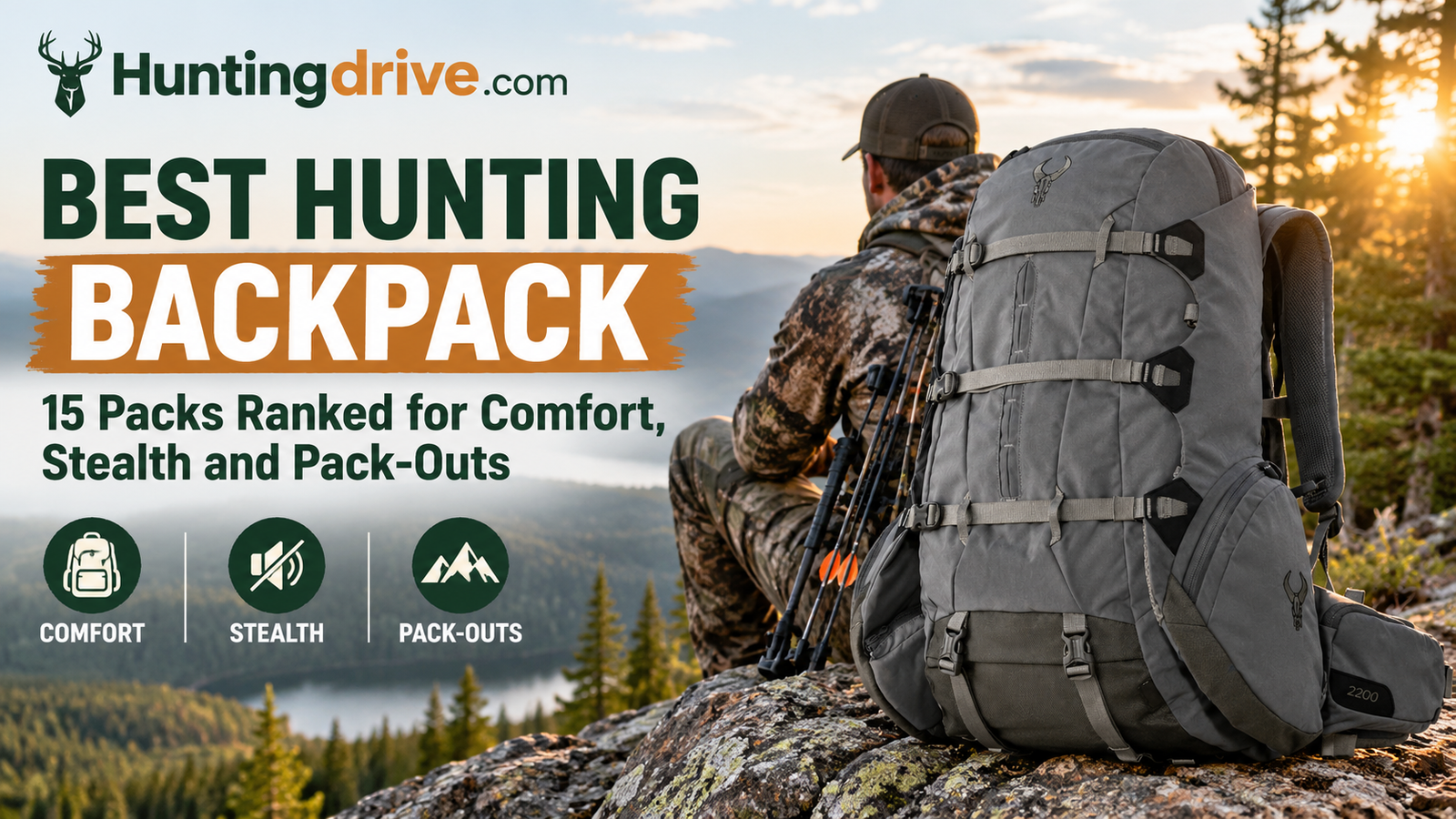
A hunting backpack is the one piece of gear that touches every part of a hunt. It carries your layers at 4 a.m., your optics on the ridge, your lunch at midday, and — if things go right — a heavy load of meat on the walk out. Choose well and you barely think about it. Choose poorly and you will think about nothing else.
That is the honest problem with shopping for a hunting pack. The category looks simple from the outside — it is just a bag, right? — but the gap between a generic day pack and a purpose-built hunting pack shows up the moment you add a bow, a rifle, a bladder of water, and a quarter of elk to the equation.
Over the last several seasons, hunting packs have quietly become some of the most engineered equipment in a hunter’s kit. Load shelves that let you stack meat between the frame and the bag. Quiet, brushed fabrics that do not rasp against brush. Suspensions built around real torso measurements. Weapon-specific carry systems for rifles, compound bows and crossbows. All of that matters, and none of it is obvious from a product photo.
This guide is built the way a hunt actually unfolds. First we sort out the pack types and capacity math. Then we dig into the details that decide whether a pack survives a real season: frames and meat hauling, suspension and fit, materials and noise, camouflage, weather protection, weapon carry, and loading technique. After that, you will find individual reviews of every pack on our list, a full comparison table, and answers to the questions hunters ask most.
If you are completely new to the sport, it is worth starting with our primer on how to get into hunting before you spend a dollar on a pack — because the terrain you hunt and the season you hunt it in will dictate the pack far more than any feature list will.
Ready to Upgrade Your Carry?
Browse today’s full selection of hunting packs, frames and accessories.
Compare live prices, availability and bundles in one place.
Quick Comparison: Our Top Picks
Here is the whole list at a glance. Every pack in this guide appears in the table below, with its format, its standout strength and a direct link. Two notes before you read it: capacity numbers come straight from the manufacturer’s model names, and the “best for” labels reflect how each pack is designed to be used rather than a lab score.
| # | Image | Product | Key Specs | Verdict | Check Price |
|---|---|---|---|---|---|
| 1 Top Pick |
 |
ALPS OutdoorZ PursuitBest Overall |
|
The do-everything pack most hunters should buy first. | Check Price on Amazon |
| 2 |  |
TIDEWE 40L Camo Hunting PackBest Value |
|
Serious storage and camo coverage without the premium price. | Check Price on Amazon |
| 3 |  |
Badlands 2200Best for Meat Hauling |
|
The pack that turns a successful stalk into a successful pack-out. | Check Price on Amazon |
| 4 |  |
Insights The Vision Bow PackBest for Bowhunters |
|
Purpose-built for archers who move, climb and stalk. | Check Price on Amazon |
| 5 |  |
SPIKA Meat Hauler Frame PackBest Heavy-Duty Frame |
|
Built for the ugly, heavy job most day packs avoid. | Check Price on Amazon |
| 6 |  |
YVLEEN Waterproof Camo PackBest for Wet Weather |
|
A smart pick for rain-soaked sits and river-bottom hunts. | Check Price on Amazon |
| 7 |  |
PLUSINNO 45L Waterproof PackBest for Rifle Hunters |
|
Rifle-first design with real weather protection built in. | Check Price on Amazon |
| 8 |  |
BLISSWILL Large 40L PackBest Budget All-Rounder |
|
Big, flexible storage for hunters who carry a little of everything. | Check Price on Amazon |
| 9 |  |
Kioqiear Large Day PackBest Budget Weather Pick |
|
Straightforward, covered and roomy — an easy first hunting pack. | Check Price on Amazon |
| 10 |  |
MARITTON 40L Hunting BackpackBest Simple Loadout |
|
No-fuss storage that gets out of the way on the trail. | Check Price on Amazon |
| 11 |  |
Fieldline Pro Series TreelineBest Lightweight Daypack |
|
Lean, quiet and simple — ideal for short sits and stalks. | Check Price on Amazon |
| 12 |  |
Allen Company Arroyo 3200Best Everyday Camo Pack |
|
A dependable all-season day pack from a trusted maker. | Check Price on Amazon |
| 13 |  |
King’s Camo Core HunterBest Pattern Options |
|
Camo done properly, in a pack built around the hunt. | Check Price on Amazon |
| 14 |  |
Carhartt Classic 21LBest for Work-to-Woods |
|
Tough, understated, and equally at home on the job site. | Check Price on Amazon |
| 15 |  |
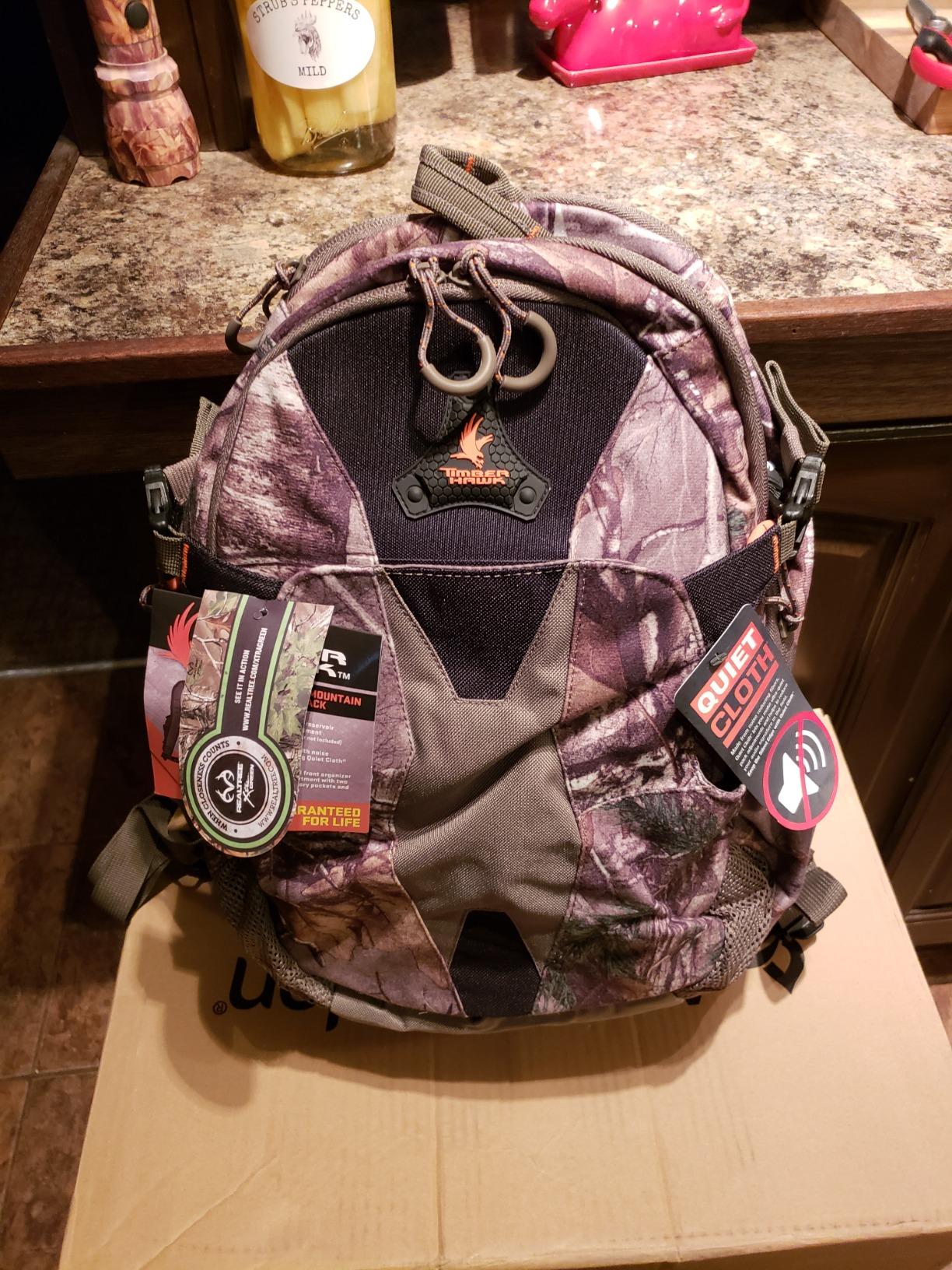
Timber Hawk Big BasinBest Traditional Camo Pack |
|
A familiar, comfortable pack for stand and still hunters. | Check Price on Amazon |
Packs are listed in the order we would recommend them for a general-purpose hunting season. Your terrain, weapon and hunt length may change which one makes sense — the sections below will help you decide.
See Today’s Prices on Hunting Packs
Stock and pricing shift through the season.
Check current availability before your hunt.
1. Types of Hunting Backpacks: Day Packs, Mid-Size, Multi-Day and Frame Packs
Before you compare a single feature, you need to know which family of pack you are shopping in. Nearly every hunting pack on the market falls into one of four categories, and mixing them up is the most common way hunters end up disappointed.
Day Packs
A day pack is built for a single outing: in before light, out after dark. It carries the essentials — a shell layer, food, water, ammunition or arrows, a small first-aid kit, optics, a knife and a headlamp — and nothing more. Day packs are the most popular category for good reason. They are light enough to stay quiet and mobile, they work from a tree stand or saddle, and they force you to leave the “just in case” pile at the truck.
They are also the packs most hunters use when they hunt close to the vehicle. If your typical walk is under a couple of miles and you are not packing out an animal on your back, a day pack is almost certainly the right answer. Hunters using a saddle hunting setup will especially appreciate how little a day pack interferes with climbing and hanging gear.
Mid-Size Packs
Mid-size packs bridge the gap. They hold enough for a long all-day hunt in cold weather, plus a little extra for an unplanned overnight or a light pack-out. This is the sweet spot for western deer and eastern elk, where you may leave the truck at dawn with a plan, and end up carrying something heavy back at dusk.
Multi-Day Packs
Multi-day packs are for wall-tent camps, spike camps and extended backcountry trips. They carry sleeping systems, stoves, food for several days and the gear to survive a weather change. They are heavier by design, and their suspension is built to make that weight tolerable over distance.
Frame Packs
Frame packs put the structure first. The frame, load shelf and suspension exist to carry heavy, awkward, bloody weight — quartered elk, boned-out deer, a pack of gear hauled to a spike camp. Many frame systems accept a detachable bag, so the same frame can serve as a day pack on the way in and a hauler on the way out.
| Pack Type | Best For | What It Carries | Example From This List |
|---|---|---|---|
| Day Pack | Single-day hunts, stand and saddle hunting | Layers, water, food, optics, ammunition | Fieldline Pro Series Treeline |
| Mid-Size Pack | All-day hunts, cold weather, light pack-outs | Full day kit plus extra layers and food | ALPS OutdoorZ Pursuit |
| Multi-Day Pack | Backcountry camps, extended trips | Sleep system, stove, food, heavy gear | PLUSINNO 45L Waterproof Pack |
| Frame Pack | Meat hauling and heavy loads | Quarters, boned meat, camp gear | SPIKA Meat Hauler Frame Pack |
Field Note
If you are torn between two sizes, buy the one that fits your longest realistic hunt, not your average one. A slightly larger pack that is cinched down weighs almost nothing extra, while a pack that is too small forces you to leave safety gear behind.
Find the Right Pack Format
Compare day packs, mid-size packs and frame systems side by side.
Check Price on Amazon2. Pack Capacity in Liters: How to Choose by Hunt Length
Capacity is measured in liters, and it is the number shoppers fixate on most — which is a shame, because it is one of the least interesting numbers on a pack. What matters is whether the volume is usable, whether the pack carries that volume close to your body, and whether the suspension can handle the weight you will actually put inside.
Still, capacity is a useful starting point when you match it to a hunt. The ranges below are guidelines rather than rules, and they assume you are packing for the conditions rather than for every possible scenario.
| Hunt Length | Rough Capacity | Typical Load | Watch Out For |
|---|---|---|---|
| Half-day sit | Under 25 liters | Water, snack, light layer, ammunition | No room for a shed layer if weather turns |
| Full-day hunt | 25 to 40 liters | Layers, food, water, optics, first aid | Overpacking — weight adds up fast |
| All-day + pack-out | 40 to 60 liters | Full kit plus meat-hauling capacity | Frame strength matters more than liters |
| Multi-day / spike camp | 60 liters and up | Sleep system, stove, food, heavy layers | Suspension fit becomes critical |
Notice that the middle band covers most hunting. A 40L-class pack like the TIDEWE or MARITTON handles a full day of cold-weather hunting with room to spare, while the PLUSINNO 45L gives you a bit more margin for an extra layer and a rain cover. If your season runs from the early archery heat into the late rifle cold — which is exactly when most of us hunt — that middle band is where you want to live.
Season timing drives load more than anything else. A September sit and a December sit are different hunts. Check when deer hunting season opens in your area, then plan your pack around the weather you will actually face rather than the weather you hope for.
The Liters-vs-Weight Trap
Here is the part nobody tells you: a big, floppy pack that swallows gear is often worse than a smaller pack that forces discipline. Hunters who carry less walk quieter, climb easier and stay in the field longer. Use the capacity table above as a ceiling, not a target.
Shop by Capacity
Filter hunting packs by size and format to match your hunt length.
Check Price on Amazon3. Meat Hauling Capability: Load Shelves, Frame Systems and Weight Ratings
This is the single biggest difference between a hiking pack and a hunting pack, and it is the feature most hunters underestimate until they are standing over a downed animal two miles from the road.
A meat-hauling pack works on a simple idea: the frame stays against your back, the bag sits in front of the frame, and the meat goes in between. That load shelf keeps the weight close to your center of gravity and off your shoulders. It also keeps blood and debris away from your gear.
What to Look For
- A load shelf or compression system. Straps and shelf fabric that let you sandwich a quarter between the frame and the bag.
- A frame that does not flex under load. When weight climbs, a soft frame turns into a pretzel and the load shifts.
- A hip belt that actually transfers weight. Meat hauls are won and lost at the hips.
- Washable, blood-resistant surfaces. You will be cleaning this pack. Make sure it can take it.
Packs built specifically for this job include the Badlands 2200, whose name tells you exactly what it is designed to do, and the SPIKA Meat Hauler Frame Pack, which takes the frame-first approach. The ALPS OutdoorZ Pursuit handles a lighter haul as part of its all-round design, and that is enough for many deer hunters who hunt close to a road.
It also helps to think through the whole sequence before you need it. Quartering an animal in the field, keeping meat clean, and loading a pack efficiently are skills you want to practice on paper first — our walkthrough on how to field dress a deer covers the part that happens before the pack ever comes off.
| Product | Hauling Approach | Best Use Case | Check Price |
|---|---|---|---|
| Badlands 2200Top Pick |
Built-in meat hauler integrated with the pack body | Backcountry deer and elk where one pack must do it all | Check Price on Amazon |
| SPIKA Meat Hauler Frame Pack |
Dedicated frame with load shelf for heavy loads | Repeated heavy pack-outs over rough ground | Check Price on Amazon |
| ALPS OutdoorZ Pursuit |
All-round pack with expandable carry for lighter loads | Day hunts where a modest haul is possible | Check Price on Amazon |
| TIDEWE 40L Camo Pack |
General compression and external strap carry | Everyday deer hunting with an occasional light haul | Check Price on Amazon |
Field Note
Load the heaviest weight high and tight against your back, closest to your shoulder blades. Weight that hangs low and away from your spine will punish you on the second mile, no matter how good the pack is.
Shop Meat-Hauling Packs
Frame packs and load-shelf systems built for heavy pack-outs.
Check Price on Amazon4. Frame Types: Internal Frame, External Frame and Frameless
The frame is the skeleton of the pack, and it decides how the load behaves on your body. There are three approaches, and each has a clear personality.
Internal Frame
Internal frame packs have stays or a framesheet hidden inside the back panel. They wrap the load close to your spine, which makes them feel stable and agile on steep, technical terrain. This is the dominant design today and it suits most hunting, especially anything involving climbing, sidehilling or moving through timber.
External Frame
External frames keep the load in a visible rack behind you. They are excellent at carrying awkward, heavy weight because the frame does the work and the bag does not fight it. They also ventilate better in hot weather. The trade-off is bulk and a wider profile that can snag in brush.
Frameless
Frameless packs are simply soft bags with a padded back. They are light, quiet and compressible, which makes them excellent for short hunts and minimalist setups. Once you add real weight, though, they sag and pull on your shoulders.
| Frame Type | Strengths | Trade-Offs | Best For |
|---|---|---|---|
| Internal | Stable, close to the body, agile in steep terrain | Runs warmer on the back; less ventilated | Most hunting, especially mobile and mountain hunts |
| External | Excellent heavy-load carry; airy back panel | Wider profile; can catch on brush and branches | Meat hauling and camp resupply |
| Frameless | Light, quiet, simple, easy to stow | Sags and pulls when heavily loaded | Short hunts, saddle setups, minimalist loadouts |
The practical takeaway: if your hunt has a realistic chance of ending with meat on your back, buy a framed pack. If it never does, frameless is a joy. The middle ground is a mid-size internal frame pack like the ALPS OutdoorZ Pursuit or the Badlands 2200, both of which are designed around the reality that a day hunt can turn into a long night.
Match the frame to the country, too. If you are chasing elk in steep timber, our guide to what caliber to use for elk hunting is worth reading alongside this — a heavier rifle changes how you carry, and how much the pack has to absorb.
Compare Frame Systems
Internal, external and frameless packs for every hunting style.
Check Price on Amazon5. Suspension and Fit: Torso Length, Hip Belt and Shoulder Straps
You can buy the best pack in the world and still hate it if it does not fit. Fit is not about your height or your chest size — it is mostly about your torso length, which is the distance from the top of your hip bone to the bony bump at the base of your neck.
Measure Your Torso
Have someone run a soft tape measure along your spine from the top of the iliac crest to the C7 vertebra. Most packs list a torso range. If yours sits at the edge of a range, size up and use the adjustment — it is easier to shorten a pack’s harness than to lengthen it.
The Hip Belt Does the Work
A properly fitted hip belt sits on top of your hip bones and carries the majority of the weight. When you lift the pack by the shoulder straps, the belt should stay roughly in place. If it slides down, the pack is too long or the belt is not shaped for your body.
Shoulder Straps and Load Lifters
Shoulder straps should wrap over your shoulders without gapping at the top or digging in at the armpits. Load lifter straps — the small straps running from the top of the pack to the top of the shoulder straps — should run at roughly a 45-degree angle and pull the pack’s weight up and forward. Cinch them too tight and the pack pulls backwards; leave them loose and the load sags.
- Sternum strap: keeps shoulder straps from sliding outward on sidehills.
- Load lifters: fine-tune how the pack sits against your upper back.
- Padding density: thicker is not better — firm, shaped padding beats soft foam that bottoms out.
- Ventilation channels: useful in warm archery season, less important in winter.
Fit also determines how much your footwear and layers matter. Stiff boots and thick socks change your gait and your balance, and the pack sits on top of all of it. Take a look at our picks for lightweight hunting boots and the best hunting socks before you dial in a load — they change the way a pack feels more than most hunters expect.
6. Materials and Durability: Cordura, Ripstop Nylon and Abrasion Resistance
A hunting pack lives a harder life than almost any other bag. It drags over granite, gets stuffed with sharp antlers, rides through thorn thickets, and spends its evenings in the bed of a truck. Fabric choice decides how many seasons it survives.
Common Fabric Families
- Cordura-style nylons are the durability benchmark. They resist tearing and abrasion and they take a beating from brush and rock.
- Ripstop nylons use a reinforcing grid so a puncture does not run. They are lighter and slightly less abrasion-resistant than heavy denier fabrics.
- Polyester fabrics are common on value-oriented packs. They are fine for moderate use and hold color well in sunlight.
- Brushed tricot and fleece-faced fabrics are used where silence matters — on the body of the pack and against contact points.
Construction Details Worth Checking
Look at the stitching at strap attachment points, the thickness of the webbing, the quality of the buckles, and whether the base of the pack is reinforced. Zippers deserve a close look too: a pack is only as usable as its openings, and a blown zipper in the field is more than an inconvenience.
Quiet Fabrics and Noise Reduction
Noise is a design problem, not an accident. Cheap nylon rasps against brush and jacket fabric in a way deer hear instantly. Better hunting packs use brushed or napped fabrics on contact surfaces, quiet zippers, and strap management that keeps loose webbing from slapping. It is one of the reasons a purpose-built hunting pack outperforms a hiking pack of similar weight.
Quiet goes beyond fabric, of course. Managing scent is a whole discipline of its own, and pack design plays a role in how well your system works — see our guide to the best scent control sprays for hunting if you hunt pressured deer.
Shop Durable Hunting Packs
Hard-wearing fabrics and quiet construction for real field use.
Check Price on Amazon7. Camouflage Patterns and Terrain Matching
Camo on a backpack matters less than camo on your body, but it is not irrelevant — especially for still hunters and stalkers who use the pack as part of their silhouette. The real question is not which pattern is best. It is which pattern disappears where you hunt.
Match the Terrain, Not the Catalog
- Open timber and mixed hardwoods: patterns built on bark, branches and leaf litter, such as the Mossy Oak Bottomlands styling found on the Carhartt Classic 21L.
- Grassland, sage and prairie: lighter, grass-forward patterns with vertical structure.
- Early season green: leafy, high-detail patterns; consider a neutral solid if the foliage is changing.
- Snow and late season: grays, browns and whites; break up the outline more than the color.
Brands such as King’s Camo build their identity around pattern families, and the King’s Camo Core Hunter is designed accordingly. Others, like the Timber Hawk Big Basin and the Allen Company Arroyo 3200, use established camo schemes that work well in classic woodland settings.
Silhouette Beats Pattern
The human outline is what spooks game. A pack with dangling straps, a bright buckle or a shiny zipper pulls attention faster than a slightly wrong camo pattern does. Keep straps shortened, tape anything reflective, and let the pack blend into your overall shape.
If you hunt multiple species across multiple habitats, an all-purpose woodland pattern is the sensible default. If you specialize — say, open-country dove hunting where cover matters differently — the principles in our what to wear dove hunting guide show how much the environment dictates your choices.
Shop Camo Hunting Packs
Patterns and colors to match timber, grassland and late-season cover.
Check Price on Amazon8. Weather Resistance, Rain Covers and Hydration Compatibility
Water is the fastest way to ruin a hunt. Wet insulation does not keep you warm, wet ammunition is a problem you do not want to discover at the moment of truth, and a soaked sleeping bag ends trips early. Weather protection on a pack falls into three layers.
Fabric Treatment and Construction
Many hunting packs use a durable water-repellent coating on the fabric and taped or covered zippers. That handles drizzle and damp brush. It will not handle a downpour for hours, and no fabric coating lasts forever — it wears off with abrasion and needs periodic renewal.
Rain Covers
An integrated or included rain cover is the simplest insurance policy in the category. The PLUSINNO 45L and the Kioqiear day pack both include one, which saves you a separate purchase and means you will actually have it with you. Store the cover where you can reach it without unpacking the whole bag.
Hydration Compatibility
A dedicated bladder sleeve and a hose port let you drink without stopping, which matters more than it sounds on long hikes and in warm archery weather. Position the bladder close to your back to keep the load stable, and keep it away from anything sharp.
- Layer your protection: dry bags inside the pack beat a single rain cover alone.
- Separate wet from dry: use a dedicated pocket or stuff sack for soaked gear.
- Keep insulation accessible: your warmest layer should be reachable without unpacking.
- Protect electronics: rangefinders, phones and cameras hate moisture more than you do.
Cold hands are the other half of the weather equation, and they happen fast once you stop moving. Our roundup of the best hunting gloves pairs naturally with a weather-ready pack system.
Weatherproof Your Setup
Look for included rain covers, sealed zippers and hydration sleeves.
Check Price on Amazon9. Weapon Carry Systems: Rifle, Bow and Shotgun Attachments
Hunting packs are built around weapons in a way hiking packs are not. A scabbard, a bow-carry system or a set of compression straps is not a luxury — it changes how you move through the woods and how quickly you can get set up when an animal appears.
Rifle Carry
Padded scabbards hold a rifle vertically or diagonally along the pack, freeing both hands for climbing and glassing. The PLUSINNO 45L is designed around exactly this idea with its padded scabbard carry system. Look for a scabbard that keeps the muzzle up and clear of brush, and that can be removed when you are not carrying a firearm.
Bow Carry
Bow-specific packs hold a compound bow securely against the frame so it does not swing or bang. The Insights The Vision Bow Pack is purpose-built for archers, and it is the reason dedicated bow packs exist. If you shoot a crossbow, the same logic applies — check our guide to the best crossbows for deer hunting for the wider system, then look for a pack that can hold the frame without fighting you.
Arrows, Releases and Accessories
Arrow tubes and quiver attachment points keep broadheads away from your hands and your gear. Releases, rangefinders and small accessories want dedicated pockets where you can find them by feel in the dark. Our picks for the best arrows for deer hunting and the best thumb release for hunting fit neatly into that same system.
For predator and night hunters, optics are the weapon system in practice. If that is your game, our guide to the best night vision scopes for coyote hunting covers the glass you will need a safe, padded home for inside the pack.
Field Note
Whatever weapon carry you choose, practice mounting and dismounting it with your gloves on, in the dark, with the pack fully loaded. The first time should not be when an animal is in front of you.
Shop Packs With Weapon Carry
Padded scabbards, bow carry systems and compression attachments.
Check Price on Amazon10. How to Pack a Hunting Backpack: Weight Distribution and Organization
How you pack matters as much as what you pack. The same gear, loaded in a different order, can feel like half the weight.
The Loading Order
- Bottom: light, bulky items you will not need until camp — sleeping bag, puffy jacket, spare socks.
- Middle, close to the spine: the heavy stuff. Food, water, ammunition, stove. Keep it high and tight.
- Top: things you may need during the day — rain shell, warm layer, snacks.
- Outer pockets: optics, rangefinder, headlamp, knife, gloves, first-aid kit.
Build a Go-Kit
Keep the small essentials in one pouch so you can move them between packs. When the weather changes or the plan changes, you are relocating one kit rather than repacking everything.
The rest of your gear deserves the same discipline. A rangefinder you cannot reach is useless, which is why dedicated pockets matter — see our recommendations for the best hunting rangefinders and the best hunting binoculars, then design your pack layout around them. A sharp, accessible blade is equally non-negotiable, and our guide to the best hunting knife covers what to carry and where to keep it.
Packing Out an Animal
The pack-out is where preparation pays off. Bone out what you can, keep the meat clean and cool, and load it high against the frame. Distribute weight evenly left to right, and take shorter, slower steps on the walk out. It is also worth knowing when you can make multiple trips — pacing yourself is not weakness, it is how you get everything home.
Trip planning makes all of this easier. Understanding the best times to hunt deer and doing your scouting with trail cameras means fewer wasted miles with a loaded pack.
Gear Up for the Pack-Out
Packs, pouches and organization systems for a cleaner load.
Check Price on Amazon11. How to Waterproof and Care for a Hunting Backpack
A little maintenance is the difference between a pack that lasts a decade and one that falls apart in three seasons. Most of it takes minutes.
Cleaning
Empty every pocket and shake out the debris first — grit in zippers does more damage than anything else. Rinse the pack with cool water and a mild soap, using a soft brush on stubborn blood or mud. Never machine dry, never use high heat, and never bleach technical fabrics.
Restoring Water Resistance
After cleaning, a wash-in or spray-on durable water repellent treatment restores the beading on the outer fabric. Reapply when water stops forming droplets and starts soaking in. Keep the treatment off the harness padding where it can make the fabric slick.
Storage
- Store unpacked, in a dry place, away from direct sunlight.
- Leave zippers partly open so the fabric is not under tension.
- Loosen all straps so foam and webbing keep their shape.
- Check buckles, stitching and webbing at the start of every season.
Field Repairs
Carry a small repair kit: a few zip ties, a length of webbing, a needle and heavy thread, and a roll of repair tape. A broken strap two miles from the truck is a solvable problem if you planned for it, and a trip-ender if you did not.
Care also extends to what lives inside the pack. Scent control, dry storage and a clean loadout all start with good habits — the same habits that make other gear last longer, from your clothing system to your shelter. If you hunt from cover rather than open ground, see our look at hunting blinds, which share the same “protect it and it protects you” philosophy.
Pack Care Essentials
Cleaners, water-repellent treatments and repair kits for field gear.
Check Price on Amazon12. Hunting Backpack vs. Hiking Backpack: What’s the Difference?
Hunters ask this constantly, and the answer is not “marketing.” The two categories solve genuinely different problems.
A hiking pack is optimized for moving weight efficiently over distance on trails. It prioritizes ventilation, lightweight fabrics, a clean silhouette and comfort at walking pace. A hunting pack adds silence, weapon carry, meat-hauling structure, scent-aware organization and a layout designed for access while wearing gloves in the dark.
| Feature | Hunting Backpack | Hiking Backpack |
|---|---|---|
| Fabric noise | Brushed, quiet fabrics and low-rattle hardware | Lightweight nylon, often audible in brush |
| Weapon carry | Scabbards, bow carry, compression attachments | None, or improvised with straps |
| Meat hauling | Load shelves and frames rated for heavy loads | Not designed for it |
| Organization | Optics, ammunition and quick-access pockets | General compartments and hydration focus |
| Color | Camouflage or muted earth tones | Often bright, high-visibility colors |
| Best use | Hunting with gear, weapons and possible pack-out | Trail travel and lightweight overnights |
Can you hunt with a hiking pack? Of course — thousands of hunters do every season, especially on short, close-to-the-road hunts. But if you regularly carry a weapon, hunt in the dark, or expect to haul meat, a hunting pack earns its keep immediately.
The same “right tool, right job” logic applies to the rest of your kit. Upland birds, waterfowl, still hunting and spot-and-stalk all want different setups — compare our guides to upland hunting and still hunting and you will see how quickly the gear conversation changes with the terrain. If you spend your springs looking for sheds rather than game, our guide to shed hunting explains why a light, comfortable pack matters more than almost anything else those days.
Choose the Right Tool
Hunting-specific packs built for silence, weapons and pack-outs.
Check Price on AmazonThe Full Reviews: Every Hunting Backpack on Our List
Below is a closer look at each pack, with who it suits and what to keep in mind before buying. Use these alongside the comparison table above — the table gives you the shape of the field, and these reviews give you the texture.
ALPS OutdoorZ Pursuit Hunting Backpack
Best OverallVersatile
The Pursuit is the pack we hand to hunters who say “I only want one pack.” It sits in that useful middle ground — big enough for a long, cold day and a modest pack-out, organized enough for a bow or rifle setup, and quiet enough that it does not announce you before you arrive.
What stands out is the layout. Pockets are where a hunter needs them, not where a designer thought they would look balanced, and the exterior is designed to keep straps and gear under control rather than flapping.
Key Features
- Full-featured day-to-mid-size hunting format
- Weapon carry options for rifle or bow
- Well-organized pocket system for quick access
- Quiet fabric and controlled exterior profile
What We Like
- Extremely well-organized layout
- Comfortable for long days on foot
- Works across archery and rifle seasons
Keep in Mind
- Not a dedicated heavy-load frame pack
- More features than a minimalist needs
Who it’s best for: The hunter who hunts all season, across weapons and terrain, and wants one pack that handles everything short of a heavy backcountry pack-out.
ALPS OutdoorZ Pursuit
Our top overall pick for most hunting seasons.
Check current pricing and color options.
TIDEWE Hunting Backpack for Men, 40L Camo Pack
Best Value40L
The TIDEWE 40L is a straightforward deer hunting pack with real storage and proper camouflage coverage. It is the pack that gets a lot of first-time hunters into the woods with gear they are not embarrassed by, and it does that without asking for a premium-budget investment.
Inside, you get the kind of compartment layout that rewards organization: separate spots for layers, food, ammunition and optics, with compression straps on the outside to keep the load tight and quiet.
Key Features
- 40L stated capacity for full-day hunts
- Camo exterior designed around deer hunting
- Multi-pocket organization with compression control
What We Like
- Generous storage for the format
- Camo coverage where it counts
- Easy to organize a full day’s kit
Keep in Mind
- Built for day hunting, not heavy hauls
- Fit is more fixed than premium packs
Who it’s best for: Deer hunters who want room, camo and organization at a sensible price.
TIDEWE 40L Camo Pack
Best value for everyday deer hunting.
See current colors and availability.
Badlands 2200 Hunting Pack with Built-In Meat Hauler
Best for Meat HaulingBackcountry
The 2200 is built around a promise: one pack for the walk in, the stalk, and the walk out with weight on your back. The integrated meat hauler is the headline feature, and it is the reason this pack is on so many elk and deer hunters’ lists.
What we appreciate most is that it does not feel like a hauler the rest of the time. On an ordinary day hunt it behaves like a normal, well-sorted hunting pack — which is exactly what you want from something that only becomes a load carrier a few times a season.
Key Features
- Built-in meat hauler for pack-outs
- Quiet, hunting-focused construction
- Layout designed for backcountry day hunts
What We Like
- Serious hauling capability in one pack
- Quiet and confident on the trail
- Versatile across day hunts and pack-outs
Keep in Mind
- More pack than a casual stand hunter needs
- Focused on hunting rather than general travel
Who it’s best for: Deer and elk hunters who hunt away from the road and need a pack that finishes the job.
Badlands 2200
Our meat-hauling pick for backcountry hunts.
Check current pricing.
Insights The Vision Bow Pack
Best for BowhuntersArchery
The Vision is designed from the ground up for archers. Everything about it assumes you are carrying a bow, moving through timber, climbing into a stand or saddle, and setting up quickly when an animal closes the distance.
That focus shows in the profile. It is streamlined enough that it does not fight you in tight cover, and it keeps a bow secure without turning the pack into a piece of scaffolding.
Key Features
- Bow-specific carry design
- Streamlined profile for climbing and stalking
- Built around mobile archery hunting
What We Like
- Purpose-built for bow carry
- Low-profile and easy to move with
- Natural fit with mobile setups
Keep in Mind
- Less appealing if you mostly rifle hunt
- Archery-first feature set
Who it’s best for: Archers who hunt mobile and want a pack that understands a bow.
Insights The Vision Bow Pack
Built for archers who move.
Check current availability.
SPIKA Hunting Meat Hauler Frame Pack
Best Heavy-Duty FrameLoad Carrier
SPIKA takes the frame-first route. This is a pack designed around the load shelf and the suspension, with the bag doing its work in front of the structure rather than pretending to be everything at once.
That makes it a specialist. For repeated heavy pack-outs — a season where you are moving meat, camp gear or both — the design logic is hard to beat.
Key Features
- Dedicated frame pack format
- Meat-hauling load shelf design
- Adjustable suspension for heavy loads
What We Like
- Excellent at heavy, awkward weight
- Adjustable fit for long carries
- Purpose-built rather than adapted
Keep in Mind
- Overbuilt for short, light hunts
- Frame-first design adds bulk
Who it’s best for: Hunters who regularly haul heavy loads and want a frame that does the work.
SPIKA Meat Hauler Frame Pack
Frame-first hauling for serious pack-outs.
See current pricing.
YVLEEN Hunting Backpack, Waterproof Camo
Best for Wet WeatherWaterproof
If you hunt where it rains — river bottoms, coastal timber, late-season sits in freezing drizzle — the YVLEEN is built for your reality. Its waterproofing focus is the reason to buy it, and the camo exterior keeps it in the hunting category rather than the general outdoor one.
It is a sensible, no-drama pack: get in, get set, stay dry, get out.
Key Features
- Waterproof-focused construction
- Camo exterior for hunting use
- Hunting-specific pocket organization
What We Like
- Strong weather protection
- Proper hunting camouflage
- Straightforward, practical layout
Keep in Mind
- Weather focus over hauling focus
- Best suited to day hunting
Who it’s best for: Hunters in wet climates who need their gear dry more than anything else.
YVLEEN Waterproof Camo Pack
Weather-ready hunting storage.
Check current colors and price.
PLUSINNO Hunting Backpack, 45L with Rain Cover & Padded Scabbard
Best for Rifle Hunters45L
Two features make the PLUSINNO stand out immediately: an included rain cover and a padded scabbard carry system. Both solve problems that rifle hunters hit constantly — wet gear and hands-free weapon carry on the walk in.
At 45L it also has the volume for a full cold-weather day plus a light pack-out, which makes it a genuinely useful all-season option.
Key Features
- 45L stated capacity for full-day and overnight loads
- Rain cover included for quick weather protection
- Padded scabbard carry system for rifles
What We Like
- Rain cover included, not sold separately
- Real weapon carry built in
- Roomy without being unwieldy
Keep in Mind
- Rifle-first design for archers
- More volume than a minimalist wants
Who it’s best for: Rifle hunters who hunt in changeable weather and want everything in one package.
PLUSINNO 45L Waterproof Pack
Rifle carry and rain cover in one package.
Check today’s price.
BLISSWILL Large 40L Hunting Backpack
Best Budget All-Rounder40L
The BLISSWILL is the “carry a little of everything” pack. Its multi-compartment layout makes it easy to separate food, layers, ammunition and tools, and the 40L format gives you enough room for a full day without the pack becoming a suitcase.
It is a strong pick for hunters who want flexibility over specialization.
Key Features
- 40L stated capacity
- Multi-compartment organization
- General-purpose hunting format
What We Like
- Flexible, easy-to-sort layout
- Comfortable storage capacity
- Suits a wide range of hunts
Keep in Mind
- Not specialized for hauling
- General-purpose rather than weapon-specific
Who it’s best for: Hunters who want one flexible pack across several styles of hunt.
BLISSWILL 40L Hunting Backpack
Flexible storage for everyday hunting.
See current pricing.
Kioqiear Hunting Backpack with Rain Cover
Best Budget Weather PickRain Cover
The Kioqiear keeps things refreshingly simple: a large-capacity day pack, a hunting-oriented layout and an included rain cover. It is the kind of pack that does exactly what it says and gets on with the job.
For a first hunting pack — or a reliable backup that lives in the truck — it is an easy recommendation.
Key Features
- Rain cover included
- Large-capacity day pack format
- Hunting-oriented pocket organization
What We Like
- Weather cover out of the box
- Generous, easy-to-use layout
- Great entry point into hunting packs
Keep in Mind
- Day-hunt focused
- Fewer specialized weapon features
Who it’s best for: New hunters and anyone who wants a covered, roomy day pack without fuss.
Kioqiear Hunting Day Pack
Roomy, covered and ready to hunt.
Check availability now.
MARITTON Hunting Backpack 40L
Best Simple Loadout40L
MARITTON goes the other direction from feature-heavy packs: it keeps the layout clear and the design honest. The 40L format is flexible enough for day hunts and light overnights, and the compartments are arranged so you are not playing Tetris every morning.
If you prefer gear that disappears once it is working, this is that kind of pack.
Key Features
- 40L stated capacity
- Straightforward compartment layout
- Day-to-overnight flexibility
What We Like
- Simple, intuitive organization
- Useful capacity range
- Easy to live with all season
Keep in Mind
- Fewer specialized hunting features
- Not built for heavy meat hauls
Who it’s best for: Hunters who value simplicity and a clean layout over feature count.
MARITTON 40L Hunting Backpack
Simple, sensible storage for real hunts.
See current price.
Fieldline Pro Series Treeline Daypack
Best Lightweight DaypackCompact
The Treeline is the compact, quiet option in the group. It carries the essentials, stays out of the way in tight timber and does not tempt you into hauling things you will never use.
For short hunts, warm weather, and mobile setups where every ounce counts, its restraint is the feature.
Key Features
- Compact daypack format
- Pro Series construction
- Quick-access, simplified layout
What We Like
- Light and easy to carry
- Quiet in close cover
- Simple to pack and unpack
Keep in Mind
- Limited capacity for cold-weather layers
- Not intended for pack-outs
Who it’s best for: Still and saddle hunters who hunt light and close.
Fieldline Pro Series Treeline
Compact, quiet and ready to move.
Check current pricing.
Allen Company Arroyo 3200 Camo Hunting Daypack
Best Everyday Camo PackCamo
Allen Company has been in the hunting space long enough to know what a day pack actually needs, and the Arroyo reflects that. It is a camo daypack with sensible organization, sensible sizing and no gimmicks.
That reliability is exactly why it earns a place on the list.
Key Features
- Camouflage exterior for hunting cover
- Daypack organization and sizing
- Established hunting-brand construction
What We Like
- Dependable, no-nonsense design
- Good camouflage coverage
- Works across a full season
Keep in Mind
- Day-hunting capacity
- Fewer premium suspension features
Who it’s best for: Hunters who want a solid camo day pack from a trusted name.
King’s Camo Core Hunter Daypack
Best Pattern OptionsCamo-First
King’s Camo treats camouflage as a system, and the Core Hunter is built around that idea. It is a hunter-focused daypack with a clean, streamlined profile and pattern options that let you match the country you actually hunt.
If breaking up your outline is a priority in your terrain, this pack deserves a close look.
Key Features
- Hunter-focused daypack design
- Camouflage-first approach with pattern choices
- Streamlined carry profile
What We Like
- Strong camouflage options
- Clean, low-profile silhouette
- Designed specifically for hunting
Keep in Mind
- Day-pack capacity
- Camo focus over hauling focus
Who it’s best for: Hunters in pattern-specific terrain who want to blend in properly.
King’s Camo Core Hunter
Camo done right, in a hunt-ready pack.
See today’s price.
Carhartt Classic 21L Backpack, Mossy Oak Bottomlands
Best for Work-to-Woods21L
The Classic 21L is the pack you can take to work on Friday and into the timber on Saturday. The Mossy Oak Bottomlands pattern gives it hunting credibility, and the Carhartt build gives it the toughness that brand is known for.
At 21L it is a lean day pack — perfect for short hunts, warm weather and anyone who packs light on purpose.
Key Features
- 21L stated capacity for light, fast hunts
- Mossy Oak Bottomlands camo pattern
- Rugged, everyday construction
What We Like
- Excellent durability for the format
- Classic camo pattern
- Doubles as an everyday pack
Keep in Mind
- Compact — limited for cold-weather gear
- General design rather than hunting-specific
Who it’s best for: Hunters who want one tough, understated pack for work, travel and short hunts.
Carhartt Classic 21L
Tough, classic and ready for anything.
Check current pricing.
Timber Hawk Big Basin Camouflage Hunting Day Pack
Best Traditional Camo PackClassic
The Big Basin is the traditionalist’s pick. It looks and feels like a classic hunting day pack, with a roomy main compartment and camouflage that suits woodland stand hunting.
There is a lot to be said for gear that simply works the way you expect. This is that pack.
Key Features
- Camouflage day pack design
- Classic hunting styling
- Roomy main compartment for day gear
What We Like
- Familiar, comfortable format
- Good storage for a day hunt
- Proven woodland camouflage styling
Keep in Mind
- Traditional layout, not feature-heavy
- Best for day hunting
Who it’s best for: Stand and still hunters who want a classic camo day pack that just works.
Timber Hawk Big Basin
A classic hunting day pack done properly.
Check availability and price.
Still Deciding?
Compare live pricing across all fifteen packs in one place.
Compare Hunting BackpacksFrequently Asked Questions
What size hunting backpack do I really need?
For most hunters, a pack in the middle of the range covers nearly everything. If you hunt a single day at a time in moderate weather, a compact day pack is plenty. If you hunt cold mornings, carry extra layers or want the option of a light pack-out, move up to a 40L-class pack like the TIDEWE or MARITTON. Only go bigger if you are camping or hauling seriously.
Can I use a regular hiking backpack for hunting?
Yes, and many people do. But hunting packs add quiet fabrics, weapon carry and meat-hauling structure that hiking packs do not have. If you hunt close to the road and never carry meat, a hiking pack works. If you hunt with a rifle or bow and expect a pack-out, a hunting pack is worth it.
What is a load shelf, and do I need one?
A load shelf lets you strap meat between the frame and the bag, keeping heavy weight close to your spine. If you hunt deer or elk more than a mile from a road, yes — it is the single most useful feature on a hunting pack. If you hunt close to the vehicle, you can skip it.
Internal frame or external frame — which is better?
Neither is better; they solve different problems. Internal frames are stable and agile for steep terrain and daily hunting. External frames excel at heavy, awkward loads and ventilate better. Most hunters today choose internal frame, with frame packs reserved for serious hauling.
How do I know if a backpack fits my torso?
Measure from the top of your hip bone to the bony bump at the base of your neck, then compare to the pack’s stated torso range. The hip belt should sit on your hip bones and carry most of the weight, while the shoulder straps should wrap smoothly without gaps or pinching.
How do I make my hunting backpack quieter?
Choose packs with brushed fabrics and quiet hardware, shorten loose straps, and secure anything that can swing or slap. Fill empty space so gear cannot rattle, and avoid shiny buckles or zippers that catch light.
How should I waterproof my hunting backpack?
Start with a pack that includes or accepts a rain cover, then store sensitive gear in dry bags inside. After cleaning the fabric, reapply a durable water repellent treatment when water stops beading. Zippers are usually the weak point, so keep them clean and covered.
What should I keep in my hunting backpack at all times?
Water, food, a warm layer, a rain shell, a headlamp, a knife, a basic first-aid kit, ammunition or arrows, a fire-starting method and your optics. Beyond that, tailor the list to the terrain and the length of the hunt.
Is a bow-hunting backpack different from a rifle-hunting backpack?
Yes. Bow packs hold a compound bow securely against the pack and keep arrows protected — the Insights Vision is a good example. Rifle packs typically use a padded scabbard, like the PLUSINNO. Many all-rounders handle both, which is helpful if you hunt across seasons.
How do I pack out meat with a hunting pack?
Quarter or bone out the animal in the field, keep the meat clean and cool, then load it high and tight against the frame with even weight left to right. Take shorter steps, use trekking aids if you have them, and make multiple trips rather than risking an injury.
How long should a hunting backpack last?
With reasonable care, a well-made pack should serve many seasons. Rinse out grit after use, dry it fully before storage, keep it out of direct sunlight, and check buckles, stitching and straps at the start of each season.
Does camo pattern on a backpack really matter?
Less than it does on your body, but it still contributes to your overall outline. Match the pattern to your terrain — hardwood bark and leaf litter for timber, grass-forward patterns for open country — and eliminate bright colors, reflective hardware and dangling straps.
Questions Answered — Ready to Choose?
Compare current pricing on every pack in this guide.
Check Price on AmazonFinal Verdict: Which Hunting Backpack Should You Buy?
If you want one clear answer, it is this: buy the pack that fits the hunt you actually do, not the hunt you see in the highlight reel. For the majority of hunters — archery season through rifle season, day hunts with the occasional pack-out — the ALPS OutdoorZ Pursuit is the most complete package on this list. It is organized, quiet, comfortable and versatile enough to handle almost anything short of a deep backcountry haul.
If your hunts end with meat on your back more often than not, step up to the Badlands 2200 or the SPIKA Meat Hauler Frame Pack. If you are a dedicated archer, the Insights The Vision Bow Pack is purpose-built for how you hunt. Rifle hunters who want weather protection and a proper scabbard should look hard at the PLUSINNO 45L, and budget-minded hunters who still want camo and organization will be happy with the TIDEWE 40L.
Whatever you choose, spend the time on fit. Try it on with weight in it. Walk around. Adjust the hip belt, the load lifters and the sternum strap until the pack feels like part of you. That half hour of adjustment will do more for your season than any feature on a spec sheet.
Then get it dirty. A hunting pack that has never been rained on, bloodied or stuffed full of elk is just an expensive accessory. The ones worth owning earn their scars.
Get the Right Pack Before Your Season Opens
Our top pick, the ALPS OutdoorZ Pursuit, plus every other pack in this guide.
Check live pricing and availability now.