
Predator Hunting · Optics Guide
Best Night Vision Scope for Coyote Hunting
Eleven dedicated night optics, ranked and reviewed — from budget digital rigs to Gen 3 clip-ons and thermal — so you can pick the glass that actually puts coyotes in your crosshairs after dark.
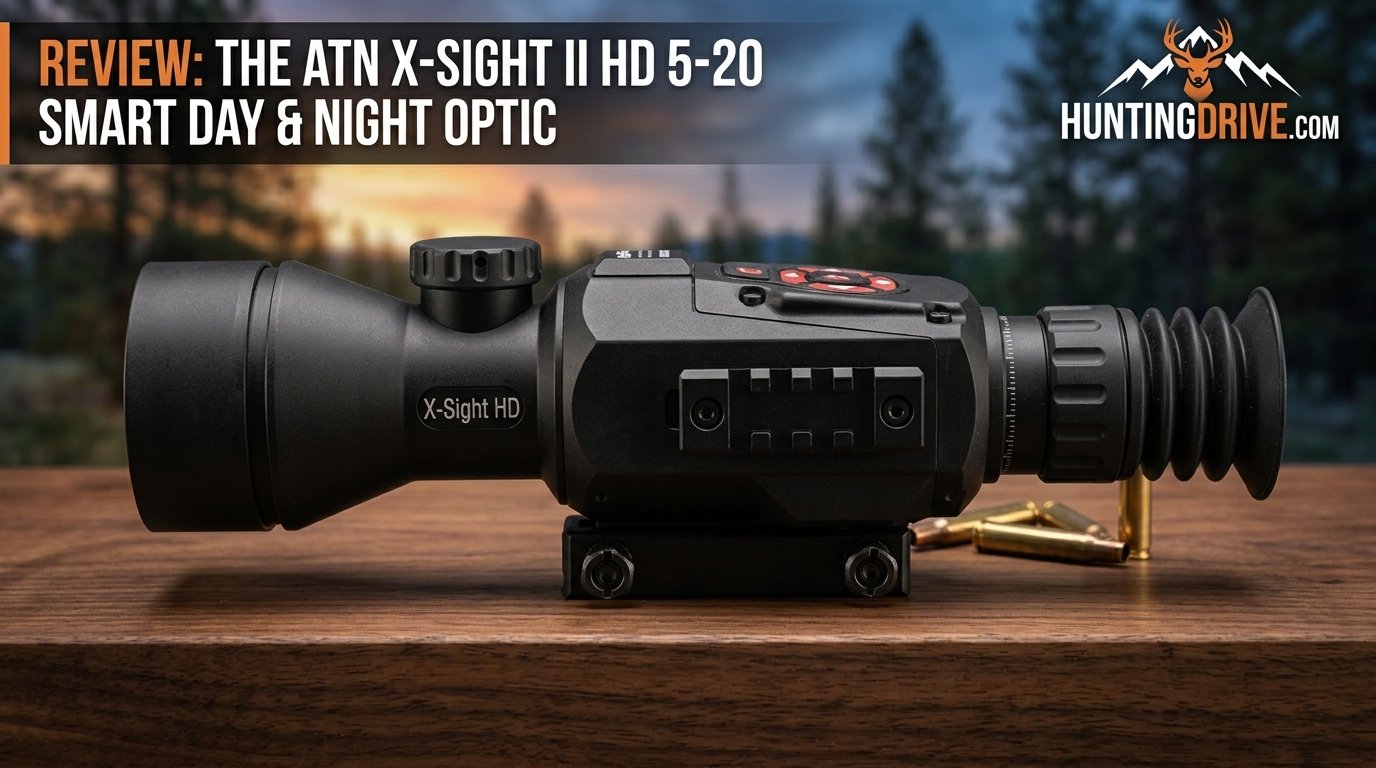
Smart digital day/night scopes have reshaped predator hunting — one optic, every hour of the clock.
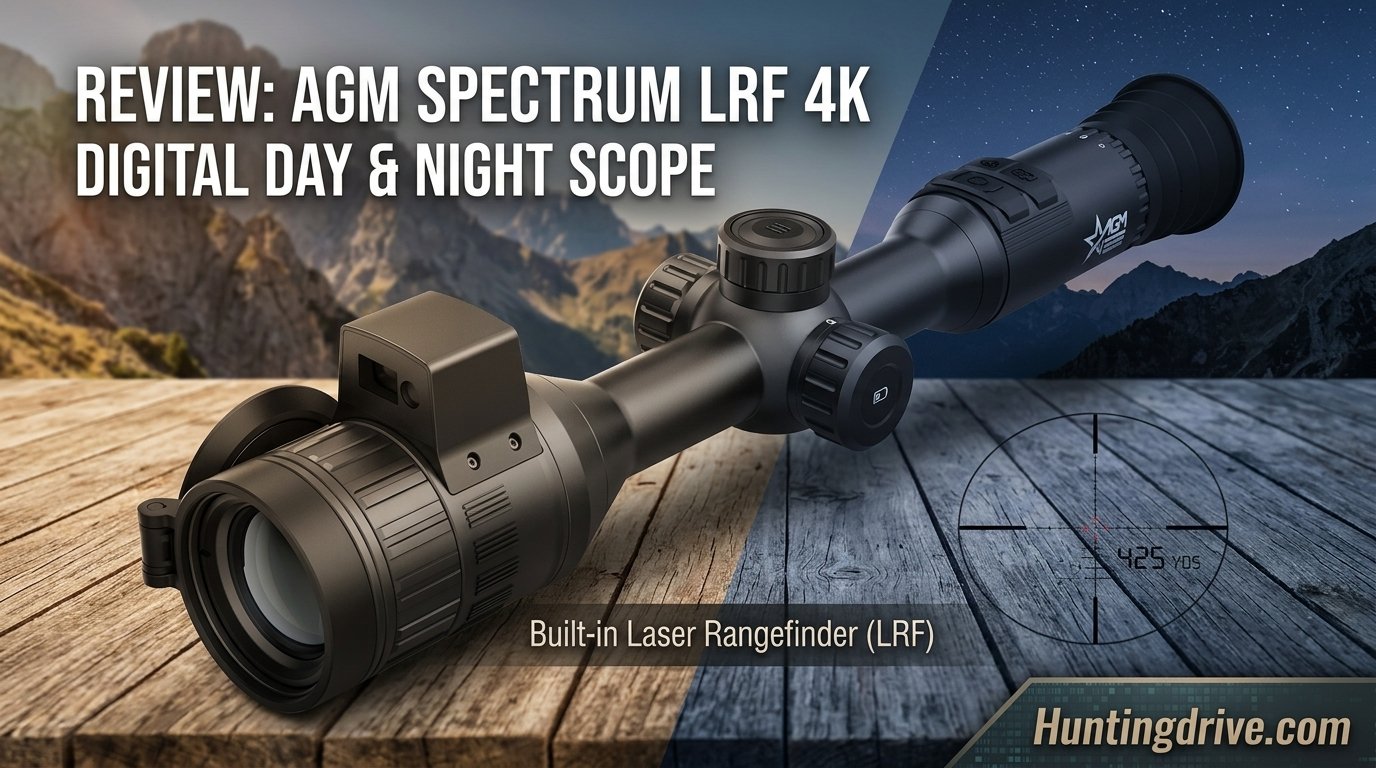
Coyotes own the night. If you want consistent success, your optic has to own it with them.
There is a specific kind of frustration that every predator hunter knows: a coyote answers your call, works the wind perfectly, and ghosts in on a line you cannot see until it is already circling downwind. By the time your eyes pick up movement against the brush, the shot is gone. That is the moment a dedicated night vision scope changes everything. Instead of straining into the dark with a handheld light and a rifle you cannot shoot straight, you get a crisp digital picture of the field, a reticle you have already zeroed, and the confidence to identify your target before your finger ever touches the trigger.
Coyotes are intelligent, adaptable, and increasingly nocturnal in areas with hunting pressure. Trapping seasons, calling schedules, and livestock protection programs all push predator activity deeper into the hours when most hunters are back at the truck. A night vision scope does not just extend your hunting window — it fundamentally rewrites what a productive evening looks like. A stand that used to end at legal light can now run for hours, and a set that once produced a single opportunity can produce several.
The market has responded with an overwhelming flood of options, and that is exactly where most hunters get stuck. Digital day/night scopes promise one optic for every hour of the clock. Thermal units brag about detection in fog and through light cover. Gen 3 clip-ons claim the cleanest image money can buy. Budget kits claim you can convert the scope you already own for a fraction of the cost. On top of that, every product listing throws a wall of numbers at you — sensor resolutions, magnification ranges, illuminator wavelengths — and it is genuinely hard to tell which numbers translate to a dead coyote and which are just marketing arithmetic.
This guide cuts through that noise. We evaluated eleven night optics against the realities of coyote hunting specifically: how quickly you can scan a field, how confidently you can tell a coyote from somebody’s lost hound, how the setup behaves after a cold night in the truck bed, and whether the whole rig still works when the temperature drops and the batteries start to fade. Some of these are premium flagships. Some are honest budget tools. One is a thermal. One is a clip-on that keeps your favorite day scope exactly where it is. Each one earns its place for a different hunter, and we are going to be blunt about which hunter that is.
You will find a master comparison table right below this introduction, followed by twelve deep-dive sections covering selection criteria, technology differences, full individual reviews for every product on the list, and the setup and field craft that makes any of them work. By the end, matching a scope to your hunting style should feel obvious.
Start Shopping
Ready to see what the market looks like right now? Browse current night vision scopes on Amazon and compare live listings.
Quick Comparison: Our Top Picks
Every scope on this list appears in the table below, ranked for coyote hunting specifically. Use it to shortlist two or three contenders, then drop into the detailed reviews further down for the honest trade-offs on each one.
Swipe to see more →
| # | Image | Product | Key Specs | Verdict | Deal |
|---|---|---|---|---|---|
| 1 |  |
Top Pick ATN X-Sight II HD 5-20 Best Smart Scope |
|
The do-everything workhorse that made digital night vision mainstream. | Check Price on Amazon |
| 2 |  |
Pulsar Digex N455 Best Premium Digital |
|
Refined image quality in a silhouette that feels like real glass. | Check Price on Amazon |
| 3 |  |
AGM Spectrum LRF 4K Best All-in-One |
|
Ranging and night vision in one unit — fewer gadgets, faster decisions. | Check Price on Amazon |
| 4 |  |
AGM Rattler V2 Best Thermal |
|
Finds heat first and asks questions later — the detection king. | Check Price on Amazon |
| 5 |  |
DNT Optics ZULUS HD 5-20x Best Value Feature Set |
|
Feature-rich and reach-hungry without the flagship price posture. | Check Price on Amazon |
| 6 |  |
Sightmark Wraith 4K Mini (2-16×32) Best Compact 4K |
|
Small, light, and genuinely useful on a walking stand. | Check Price on Amazon |
| 7 |  |
Armasight CO-Mini Gen 3 Pinnacle Best Clip-On |
|
Your day glass by day, serious night vision by dark — no re-zeroing. | Check Price on Amazon |
| 8 |  |
Bushnell Equinox Z2 Best for Scanning |
|
Not a rifle scope — the scout-and-scan companion every caller should own. | Check Price on Amazon |
| 9 |  |
Night Owl Nightshot Best Budget Digital |
|
Straightforward, honest, and unapologetically night-focused. | Check Price on Amazon |
| 10 |  |
RZJSKJZM T4 Best Entry-Level |
|
The low-risk way to find out if night hunting is for you. | Check Price on Amazon |
| 11 |  |
BESTSIGHT DIY Night Vision Kit Best Budget Add-On |
|
Tinkerer territory — cheap night vision for the scope you already trust. | Check Price on Amazon |
Treat this ranking as a starting point, not gospel. The “best” scope on this table is the one that fits your rifle, your terrain, and your budget — which is exactly what the next twelve sections are built to help you figure out.
Compare Live Listings
Prices and availability on night vision optics move constantly. Check current listings before you commit.
Why Night Vision Wins for Coyote Hunting
Understanding why coyote hunting drifts into the dark explains everything about which optic you actually need.
Coyotes are crepuscular by nature, meaning they are most active around dawn and dusk. But hunting pressure, road traffic, farm activity, and their own survival instincts push them later and later. In many regions, the coyotes that answer a call reliably are the ones that wait until full dark before committing. If your hunting window closes when the sun does, you are competing for the least productive slice of the day.
Night vision closes that gap, and it does so in a way that a shooting light simply cannot. Light discipline is the coyote’s greatest ally. A visible beam sweeps across a field and announces your presence long before an animal steps into it — and in plenty of jurisdictions, using a visible light to hunt coyotes at night is restricted or outright illegal in certain forms. A digital night vision scope paired with an infrared illuminator puts light on the target that the human eye cannot see and that the overwhelming majority of coyotes never notice.
Identification is a moral issue, not just a practical one
Predator hunting at night carries a non-negotiable obligation: you must know what is in your crosshairs before you shoot. A curled tail at distance can be a coyote, a domestic dog, a fox, or in some regions something far more protected. Night vision gives you the ability to pause, magnify, and study an animal’s posture, gait, head shape, and behavior until you are certain. That alone makes it worth the investment. The confidence to pass on a questionable target is worth as much as the confidence to take a good one.
There is also the matter of wounding. Coyotes move constantly — trotting, stopping, quartering, spinning. A hunter squinting into the dark with a light in one hand and a rifle in the other is a hunter who makes rushed, poorly aligned shots. A properly zeroed night vision scope puts the shooter in a stable, conventional shooting position behind an optic they know. That is how you turn opportunities into clean, ethical kills.
The practical advantages compound fast
- Extended sits. A prime stand at last light can keep producing long after the sun is gone — the coyotes that show up at the ninety-minute mark are often the boldest and the biggest.
- Scouting after the hunt. Scanning fields and fence lines from the truck reveals travel corridors you would never see in daylight. Pair that with information from a trail camera setup and your intel gets dramatically better.
- Recording. Most modern digital scopes record video, which turns every set into reviewable footage. You can study approach angles, wind mistakes, and how close a coyote actually got.
- Versatility. Digital day/night scopes work in daylight too, so you are not buying a single-use tool.
Of course, gear is only one part of the equation. Stand placement, calling strategy, wind discipline, and a working knowledge of predator behavior still decide most outcomes. But when a coyote finally steps into your shooting lane at fifty yards in the pitch black, the optic is the difference between a story and a miss.
Build Your Kit
A night vision scope works best as part of a system — rifle, mount, illuminator, and support gear.
How to Choose the Right Night Vision Scope
Ignore most of the marketing numbers. These are the criteria that actually show up in the field.
Every night optic listing throws specifications at you, and the temptation is to compare numbers on a spreadsheet. Resist it. The numbers that matter for coyote hunting are the ones tied to a specific moment in the field: the moment you spot movement at distance, the moment you need to confirm what you are looking at, and the moment the reticle settles behind the shoulder of an animal that will not stand still for long.
Detection, recognition, and identification
Think about night optics in three stages. Detection is seeing that something is there — a heat signature, a glowing eye pair, a shape moving against the brush. Recognition is knowing it is a four-legged predator rather than a deer or a blowing tumbleweed. Identification is being certain enough to shoot. Many scopes excel at detection and merely survive identification. For coyotes, you need both, because you are legally and ethically required to identify your target. A scope that lets you study an animal’s head shape and posture at your typical shooting distance is worth more than one that only promises raw range.
Magnification: less is usually more
Here is the counterintuitive truth: most night shots on coyotes happen closer than people expect. Calling brings animals to you, and a coyote that commits to a call will often stop well inside practical shooting distance. High magnification narrows your field of view, makes scanning exhausting, and amplifies every tremor in your shooting position. Look for a scope with a genuinely useful low end so you can scan wide and only zoom once you have located the animal. The magnification ranges printed in product names — like the 5-20x on the ATN or the 2-16×32 on the Wraith Mini — tell you the working window; what matters is whether the low end feels wide enough for how you hunt.
Display, sensor, and image character
Digital night vision converts what the sensor sees into a picture on an internal display. Resolution matters, but so do refresh behavior, contrast, and how the image handles the transition from open field to shadowed treeline. Some hunters prefer a bright, punchy image; others want a flatter picture that preserves detail in the shadows. Pay attention to how a scope renders edges and fur texture at distance, because that is where identification happens.
Infrared illumination and light discipline
Digital night vision needs light. In total darkness, that light comes from an infrared illuminator. The key considerations are beam focus (flood for scanning, spot for shooting), adjustability, and whether the illuminator is built in or added as an accessory. Wavelength is a real consideration too: shorter-wavelength IR tends to throw farther but can be faintly visible to keen eyes — animal and human — while longer-wavelength IR is more covert at the cost of range. For calling setups where coyotes may approach to very close distances, a covert beam is a genuine tactical advantage.
Battery life and power management
Night optics eat power, especially digital units running displays, sensors, and recording simultaneously. Cold weather makes this worse. Your real-world planning should assume less runtime than any optimistic claim, and you should think about how the scope is powered — replaceable cells versus internal packs versus external power options. Nothing ends a promising sit faster than a dark display, so carrying backup power is not optional.
Reticles, zeroing, and repeatability
A night scope is still a rifle scope first. It needs to hold zero through recoil, transport, and temperature swings, and it needs a reticle you can shoot precisely with. Digital scopes typically offer multiple reticle styles and save zeroing profiles, which is genuinely useful if you switch between loads or rifles. Whatever you choose, budget time for a proper zeroing session before the season, not during it.
Match the scope to the hunt
Here is a smaller comparison table that routes you straight to the right category for your situation — five standouts, each representing a different hunting style.
Swipe to see more →
| # | Image | Product | Key Specs | Best Match | Deal |
|---|---|---|---|---|---|
| 1 | |
All-RounderATN X-Sight II HD 5-20Mixed day/night hunting |
|
One rifle, one optic, every hour of the clock. | Check Price on Amazon |
| 2 | |
AGM Spectrum LRF 4KOpen country, longer shots |
|
When ranging and shooting must happen in one breath. | Check Price on Amazon |
| 3 | |
AGM Rattler V2Fog, cold, and heavy cover |
|
Nothing hides from heat — not fog, not brush, not darkness. | Check Price on Amazon |
| 4 | |
Sightmark Wraith 4K MiniWalking stands and light rifles |
|
Compact enough to carry all night without complaint. | Check Price on Amazon |
| 5 | |
Armasight CO-Mini Gen 3 PinnacleKeeping your day setup |
|
Add night capability without touching your favorite scope. | Check Price on Amazon |
Shop by Category
Browse digital, thermal, and clip-on night optics side by side on Amazon.
Digital vs Thermal vs Analog Gen 3: Which Technology Fits Your Hunt?
Three different physics problems, three different answers. Choosing wrong here is the most expensive mistake in night optics.
People use “night vision” as a catch-all term, but the products in this guide run on three fundamentally different technologies, and each one has a distinct personality in the field. Understanding the differences will save you from buying an impressive piece of technology that is wrong for how you actually hunt.
Digital night vision
Digital night vision is what most of this list uses. A light-sensitive sensor collects visible and near-infrared light, the processor turns it into an image, and you view that image on an internal display — like a camera that mounts to your rifle. In daylight, digital scopes show a normal color picture. In darkness, they switch to night mode and rely on an infrared illuminator to light the scene. The strengths are compelling: one optic for day and night, video recording, multiple reticles, saved zero profiles, and price points that span from budget-friendly to premium. The trade-offs are familiar to anyone who has used a digital camera at dusk — image noise increases as light drops, digital zoom softens detail, and battery draw is real.
Thermal imaging
Thermal optics, like the AGM Rattler V2 in this guide, do not use light at all. They detect heat differences and render them as an image. The strategic advantage is enormous: a warm coyote against a cold field lights up instantly, regardless of how dark the night is, and thermal sees through fog, light smoke, and the kind of visual clutter that swallows illuminated night vision. Detection speed is unmatched. The trade-off is identification: thermal shows you a glowing shape, not fur texture, and at distance a coyote silhouette can resemble other four-legged shapes. Many experienced predator hunters solve this with a one-two punch — thermal for scanning and detection, digital night vision for the final identification before the shot.
Analog image-intensified night vision
This is the classic technology: an image intensifier tube gathers ambient light — starlight, moonlight, sky glow — and amplifies it into a green or white-phosphor image. The Armasight CO-Mini Gen 3 Pinnacle on this list represents this category in its clip-on form. Tube-based night vision delivers an exceptionally natural, low-latency image that many shooters find easier on the eye for extended viewing, and high-grade tubes perform beautifully in low ambient light. The constraints are cost, tube care, and the reality that in total darkness even the best tube wants some ambient light or an IR boost. Clip-on units add a specific advantage: mounted in front of your existing day scope, they let you keep your familiar glass, your magnification, and your zero.
Side-by-side comparison
Swipe to see more →
| Factor | Digital NV | Thermal | Gen 3 Tube |
|---|---|---|---|
| Total darkness | Works with IR illuminator | Works with zero light | Wants ambient light or IR |
| Detection speed | Good once lit | Exceptional | Very good in low light |
| Target identification | Strong detail | Shape and heat based | Excellent natural detail |
| Fog and light cover | Struggles with clutter | Handles it well | Struggles with clutter |
| Daytime use | Yes, color mode | Thermal only | No — clip-on removed |
| Recording and features | Extensive | Modern units record too | Minimal to none |
| Typical investment | Wide range | Higher | Highest |
So which one for coyotes?
If you are buying one optic for a rifle that also hunts deer in daylight, a digital day/night scope is the rational choice. If you hunt open country where coyotes appear as distant dots and the weather rarely cooperates, thermal detection will out-produce everything else. If you are deeply attached to a premium day scope and simply want to extend it into the night, a clip-on is elegant and efficient. And if you are not sure yet, the budget digital options later in this guide let you learn the discipline of night hunting before committing serious money.
Explore Thermal Options
Curious about heat-based detection? Browse thermal rifle scopes and compare current models.
Best Smart Scope: ATN X-Sight II HD 5-20
ATN X-Sight II HD 5-20 Smart Day/Night Rifle Scope
The scope that taught a generation of predator hunters that digital night vision could be more than a novelty.
The ATN X-Sight II HD is the reference point for this entire category. Where earlier digital night vision products felt like camcorders strapped to rifles, the X-Sight line pushed the idea of the smart scope — an optic that manages the whole shooting problem, not just the aiming point. For coyote hunting, that philosophy fits beautifully. You are constantly scanning, constantly ranging animals in your head, and constantly balancing the clock against the wind. A scope that handles some of that cognitive load earns its weight fast.
The 5-20x designation in its name describes a magnification window that suits predator work: low enough to scan a field edge or a creek bottom without tunnel vision, high enough to settle a crosshair on a coyote that stops at distance. In practice, most callers will live at the low end of that range and only wind up when an animal presents a shot. That is exactly how the scope should be used, and it rewards that discipline with a comfortable, wide picture.
Key Features
- True day/night operation. Hunt with a normal color image in daylight and switch to digital night vision once the light fades — no scope swaps, no re-zeroing.
- Smart shooting assistance. The X-Sight platform is known for integrated ballistic and ranging aids that help you make cleaner decisions on marginal shots.
- HD video recording. Every stand becomes footage you can review, share, or study to sharpen your calling and setup.
- Profile management. Save zeroing data and settings so switching rifles or loads does not mean starting from scratch.
- Established ecosystem. A long-running platform with a deep base of user knowledge, mounting accessories, and firmware refinement.
What We Like
- One optic covers day and night hunting completely
- Smart features genuinely help in the field
- Recording lets you learn from every set
- Versatile magnification window for calling distances
- Mature platform with wide accessory support
Worth Considering
- Digital scopes carry more bulk than glass
- Menus and features take practice to master
- Smart features add battery demand on long sits
- Not the lightest option for all-day carries
Our Top Pick
See the current listing, available bundles, and accessory options for the ATN X-Sight II HD.
What makes the X-Sight II our overall pick for coyote hunting is balance. It is not the cheapest option here, not the most compact, and not the most technologically exotic. But it is the one optic on this list that does everything a predator hunter realistically asks for, and it does each of those things well enough that you never feel like you are fighting your gear. When a coyote answers from the ridge and you have one chance to get the shot right, boring reliability beats flashy specialization every time.
Compare Smart Scopes
See how other digital day/night scopes stack up against the X-Sight platform.
Best Premium Digital: Pulsar Digex N455
Pulsar Digex N455
Digital night vision for hunters who want the image quality of a premium unit in a silhouette that feels like a traditional scope.
There is a category of hunter who wants every advantage of digital night vision but has never made peace with the look and feel of a digital rig. The Pulsar Digex N455 is built for exactly that person. Its profile echoes a conventional riflescope — the proportions, the way it sits over the bore, the way your cheek weld feels behind it — while housing a sensitive digital night vision system that works across the full span of a hunting day.
That blend of familiarity and capability matters more than it sounds. Coyote hunting rewards comfort. When you are settled into a stand with the wind in your face and a coyote is methodically working toward you from two hundred yards out, the last thing you want to think about is how the optic handles. The Digex lets you shoot the way you already shoot, which means fewer distractions during the only minutes that count.
Key Features
- Traditional handling. Mounted and shot like a classic riflescope, keeping muscle memory intact.
- Day and night capability. A single optic that transitions from daylight color to night vision without a hardware change.
- Sensitive night vision system. Designed to extract usable detail in genuinely dark conditions where lesser sensors wash out.
- Onboard recording. Capture hunts without bolting extra equipment to your rifle.
- Premium build character. Refined fit and finish that reflects its position at the top of the digital market.
What We Like
- Handles like real glass — natural and intuitive
- Excellent image refinement for a digital unit
- Clean rifle profile without gadget clutter
- Strong low-light character for late-night sets
- Recording built in, not bolted on
Worth Considering
- Sits at the premium end of the market
- Feature set rewards patience during setup
- Overkill for the casual weekend hunter
Premium Digital Night Vision
Check the current listing for the Pulsar Digex N455 and related configurations.
The Digex earns its place on this list by solving a very specific problem elegantly. Plenty of scopes can see in the dark. Far fewer make you forget you are using a digital optic at all. If you have spent years behind glass and you want night capability without relearning how to shoot, this is the direction to look.
Shop Premium Optics
Compare premium digital night vision scopes and their current availability.
AGM’s Twin Answers: Spectrum LRF 4K and Rattler V2 Thermal
One brand, two philosophies — digital range-finding precision versus pure thermal detection.
AGM has staked out an interesting position in the night optics market by building serious capability into packages that do not require a second mortgage. Their two entries in this guide could hardly be more different in approach, yet both address core coyote hunting problems. The Spectrum LRF 4K bundles high-resolution digital night vision with a laser rangefinder. The Rattler V2 goes full thermal. Choosing between them comes down to a simple question: is your greatest challenge seeing targets, or measuring them?
AGM Spectrum LRF 4K
A 4K digital day/night scope with a laser rangefinder built into the body — fewer gadgets, faster shot decisions.
Every predator hunter has lived the moment: a coyote appears at an unknown distance, the adrenaline spikes, and your brain starts guessing yards while the animal starts moving. In daylight, you might squeeze off a rangefinder reading. At night, fumbling for a second device usually means losing the shot. The Spectrum LRF 4K solves this by folding rangefinding into the optic itself, so range and reticle live in the same picture.
The 4K sensor designation in its name points to the other half of the story: detail. Higher-resolution sensors preserve the fur texture, ear shape, and body posture that separate a coyote from a lookalike. For hunters working open country where shots stretch out, that detail plus precise ranging is a genuinely powerful combination.
Key Features
- Integrated laser rangefinding. Range the target without breaking your shooting position or losing the picture.
- 4K digital imaging. High-resolution capture designed to preserve identification-level detail.
- Day/night versatility. Full daytime performance plus dedicated night mode in a single unit.
- Reticle and profile flexibility. Adapt the aiming solution to your rifle and load instead of adapting yourself.
- Recording and modern interface. Review your hunts and refine your approach after the fact.
What We Like
- Rangefinder integration removes a whole step from the shot
- High-resolution detail aids positive identification
- Replaces multiple pieces of gear on the rifle
- Strong fit for open-country and field-edge hunting
Worth Considering
- More features means more menu learning
- Larger footprint than a stripped-down scope
- Overqualified for hunters who only shoot inside close calling distance
All-in-One Night Vision
See the current listing for the AGM Spectrum LRF 4K and available kits.
AGM Rattler V2
Compact thermal imaging that finds warm targets first and worries about lighting conditions never.
Thermal imaging changes the psychology of night hunting. The first time you lift a thermal optic to your eye and watch a coyote blaze like a lantern against a cold field, you understand immediately why predator hunters are obsessed with the technology. The AGM Rattler V2 delivers that experience in a compact package, and it does so without asking anything from the environment — no moon, no ambient light, no infrared beam to manage.
For coyote hunting specifically, thermal solves the hardest problem: finding the animal in the first place. Coyotes approaching a call rarely stroll in across open ground. They ghost along treelines, pause behind brush, and appear as flickers of movement that a traditional optic misses entirely. Thermal renders that entire performance visible. You see the coyote before it knows you exist, which means you are set and ready when it finally steps into the open.
Key Features
- Thermal detection. Renders heat signatures so living targets stand out instantly against the landscape.
- Multiple viewing palettes. Switch color modes to match conditions, terrain, and personal preference.
- No illuminator required. Works in absolute darkness with zero emitted light — total concealment.
- Compact thermal platform. Sized to sit sensibly on a predator rifle without turning it into a crowbar.
- Weather resilience. Thermal power shines in fog, mist, and cold — the exact conditions that ruin illuminated night vision.
What We Like
- Unmatched detection speed in the dark
- Performs through fog and light cover
- Zero light emitted — nothing to give you away
- Excellent in cold-weather hunting conditions
Worth Considering
- Thermal images show heat shapes, not fur detail
- Positive identification may need a second look or optic
- Thermal capability commands a higher investment
Thermal Detection
Check the current listing for the AGM Rattler V2 thermal scope line.
Seen together, these two AGM products illustrate the real decision matrix of night hunting. If you already spot coyotes fine but lose them at the moment of the shot, the Spectrum’s rangefinding discipline is your fix. If your problem is that coyotes simply appear and vanish before you ever see them, nothing solves that like thermal. Plenty of serious predator hunters eventually run both — thermal scanning in one hand, digital night vision on the rifle — and the combination is genuinely formidable.
Compare AGM Optics
Browse digital and thermal scopes from AGM and compare current offers.
4K Contenders: Sightmark Wraith 4K Mini and DNT ZULUS HD
Two scopes that chase the same promise — high-resolution digital night vision that does not demand flagship money.
Resolution has trickled down. Not long ago, sharp digital night vision was a premium feature; now it shows up in compact, accessible packages. The Sightmark Wraith 4K Mini and the DNT Optics ZULUS HD represent two distinct takes on that democratization. One shrinks the format until the scope almost disappears on the rifle. The other stretches the magnification range and stacks on features. Both deserve serious attention from coyote hunters building a capable rig without going all-in on a top-tier budget.
Sightmark Wraith 4K Mini (2-16×32)
A compact 4K digital scope that turns a light predator rifle into an all-hours calling rig.
The word that keeps coming up with the Wraith 4K Mini is “livable.” Night hunting involves a lot of walking — in from the truck, along fence lines, between setups — and a rifle that feels like a boat anchor will get left in the vehicle when the third stand of the night rolls around. The Mini format addresses that directly. The 2-16×32 designation in its name signals both a compact objective and a magnification range that starts genuinely wide, which is exactly what you want for scanning from a standing position before settling in for the shot.
The 4K sensor story is the second half of the appeal. Sharper sensors preserve the small details that matter when a coyote pauses broadside behind thin cover, and they make digital zoom far more usable than older-resolution units managed. Add in a color daytime mode and you have a scope that legitimately serves as your only optic if you want it to.
Key Features
- Compact 2-16×32 format. Small footprint and a wide low end made for scanning and fast shooting.
- 4K digital sensor. High-resolution capture built to preserve detail at realistic hunting distances.
- Full-color day mode. Normal daytime vision without swapping optics or losing your zero.
- Dedicated night mode. IR-assisted operation designed for full-dark predator sets.
- Recording-ready platform. Capture footage of stands and shots for later review.
What We Like
- Light and compact — a scope you will actually carry
- Wide low magnification is perfect for calling setups
- 4K detail helps with positive identification
- Genuine day/night flexibility in one body
Worth Considering
- Compact size means a smaller display experience
- Not aimed at extreme long-range night shooting
- Digital zoom softens detail at the top of the range
Compact 4K Night Vision
See the current listing for the Sightmark Wraith 4K Mini.
DNT Optics ZULUS HD 5-20x
Feature-rich digital night vision with real magnification reach — built for hunters who want capability per dollar.
Value in night optics is not about being cheap; it is about how much usable capability you get per dollar spent. By that measure, the DNT ZULUS HD makes a strong case. The 5-20x range in its name gives it genuine versatility — wide enough to scan a hayfield, magnified enough to manage a coyote that hangs up at distance — and the HD digital platform behind it is built around a modern display experience rather than an afterthought.
For predator hunters, the appeal is straightforward. You get the working tools of a serious digital scope — day and night operation, reticle options, recording, adjustable night performance — without the pricing posture of the flagship tier. That makes the ZULUS particularly interesting for hunters who are committing to night hunting but are not ready to sink top-shelf money into their first dedicated rig.
Key Features
- 5-20x digital magnification. A range that covers scanning and shooting without changing glass.
- HD digital imaging. Modern display and sensor pairing aimed at clear identification-level pictures.
- Day and night operation. Handles dawn coyote sets and daylight scouting alike.
- Recording and display features. Review your hunts and refine your tactics with actual footage.
- Value-driven design. Feature set that punches above its price category.
What We Like
- Reach and versatility in one magnification range
- Feature load rivals more expensive units
- Strong entry point for committed night hunters
- Modern display experience
Worth Considering
- Less established than legacy optics brands
- High digital zoom trades detail for magnification
- Research current firmware and support options before buying
High-Value Digital NV
Check the current listing for the DNT Optics ZULUS HD.
Between the two, the split is clean. Choose the Wraith 4K Mini if mobility, weight, and a fast-handling rifle matter more than raw reach. Choose the ZULUS HD if you want more magnification range and a heavier feature set and you do not mind a slightly larger rig to get it. Both represent where digital night vision is heading: sharper images, smarter features, and pricing that no longer requires a dedicated night-hunting budget line item.
More 4K Night Vision
Compare current 4K digital scopes and see which configurations are available now.
Best Budget Digital Scopes: Night Owl Nightshot and RZJSKJZM T4
Getting into night hunting does not require a five-figure gear list. It requires honesty about what budget gear does and does not do.
There is a real case for starting at the budget end of night optics, and it has nothing to do with settling. Night hunting is a discipline as much as a technology: reading wind in the dark, calling effectively when you cannot see the approach, sitting still when the temperature drops, and making ethical shot decisions under pressure. A modest optic lets you learn all of that before you invest heavily — and if you discover that predator hunting is not for you, the sting is manageable.
The two scopes in this section take different routes to affordability. The Night Owl Nightshot is a purpose-built digital night vision scope from a brand long associated with night observation. The RZJSKJZM T4 positions itself as an accessible day-and-night starter rig. Both ask you to calibrate expectations; both can absolutely put coyotes in the truck.
Night Owl Nightshot
A straightforward digital night vision scope that does the fundamentals without charging you for features you will never use.
Some gear wins by being complicated and impressive. The Nightshot wins by being simple and honest. It is a digital night vision scope built for one job: seeing and shooting in the dark. The interface is direct, the setup is approachable, and the whole product seems designed around the idea that a hunter wants to spend their evening hunting — not navigating nested menus with cold fingers.
For a new night hunter, that simplicity has enormous value. You can mount it, zero it, learn its behavior over a couple of range sessions, and be in the field without a weekend of study. Integrated infrared illumination means you are not immediately buying accessories, and the night-focused design means no wasted effort pretending to be a daylight competition scope.
Key Features
- Purpose-built digital night vision. Designed around darkness performance rather than marketing versatility.
- Integrated IR illumination. Light the scene without bolting on extra hardware from day one.
- Simple, direct operation. Controls that make sense in the dark with gloves on.
- Digital display and reticle. Conventional shooting feel with a modern night vision picture.
- Accessible price positioning. A realistic way into the night hunting discipline.
What We Like
- Genuinely simple to set up and run
- IR illumination included — no instant add-on shopping
- Focused on night performance, not gimmicks
- Low-risk entry into predator hunting at night
Worth Considering
- Feature set is deliberately basic
- Practical range is more modest than premium units
- You may outgrow it if night hunting becomes your obsession
Budget Night Vision
See the current listing for the Night Owl Nightshot digital scope.
RZJSKJZM T4 Day & Night Vision Rifle Scope
An entry-level digital scope that lets you test the night hunting waters without diving into the deep end financially.
The honest pitch for the T4 is that it lowers the barrier to entry. Day and night digital vision in a rifle scope format, at a price that feels like an experiment rather than a commitment, is exactly what a lot of hunters need to actually try night hunting instead of just reading about it. And plenty of hunters have discovered their passion for predator work precisely this way — with modest gear and ambitious evenings.
Expectations matter here, and we will be direct about them. An entry-level digital scope will not match the image refinement, low-light sensitivity, or feature depth of the premium units in this guide. What it will do is teach you the workflow — mounting, zeroing digitally, IR discipline, scanning, and shooting at night — at a fraction of the cost. That knowledge transfers directly to whatever you buy next.
Key Features
- Day and night digital vision. One optic for the full clock at an entry-level investment.
- Conventional scope format. Mounts and shoots like the rifles you already know.
- Beginner-friendly operation. Straightforward controls that will not intimidate a first-time user.
- Compact digital build. Sized sensibly for typical hunting rifles.
- Low barrier to entry. The most affordable way to find out if night hunting is for you.
What We Like
- Exceptionally low-risk way to start night hunting
- Day and night capability from one purchase
- Simple enough to learn on without frustration
- Keeps budget available for calls, stands, and gear
Worth Considering
- Performance ceiling is lower than mid-tier and premium units
- Best suited to closer, well-called-in shots
- Treat it as a stepping stone, not a forever optic
Entry-Level Night Vision
Check the current listing for the RZJSKJZM T4 day and night scope.
Budget digital: quick category comparison
Swipe to see more →
| # | Image | Product | Key Specs | Verdict | Deal |
|---|---|---|---|---|---|
| 1 | |
Budget FavoriteNight Owl NightshotBest Budget Digital |
|
Simple, honest, and built for darkness. | Check Price on Amazon |
| 2 | |
RZJSKJZM T4Best Entry-Level |
|
The cheapest tuition in night hunting school. | Check Price on Amazon |
| 3 | |
BESTSIGHT DIY KitBest Budget Add-On |
|
Keeps the scope you love and adds a night layer. | Check Price on Amazon |
Start Your Night Hunt
Browse budget night vision scopes and find the entry point that fits your wallet.
Clip-On and Compact Options: Armasight CO-Mini and Bushnell Equinox Z2
Not every night optic has to replace your scope. Some of the smartest gear in this guide works alongside it.
The standard assumption is that night vision means a dedicated night scope mounted to your rifle. Both products in this section challenge that assumption in useful ways. The Armasight CO-Mini is a clip-on that mounts in front of your existing day scope, adding night capability without disturbing your zero or your setup. The Bushnell Equinox Z2 is a digital night vision monocular — a scanning and observation tool that belongs in your kit even if you already own a dedicated night scope.
Taken together, they represent the supporting cast of a mature night hunting system. The clip-on philosophy is about efficiency and continuity; the monocular philosophy is about information. Both earn their keep on a coyote stand.
Armasight CO-Mini Gen 3 Pinnacle Night Vision Clip-On
Gen 3 tube performance in a clip-on package that lets you keep your day scope exactly where it is.
The clip-on concept is elegant: mount a night vision unit in front of your day scope, look through your existing glass, and shoot the way you always have. No re-zeroing, no new reticle to learn, no changes to your cheek weld or shooting position. For a hunter with a dialed-in rifle and a day scope they trust completely, that continuity is worth a great deal — especially in coyote country where a single outing can run from dusk deep into the night.
The “Gen 3 Pinnacle” designation in this product’s name points to serious night vision pedigree. Tube-based image intensification delivers an image many shooters find more natural and less fatiguing than digital displays, and high-grade tubes perform with remarkable grace in low ambient light. That is the classic strength of analog night vision: it works with the light that exists rather than depending entirely on emitted infrared.
Key Features
- Clip-on front-mounted design. Attaches ahead of your day scope without replacing it.
- Gen 3 Pinnacle image intensification. Tube-based night vision with premium low-light character.
- Preserves your day zero. Remove it and your rifle shoots exactly as it did before.
- Familiar shooting experience. Your reticle, your magnification, your muscle memory.
- Compact unit format. The “Mini” in its name reflects a smaller clip-on profile.
What We Like
- No re-zeroing between day and night use
- Natural tube image many shooters prefer
- Excellent low-light performance character
- Keeps your rifle setup completely intact
Worth Considering
- Tube technology commands premium pricing
- Requires a compatible day scope setup
- Image intensifier tubes deserve careful handling and storage
- No video features or digital extras
Clip-On Night Vision
See the current listing for the Armasight CO-Mini Gen 3 Pinnacle.
Bushnell Equinox Z2
A digital night vision monocular built for scanning, spotting, and knowing what is out there before the shot.
Let us be precise about what the Equinox Z2 is, because precision matters in a buying guide: this is a handheld digital night vision monocular, not a rifle scope. It does not mount behind a rifle reticle and it is not designed to be shot through. What it is designed to do — see in the dark, record what it finds, and give you a clear picture of the field around you — is something every coyote hunter needs, regardless of what is mounted on their rifle.
The hunting applications are obvious once you start using one. Scan the field from the truck before you walk in. Check the treeline from your stand while your rifle stays pointed safely downrange. Locate the coyote that circled downwind and never presented a shot, so you know where it went. Confirm that the eyes glowing at two hundred yards belong to a coyote and not somebody’s farm dog. In every case, information improves your decisions — and decisions are what separate consistent hunters from lucky ones.
Key Features
- Digital night vision observation. See clearly in darkness with infrared assistance.
- Handheld monocular format. Grab, scan, and stow without touching your rifle.
- Day and night usefulness. Observation tool for the full span of a hunt, not just the dark hours.
- Recording capability. Capture what you see for scouting records and review.
- Compact and packable. Belongs in a jacket pocket or a bino harness.
What We Like
- Scanning without pointing a rifle around in the dark
- Great for target identification and safety
- Works for scouting, not just hunting
- Useful accessory for any night optic setup
Worth Considering
- Not a rifle-mounted shooting optic
- Dedicated night hunters will still want a scope or clip-on
- Handheld scanning takes a free hand
Scan the Field
Check the current listing for the Bushnell Equinox Z2 night vision monocular.
If you take one idea from this section, make it this: night hunting capability is a system, not a single product. A clip-on keeps your rifle versatile. A monocular keeps you informed. Combined with a capable rifle optic — and a dependable rangefinder for daylight work — you end up with a setup where no question goes unanswered in the field.
Night Observation Gear
Compare night vision monoculars and clip-on systems available right now.
The DIY Route: BESTSIGHT Night Vision Kit
There is one honest question behind every budget night vision project: can you really add night capability to the scope you already own?
BESTSIGHT DIY Night Vision Kit
A different approach entirely — a modular kit that turns an existing scope into a night vision setup.
Every other product in this guide is a purpose-built optic. The BESTSIGHT kit is a philosophy: instead of buying a night vision scope, you bolt the pieces of one onto the scope you already trust. The basic architecture is a camera unit, a display, and an infrared illuminator — the essential components of a digital night vision system, presented as a kit you configure yourself.
For a certain kind of hunter, this is genuinely appealing. Your existing scope keeps doing the aiming. Your existing zero, reticle, and magnification remain relevant. The kit adds the night layer around them, and it does so at a fraction of the cost of any dedicated digital scope on this list. For tinkerers, experimenters, and hunters testing the waters of night work on a shoestring, that is a compelling proposition.
Key Features
- Works with your existing scope. Adds night vision around an optic you have already zeroed and trust.
- External display and camera. The building blocks of a digital night vision system in modular form.
- Infrared illumination. Provides the light digital night vision needs after dark.
- Configurable format. Set it up to suit your rifle, your scope, and your preferences.
- Radically different price point. The most affordable path into night vision on this entire list.
What We Like
- Keeps your existing scope and its zero
- Exceptionally affordable night vision entry
- Modular — repair or upgrade pieces over time
- Deeply satisfying for hands-on hunters
Worth Considering
- Setup and tuning are part of the deal
- Adds bulk and cabling to the rifle
- Image quality will not rival dedicated units
- Requires realistic expectations and patience
DIY Night Vision
See the current listing for the BESTSIGHT DIY night vision kit and its components.
Is the DIY approach right for you?
Be honest about your temperament before going down this road. A kit-based setup rewards hunters who enjoy problem-solving and who do not mind spending an evening routing cables, adjusting focus, and testing configurations. It punishes hunters who want to pull gear out of a box and immediately head to the field. Neither answer is wrong — but buying the wrong one for your personality guarantees frustration.
There is also a tactical dimension worth considering. A DIY rig is visually conspicuous, and it asks more of your handling in the dark. For close-range calling setups where you are shooting from a stable position, that matters less. For mobile hunting where the rifle is constantly being carried, repositioned, and rested on improvised supports, a purpose-built scope will simply behave better.
Our verdict: the BESTSIGHT kit is a legitimate, honest product for the right person. If you are that person, it will teach you more about how night vision actually works than any sealed unit can. If you are not, one of the dedicated digital scopes earlier in this guide will save you a headache.
Night Vision Accessories
Browse night vision kits, illuminators, and mounting accessories on Amazon.
Mounting, Zeroing, and Care: Making Any Night Scope Perform
The best night vision scope in the world is mediocre when it is mounted badly and zeroed sloppily.
Here is the unglamorous truth that separates hunters who consistently fill tags from hunters who consistently miss: setup discipline. Night optics magnify every mounting mistake, every loose ring, and every lazy zeroing session, because you will be shooting at an animal you cannot see with the naked eye, often at the end of a long sit, usually with adrenaline doing unhelpful things to your hands. The system has to be solid before the hunt begins.
Mounting fundamentals
Start with ring height and placement. Digital night vision scopes are often larger than conventional glass, and the display and body geometry can dictate how high the optic must sit for a comfortable cheek weld. Comfort matters more than people admit: if your head floats above the stock, your shots will drift, and at night you will not see that drift until a coyote is trotting away. Set the rifle up so your eye finds the display naturally, then secure the rings with even, methodical torque — always following the manufacturer’s specification rather than guessing by feel.
Eye relief deserves the same attention. Position the scope so recoil cannot drive it into your brow, and confirm your shooting position from the actual stances you will use in the field: seated with a rest, kneeling, prone. A scope perfectly positioned for bench shooting and awkward from a field position will cost you animals.
Zeroing a digital scope
Digital scopes change the zeroing workflow. Instead of adjusting erector tension, you are typically walking a reticle offset electronically until the point of impact matches the point of aim. The principles are unchanged — confirm at realistic hunting distance, shoot groups rather than single shots, and verify after transport — but the process adds a few digital habits worth building:
- Zero in the mode you hunt in. If your scope shifts behavior between day and night modes, confirm zero under both.
- Save profiles deliberately. Label them clearly and verify which profile is active before the first shot of any sit.
- Reconfirm after bumps. A rifle that took a rough ride in the truck deserves a group before the next hunt.
- Match your ammunition. Point of impact shifts between loads are a fact of shooting life; a profile per load solves it.
Infrared illuminator discipline
Think of your IR illuminator like a flashlight with etiquette. Focus it wide for scanning and narrow for shooting, and get in the habit of dialing it down rather than blasting maximum output at every coyote that appears. Close-range animals can be washed out by too much IR, and hunters have reported that some animals react to the faint glow or warmth of certain illuminator setups at close distance. Treat covert, focused light as your default and you will spook fewer coyotes.
Battery management
Cold nights are battery’s natural enemy, and coyote hunting happens almost exclusively in cold conditions. Build these habits: start every hunt with fresh or fully charged power, carry a spare set in an inside pocket where body heat keeps it functional, and learn your scope’s real-world draw rather than trusting optimistic estimates. If your unit supports external power, consider it for long stationary sits where a dead display would end the night early.
Long-term care
- Keep lens covers on when the optic is not in use — dust and frost are the slow killers of image quality.
- Clean lenses with proper supplies, never a shirt sleeve or a gloved thumb.
- Store digital optics in a dry, stable environment, and do not leave batteries installed for months on end.
- Keep firmware and software current when manufacturers release updates.
- Treat tube-based intensifier units with the respect their technology demands — no exposure to bright light while powered.
None of this is exciting. All of it is what keeps a night optic performing season after season. The hunters who complain that night vision “does not work” usually have a mounting, zeroing, or power problem wearing a night vision costume.
Mounts and Accessories
Shop scope rings, mounts, and maintenance accessories to complete your setup.
Night Tactics, Safety, and Regulations for Coyote Hunters
Gear wins attention. Tactics win coyotes. Safety keeps you hunting for decades.
A night vision scope raises your ceiling dramatically, but the fundamentals of predator hunting still determine your floor. Coyotes that survive hunting pressure are the ones that read wind, punish sloppy setups, and refuse to commit when something feels wrong. The sections below cover how to hunt smarter with night optics, how to stay safe in the dark, and the regulatory reality every night hunter must respect.
Stand selection and setup
Choose stands with shooting lanes, not just visibility. A coyote that appears at two hundred yards and disappears behind a brush pile at eighty will never give you a shot, no matter how good your optic is. Set up where you can cover the approach route with a clear lane at the distance you actually shoot, and keep the wind in your face or crossing. Coyotes will forgive a bad caller before they forgive a bad wind.
Think in terms of elevated perspectives too. Some hunters run elevated positions for better angles and cleaner shooting lanes over obstacles — a tactic worth understanding in its own right, as covered in our guide to saddle hunting. Whatever your position, comfort matters: a hunter who is shifting, shivering, and fidgeting is a hunter who will rush the shot.
Calling strategy after dark
Darkness changes calling dynamics. Coyotes often respond more boldly under cover of night, which means they may close distance faster and closer than you expect — exactly the scenario where wide field of view beats high magnification. Start with scanning volume: cover the field, the fence line, the drainage, and the downwind edge before you ever zoom in. Many missed opportunities happen because the hunter was locked on one shooting lane while the coyote worked another.
Sequence your calling patiently. A few challenge howls, long pauses, then subtle distress work often outperforms continuous noise. And when a coyote hangs up at distance, resist the urge to over-call. Sometimes the right move is to wait while you watch it through the scope’s low magnification, letting curiosity do the work.
Shot ethics and target identification
This deserves repetition: never shoot at a shape. Night vision lets you study an animal — head carriage, ear size, gait, tail position, behavior around the call — long enough to be certain. If you are not certain, you do not shoot. That discipline protects wildlife, protects domestic animals, and protects the reputation of every predator hunter in your region.
When the shot is right, make it count. Shoot from a supported position, pick a specific aiming point rather than “somewhere in the body,” and know your effective range honestly rather than aspirationally. A coyote that runs off wounded at night is nearly impossible to recover — another reason to value identification and shot placement over raw firepower.
Safety in the dark
- Know your backstop. Night vision shows you the target; it does not change the physics of what is behind it.
- Hunt with a partner when possible. Two hunters can watch separate lanes and watch out for each other.
- Wear eye and ear protection. Night shots in the quiet are punishing on hearing.
- Mark your route in and out. Familiarize yourself with the terrain in daylight before you hunt it in the dark.
- Manage the cold. Long night sits in winter conditions demand real layering — quality hunting gloves, serious insulated socks, and dependable hunting boots are not luxuries on a frozen field edge.
Regulations: the non-negotiable step
Night hunting laws vary dramatically — by state, by species, by season, and sometimes by county. Some jurisdictions permit night hunting for coyotes with specific equipment restrictions; others limit it to certain months, certain methods, or landowner-assisted situations; others prohibit aspects of it entirely. Electronic calls, lights, and night vision devices each carry their own rules in different places. Before your first night set, read your local regulations in full and confirm what is legal this season. A quick check of general season timing resources, like our overview of when deer hunting season runs, is a useful starting habit for understanding how your local hunting calendar is structured.
Build the rest of your hunting knowledge
Night predator hunting sits inside a much larger outdoor skill set. Hunters who grow fastest tend to be curious across disciplines — understanding game movement from resources on the best times to hunt deer, sharpening woodsmanship with concepts like still hunting, and exploring how calls and wind work in different seasons, from turkey hunting season timing to the fundamentals covered in our guide on how to get into hunting. The broader your understanding of wildlife behavior, the better your coyote calling becomes.
Predator Calling Gear
Complete your night setup with calls, decoys, and accessories for coyote hunting.
Frequently Asked Questions
Straight answers to the questions coyote hunters ask before buying night vision.
Is it legal to use night vision scopes for coyote hunting?
In many places, yes — but “many places” is doing a lot of work in that sentence. Night hunting regulations are set at the state or regional level and vary enormously. Coyotes are treated as game animals in some jurisdictions and as predators or nuisance wildlife in others, and that classification shapes what equipment is legal, what seasons apply, and what hours you may hunt. Some areas permit night vision and infrared devices freely for coyotes; others restrict lights or electronic calls specifically. Always verify your local regulations before the season, and re-check them, because these rules change more often than hunters expect.
Should I buy night vision or thermal for coyote hunting?
It depends on where you lose your coyotes. If your problem is identification and shooting once an animal is visible, digital night vision delivers more detail and more confidence behind the trigger. If your problem is that coyotes approach unseen along edges and through clutter, thermal detection is transformative — warm animals simply light up against a cold landscape. Many experienced predator hunters eventually combine both: thermal for scanning and detection, digital night vision on the rifle for confirmation and the shot. If forced to choose one, match it to your terrain — open country favors thermal detection, while close calling setups favor night vision detail.
Do I need a separate infrared illuminator?
Most digital night vision scopes include integrated IR illumination or ship with one, and for many hunters that is entirely sufficient. Where an external illuminator earns its keep is range and control. Dedicated illuminators often throw farther, focus tighter, and let you dial output precisely — useful when coyotes hang up at distance or when you want a covert beam for close-range sets. Think of it as an upgrade that improves performance rather than a mandatory accessory from day one. Start with what your scope provides, then upgrade if you find yourself wanting more reach or finer beam control.
Can I use a digital night vision scope during the day?
Yes, and this is one of the biggest advantages of digital night vision over tube-based systems. Most digital day/night scopes show a normal color image in daylight and switch to night mode when light fades. That makes them genuinely versatile — the same rifle can chase coyotes at midnight and deer at noon without a scope swap or a re-zero. Just remember to cap or manage the unit as the manufacturer recommends, and to confirm that your zero is consistent across the modes you actually use.
What magnification is best for coyote hunting?
Lower than most people think. Coyotes called into range are often well inside moderate distance, and they move unpredictably when they arrive. A scope with a wide, generous low end lets you scan the field, pick up movement early, and shoot quickly when an animal stops. High magnification narrows your field of view and magnifies every tremor. Treat the magnification ranges in product names — like 5-20x or 2-16x — as working windows, and plan to live at the bottom of that window until a shot presents itself. If a scope has digital zoom on top of optical range, remember that digital magnification trades image detail for size.
How far can I identify a coyote with digital night vision?
Farther than you can safely shoot one, usually — and that is the honest answer. Identification distance depends on the sensor, the illuminator, atmospheric conditions, and how much clutter sits between you and the animal. Rather than chasing a headline number, do this: set up your system, walk a realistic target into the distance, and find the point where you can still confidently read head shape, ear size, and posture. That is your personal identification limit, and it should also be your effective shooting limit. Anything beyond it is a range for detection and observation, not for trigger-pulling.
Will a digital night vision scope hold zero on my rifle?
A well-mounted digital scope from a reputable manufacturer should hold zero through normal hunting use, including typical centerfire recoil. The variables that cause trouble are almost always mechanical rather than electronic: rings torqued unevenly, a mount that does not fit the rifle correctly, or an optic that took a hard impact in transport. Mount it properly, confirm zero with groups rather than single shots, and recheck after any significant bump or long trip. Many digital scopes also let you save zero profiles, which gives you a fast way to verify and restore settings.
Do I need a special mount for a night vision scope?
You need the right mount, which is not always the same as a special one. Digital night vision scopes are often larger and heavier than conventional glass, which can dictate ring height, ring spacing, and sometimes rail requirements. The goal is the same as always: solid, even clamping and a comfortable shooting position where your eye naturally finds the display. If your night optic is a clip-on, the mounting question shifts to how it interfaces with your day scope and barrel profile. In every case, follow the scope manufacturer’s mounting guidance and use quality hardware — this is not the place to economize.
How do I avoid spooking coyotes with infrared?
Start with the assumption that less light is better. Use a focused beam rather than a flood once you are shooting, dial output down to what you actually need, and avoid sweeping the beam across the landscape when an animal is approaching. Some hunters notice reactions at close range from certain illuminators, particularly with shorter-wavelength IR that can produce a faint visible glow. If you hunt tight, close-range setups where coyotes come to within spooking distance, prioritize covert illumination settings and practice working your illuminator controls by feel so you are not fumbling in the dark.
Is a clip-on or a dedicated night vision scope better?
They solve different problems. A dedicated night vision scope replaces your optic and gives you an integrated, optimized night hunting platform with recording, reticles, and digital features. A clip-on attaches in front of your day scope and preserves everything about your existing setup — same glass, same magnification, same zero — while adding night capability. Hunters with a premium day scope they love often prefer the clip-on route for continuity. Hunters building a dedicated predator rifle often prefer the all-in-one simplicity of a digital scope. Neither is objectively better; they are better for different owners.
Are budget DIY night vision kits worth it?
For the right hunter, genuinely yes. A kit that adds night vision to an existing scope is the least expensive way to experience night hunting, and it teaches you more about how night vision works than any sealed unit. The trade-offs are real: more setup time, more bulk on the rifle, and image quality that will not compete with dedicated digital scopes. If you enjoy configuring gear and you want to test your interest in night hunting without a major investment, a DIY kit is a smart experiment. If you want gear that works out of the box and stays out of your way, buy a dedicated scope instead.
How do I record my coyote hunts at night?
Most modern digital night vision scopes record video directly to removable media, which is the simplest route by far. Set your resolution and frame rate before the hunt rather than during it, make sure storage is empty or large enough for a full sit, and get in the habit of starting recording as part of your stand setup routine — the same way you would chamber a round or switch on your illuminator. The footage is more valuable than most hunters realize: it reviews your calling timing, shows you exactly how coyotes approached, and turns every set into a lesson. Hunters who review footage improve measurably faster than hunters who only remember their highlights.
Still Deciding?
Browse the full range of night vision optics and see what fits your rifle and your hunting style.
Final Verdict: Which Night Vision Scope Should You Buy?
The best night vision scope for coyote hunting is the one that matches how you actually hunt — not the one with the longest feature list.
After working through eleven distinct approaches to night optics, a clear pattern emerges. There is no universal winner, because there is no universal coyote hunter. The hunter walking fence lines on a wind-swept prairie has different needs than the caller sitting in a hayfield corner with a decoy. The veteran with a custom day scope has different options than the newcomer buying their first serious optic. The right purchase is the one that solves your specific problem without making you pay for someone else’s.
That said, we will not dodge the question. For most hunters looking for one optic to cover the widest range of coyote hunting situations, the ATN X-Sight II HD 5-20 is our top pick. It does everything a predator hunter needs — day and night operation, smart shooting assistance, recording, and a magnification window made for calling distances — in a mature, well-supported platform. It is the safest recommendation on this list, and there is real value in that word.
If image refinement and classic handling are your priorities, the Pulsar Digex N455 is the premium digital answer. If detection is your bottleneck, the AGM Rattler V2 thermal will change how you see the night. If you want rangefinding folded into the optic, the AGM Spectrum LRF 4K removes a whole step from the shot. If mobility rules your hunting, the Sightmark Wraith 4K Mini is the carry-all-night choice. And if you want to learn night hunting without betting the budget, the Night Owl Nightshot, the RZJSKJZM T4, and the BESTSIGHT DIY kit all offer honest, affordable paths in.
Whichever route you take, remember what actually fills tags: setup discipline, wind awareness, patience in the stand, and the integrity to only shoot what you can positively identify. A night vision scope raises your potential enormously. It is your judgment that determines whether that potential becomes a clean, ethical harvest — and the fact that you are reading a guide this detailed suggests your judgment is already in good shape.
Get your rig sorted, check your regulations, confirm your zero, and go find out what the fields look like when the rest of the world is asleep.
Our Top Pick
Ready to upgrade your night hunting? Start with the ATN X-Sight II HD — the most complete all-around package on this list.
You May Also Like
More from the Hunting Drive field library — guides that pair well with a night predator setup.
- Gear Guide Best Thumb Release for Hunting
- Gear Guide Best Arrows for Deer Hunting
- Explainer What Is Snipe Hunting?
- Explainer What Is Shed Hunting?
- Explainer What Choke for Duck Hunting?
- Explainer What Is Upland Hunting?
- Explainer What Is Trophy Hunting?
- Field Guide What to Wear Dove Hunting