
Best Hunting Rangefinders: 12 Picks for Every Terrain, Season, and Budget
Guessing yardage is a good way to remember a hunt for all the wrong reasons. A reliable laser rangefinder turns “somewhere around there” into a number you can trust — and this guide walks through twelve of the best hunting rangefinders you can strap to your pack, from premium glass to budget bargains that genuinely work.

Why a Rangefinder Changes Everything
Ten honest minutes of ranging practice will save you a season of second-guessing.
Ask a hunter about the shot that still bothers them and the story usually opens the same way: “I thought he was closer.” A buck steps into a food plot at last light, you settle the pin, you squeeze — and the arrow sails high, or the bullet strikes the dirt beyond the shoulder because the animal was forty yards out instead of the thirty you assumed. Nothing about that moment was a skill problem. It was an information problem, and a laser rangefinder solves it in about half a second.
Modern hunting rangefinders are astonishingly capable for their size and price. The units in this guide slip into a jacket pocket, run on a tiny battery for entire seasons, and spit out distance readings fast enough to range an animal before it finishes chewing. What separates a great rangefinder from a frustrating one is not the headline number on the box. It is how the unit behaves in the ugly conditions where hunting actually happens: low light, tight cover, steep angles, cold fingers, and moving targets.
We put this guide together the way we would want it written for ourselves. Every product below earns a spot for a specific reason — optical clarity, angle compensation, battery convenience, low weight, or simply outstanding value — and each one gets an honest breakdown of what it does well and where it asks you to compromise. Whether you are hanging a stand over a bean field, counting down to deer hunting season with a new archery setup, or heading into mountain country where every shot is a geometry problem, there is a unit here that fits.
One thing you will not find in this article: invented numbers. We keep specs grounded in what the product names and manufacturer claims actually support, and we describe the rest the way a hunter would describe it to a friend at the tailgate. Real-world usefulness beats a spreadsheet full of asterisks every time.
Our Top 3 at a Glance
The all-rounder we would buy with our own money: sharp glass, serious range headroom, angle-compensated ranging, and a warranty reputation that is genuinely comforting.
Check Price on AmazonThe precision pick for steep country, long shots, and anyone who wants ballistic intelligence baked into every reading.
Check Price on AmazonThe value play: rechargeable convenience, honest performance, and enough savings left over for the rest of your gear list.
Check Price on AmazonReady to Stop Guessing Yardage?
Browse the full range of hunting rangefinders on Amazon and compare the latest deals across every brand in this guide.
Browse Hunting Rangefinders on AmazonQuick Comparison: Our Top Picks
Every rangefinder in this guide, ranked and summarized so you can find your match in sixty seconds.
Swipe to see more →
| # | Image | Product | Key Specs & Features | Verdict | Where to Buy |
|---|---|---|---|---|---|
| 1 |  |
Top PickVortex Crossfire HD 1400Best Overall |
|
Premium clarity and serious range headroom — the one every other unit here is measured against. | Check Price on Amazon |
| 2 | |
Leupold RX-1400i TBR/W Gen 2Best for Long-Range Precision |
|
The thinking hunter’s tool: when the shot is far, steep, or windy, this one does the math with you. | Check Price on Amazon |
| 3 | 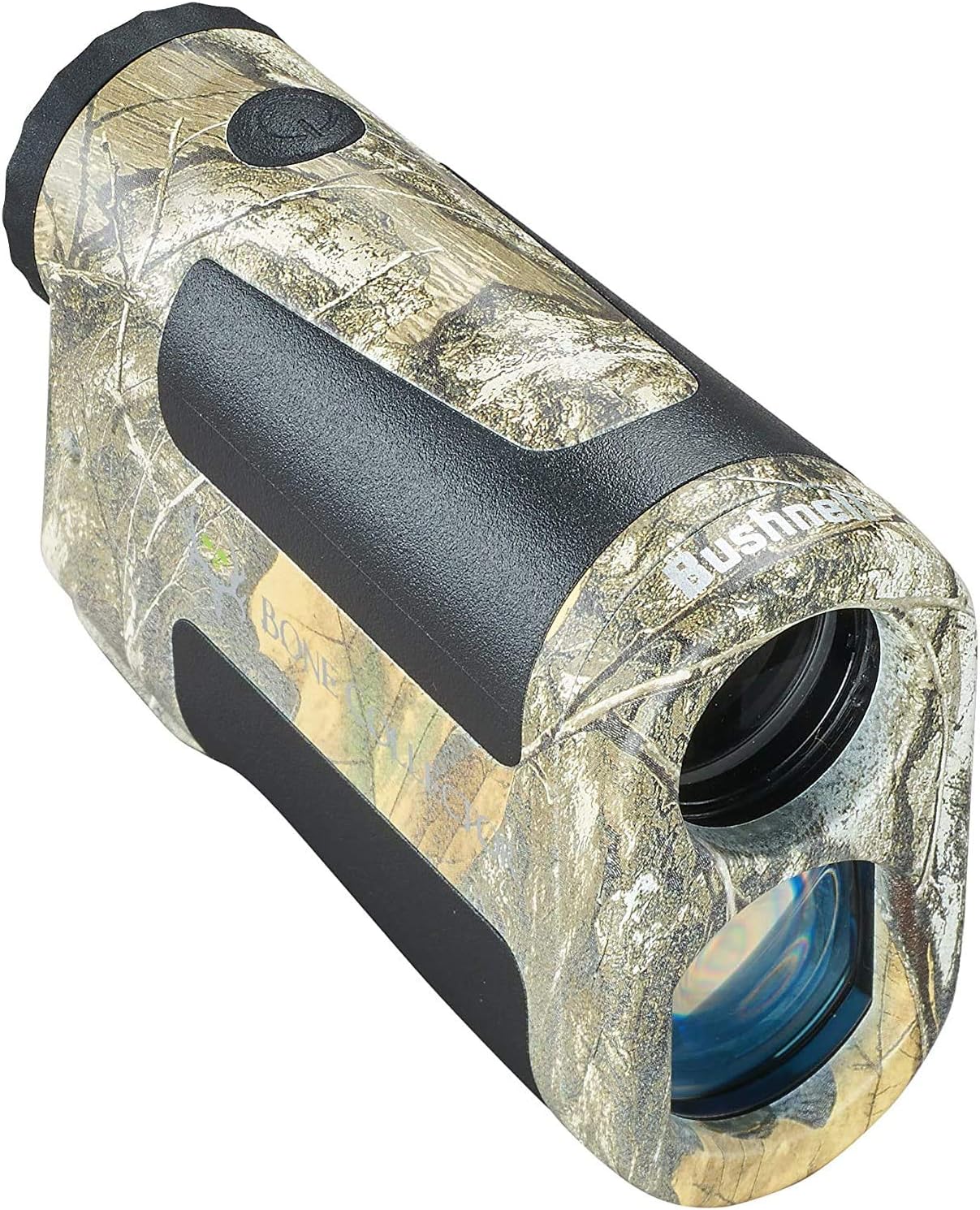 |
Bushnell BoneCollector 850Best for Tree Stands & Blinds |
|
Purpose-built for whitetail setups where shots come quick and slightly uphill. | Check Price on Amazon |
| 4 |  |
TIDEWE Hunting Rangefinder (Rechargeable)Best Rechargeable Value |
|
Stop buying button cells. This one charges up, keeps working, and leaves money in your pocket. | Check Price on Amazon |
| 5 |  |
REVASRI 1000Y Hunting RangefinderBest Lightweight Option |
|
For ounce-counters: it vanishes in a pocket and delivers without drama. | Check Price on Amazon |
| 6 |  |
AOFAR HX-700N Hunting RangefinderBest for Beginners |
|
The ideal first rangefinder: simple, honest, and cheap enough that you will actually carry it. | Check Price on Amazon |
| 7 |  |
WOSPORTS Hunting RangefinderBest Compact Budget Pick |
|
Cheap enough to live in your truck’s glovebox — and good enough to be your primary. | Check Price on Amazon |
| 8 | 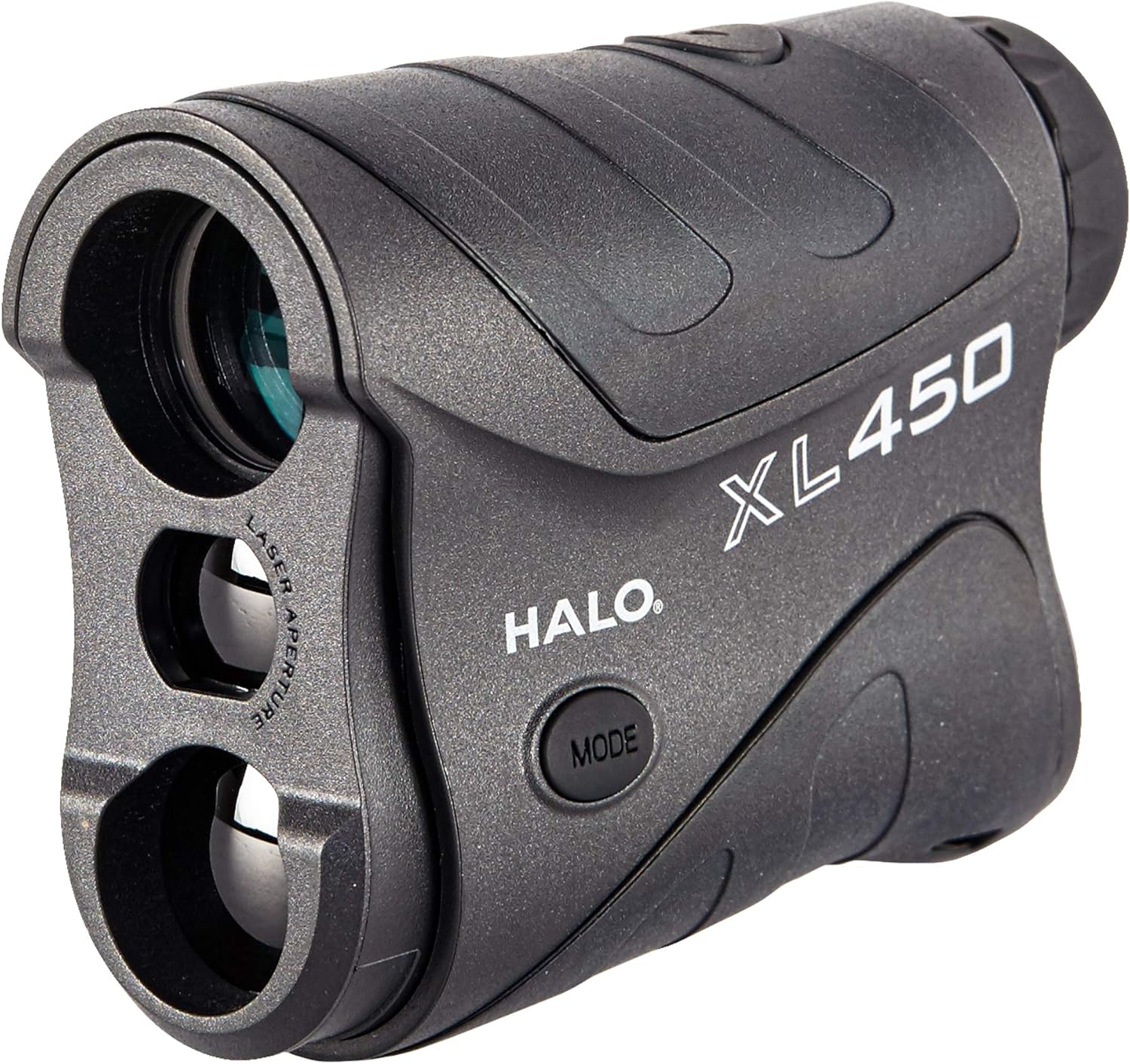 |
Halo Optics XL 450Best for Short-Range Woods |
|
When your shots are measured in dozens of yards, this does exactly what you need. | Check Price on Amazon |
| 9 |  |
CIGMAN Hunting Rangefinder 3280Best for Multi-Sport Use |
|
One device for the stand, the driving range, and everything in between. | Check Price on Amazon |
| 10 |  |
Gogogo Sport Vpro Hunting RangefinderBest Entry-Level All-Rounder |
|
The gateway rangefinder — and it performs well past its price expectations. | Check Price on Amazon |
| 11 |  |
AILEMON Hunt RangefinderBest Budget for Bowhunters |
|
Built for the archery pace: range, settle, shoot — without burning daylight. | Check Price on Amazon |
| 12 |  |
ACPOTEL Precision RangefinderBest Budget Precision Pick |
|
Straightforward accuracy without paying for a name on the rubber armor. | Check Price on Amazon |
See the Full Lineup and Today’s Deals
Compare all twelve picks in one place and grab the rangefinder that matches your terrain and your budget.
Compare Prices on AmazonHow to Choose a Hunting Rangefinder
Six ideas that cut through the marketing noise and point you toward the right unit.
Rangefinder shopping is a strange experience. Every box shouts a bigger number than the one beside it, and it is tempting to assume the largest figure wins. It does not. A rangefinder is a tool you will use in the least convenient conditions imaginable — cold hands, fading light, an animal that will not hold still, and a shot window measured in heartbeats. Choosing well means matching the tool to those conditions, not to a brochure. If you are brand new to hunting altogether, it also pays to anchor your gear decisions to the basics in a guide like how to get into hunting before you spend your whole budget on one device.
Maximum Range Versus Real-World Range
Every maximum range figure describes a large, highly reflective target on a clear day — a road sign, a bare rock face, a hillside. A deer-sized animal covered in dark, light-absorbing fur is a dramatically harder target, and at dawn or dusk the return signal is weaker still. As a working rule, expect reliable ranging on game at roughly one-half to two-thirds of the advertised maximum, depending on conditions and the unit’s quality. This is why the 1400-class and 1000-class models in this guide are not overkill: that headroom is what keeps readings fast and confident when a big-game animal appears at three hundred yards in bad light.
Think honestly about your own shooting distances. A hunter in tight eastern timber who rarely sees past eighty yards has completely different needs than someone glassing basins in elk country or setting up across a wide food plot. Buy for the farthest shot you would honestly take, then add some margin for poor light.
Angle Compensation: The Feature Tree Stand Hunters Need
A laser measures the straight-line, line-of-sight distance to a target — but gravity only cares about the horizontal component of your shot. Sit twenty feet up a tree with a buck standing thirty-eight yards away at a steep downward angle and the true ballistic distance is meaningfully shorter than the raw number. Angle compensation solves this, and it is the single most useful feature on this list for anyone who hunts from an elevated position or in mountainous terrain.
Whether the manufacturer calls it angle compensation, horizontal distance, or something flashier, what matters is that the unit gives you a corrected, shoot-for number rather than a raw one. Between tree stands, saddle platforms (see our guide to what is saddle hunting if you are curious about mobile elevated setups), and hillside glassing positions, this feature quietly prevents more missed shots than anything else on this list.
Magnification, Optics, and Field of View
More magnification sounds like more capability, but for hunting it is a trade. Higher magnification narrows your field of view and makes it harder to hold the reticle on a moving animal, especially with cold or shaky hands. Most serious hunting rangefinders live comfortably in the moderate magnification range, and that is deliberate. What matters far more than magnification is optical quality: multi-coated lenses, good light transmission, and clean edge-to-edge clarity. That is precisely why premium optical systems show up in the top picks here — glass quality is what lets you range confidently during the last fifteen minutes of legal light, which is when most shots happen.
Display and Low-Light Readability
A reading you cannot read is a reading you do not have. In the field, look for displays that stay legible in dim conditions, with clear numerals and a reticle that is easy to center on the target. Bright, high-contrast readouts make an enormous difference when you are ranging a dark-bodied animal against dark cover at dusk. If you hunt predominantly in low light — and most whitetail hunters do — prioritize display clarity over almost any other convenience feature.
Size, Weight, and Glove-Friendly Controls
A rangefinder that stays in your pack is dead weight. Compactness and one-handed operation matter enormously: you want to range with one hand while holding a bow or leaning against a tree with the other. Buttons should be findable by feel and usable with gloves on, which is worth testing before the season starts — the same logic applies to the rest of your cold-weather kit, from your hunting gloves to your lightweight hunting boots, where thoughtful design shows up in moments that last two seconds.
Battery and Power Strategy
Some units run on standard coin or camera-style cells, and others — like the rechargeable TIDEWE featured below — can be topped up by USB. Both approaches work, but the philosophy matters: replaceable batteries let you carry spares and swap in the field, while rechargeables cut long-term cost and waste. Cold weather drains every battery faster than the spec sheet admits, whatever the chemistry. Whatever you choose, make a charged spare part of your pre-season checklist.
Budget, Warranty, and Value
Rangefinders cluster into three broad tiers. Premium units cost more but earn it through optics, refined displays, advanced ballistic features, and warranty support from brands known for standing behind their gear. The middle tier delivers most of the practical capability at a friendlier price. The budget tier has improved dramatically — the affordable units in this guide genuinely range animals — but asks you to accept modest glass, simpler menus, and lighter-touch customer support. The smart buy is not the most expensive unit; it is the one whose compromises do not touch the way you hunt. And if you are building out a full archery setup while you are at it, see our roundup of the best arrows for deer hunting and our pick for the best thumb release for hunting.
Buy for Your Farthest Honest Shot
Not your dream shot. The distance you would actually pull the trigger at, in the light you actually hunt in.
Angle Compensation First
If you hunt from any elevated position or hillside, this one feature matters more than extra range.
Glass Beats Numbers
Optical quality determines whether you can range at dusk — the time you are most likely to shoot.
Carry It Every Sit
Compactness is a feature. A rangefinder left in the truck solves nothing at 6:45 in the morning.
Shop by the Features That Matter
Filter through hunting rangefinders with angle compensation, rechargeable power, and low-light-friendly displays.
Check Price on AmazonVortex Crossfire HD 1400
The do-everything rangefinder we recommend without hesitation.
There is a reason the Vortex name keeps turning up in hunting camps, truck consoles, and pack lids across the country. The brand built its reputation on delivering genuinely premium optics at prices working hunters can justify, and on backing the purchase with a warranty famous for being easy to use. The Crossfire HD 1400 continues that story: this is a rangefinder that feels like it belongs to a more expensive category and behaves like it, too.
Start with the “1400” in the name. That figure represents the class of maximum range Vortex is targeting here, and while real-world hunting distances on game will be shorter than a reflective-target maximum, the headroom is the point. Extra range capability translates directly into faster, more confident readings at ordinary hunting distances, because the unit is not straining at the edge of its ability when a bull elk appears across a meadow or a whitetail steps out at the far end of a field. For anyone who hunts mixed terrain — timber in the morning, open country in the afternoon — that margin is reassuring.
The “HD” designation speaks to the optical system, and this is where the Crossfire HD 1400 separates itself from budget competition. Coatings, clarity, and light transmission are what allow you to pick up a dark animal against dark timber as daylight drains away. Pair that with an angle-compensated ranging mode — the technology that gives you a corrected, shoot-for distance when you are shooting uphill, downhill, or out of an elevated stand — plus a scan mode that updates continuously as you sweep across a hillside, and you have the feature set that actually gets used in the field. This is also a natural companion for serious archery setups, and if you are building yours out, our guides to the best arrows for deer hunting and the best thumb release for hunting pair well with it.
What ultimately earns the Crossfire HD 1400 the top spot is that it has no obvious weak point to apologize for. The glass is excellent, the ranging is quick, the body is compact enough to live in a chest pocket or bino harness pouch, and the brand behind it has a track record of treating customers well long after the sale. If you want one recommendation and no second-guessing, this is the unit.
Vortex Crossfire HD 1400
Our best overall pick: premium-feeling optics, generous range capability, and the kind of brand support that makes an investment feel safe.
- 1400-yard class ranging — plenty of headroom for confident readings at real hunting distances in imperfect light.
- HD optical system — clear, bright glass that earns its keep during the last minutes of shooting light.
- Angle-compensated mode — corrected distances for elevated stands, saddles, and hillside shots.
- Scan mode — continuous updates as you sweep terrain or track moving game.
- Compact, glove-friendly body — easy to run one-handed while holding a bow or rifle.
- Backed by Vortex’s warranty reputation — one of the strongest reasons to buy once and keep it.
What We Like
- Optical clarity that competes above its price class
- Fast, confident readings at ordinary hunting ranges
- Angle compensation included, not sold separately
- Warranty support hunters genuinely trust
Keep in Mind
- More capability than a pure timber hunter strictly needs
- Popular models can sell out as season approaches
Vortex Crossfire HD 1400 — Our Top Pick
See today’s price and availability for the rangefinder we would buy first.
Check Price on AmazonLeupold RX-1400i TBR/W Gen 2
Ballistic intelligence in your pocket for steep, windy, far-country shots.
Leupold builds glass the way some people build heirlooms — with the assumption it will outlast the person who bought it. The RX-1400i TBR/W Gen 2 carries that DNA into a rangefinder that does considerably more than report a distance. The name tells the story: TBR/W stands for True Ballistic Range with Wind, and this second-generation model is built for hunters who think in terms of trajectories, not just tape measures.
Here is the practical difference. A basic rangefinder tells you a buck is 312 line-of-sight yards away. The RX-1400i is designed to give you the ballistic distance you should actually hold for — accounting for the angle of the shot — and to factor wind into that equation. In rolling foothills, canyon country, or any situation where the animal is well above or below you, that correction is the difference between a confident hit and a puzzling miss. If you have ever ranged a mule deer across a drainage and watched your bullet print high, you already understand the value.
The “Gen 2” designation matters, too. Product generations are where manufacturers quietly fix the things field users complained about — faster target acquisition, better display legibility, more intuitive controls — and this is a mature design refined through real use. The body is compact and classically Leupold: purposeful, ruggedly built, and engineered to survive being dropped on a rock in the dark, which happens to every piece of hunting gear eventually. And if you are the kind of hunter who also wants help dialing in the rest of the shooting system, our guide to the best night vision scope for coyote hunting covers the other half of the precision equation.
The honest caveat is that not every hunter needs ballistic wind data. If your shots are inside a hundred yards in flat timber, you will use a fraction of what this unit offers. But for mountain hunters, precision rifle shooters who hunt, and anyone who treats distance as a problem to be solved properly, the RX-1400i TBR/W Gen 2 is the most intellectually capable unit in this lineup.
Leupold RX-1400i TBR/W Gen 2
The precision pick for hunters who want their rangefinder to do ballistic thinking, not just arithmetic.
- TBR/W ballistic ranging — true ballistic range with wind information for confident holdovers.
- Angle-aware corrections — solves the geometry of steep shots automatically.
- 1400-yard class capability — generous range headroom for open-country hunting.
- Refined Gen 2 design — a mature platform improved through generations of field use.
- Rugged, weather-ready build — engineered for the abuse real hunts dish out.
- Leupold optical pedigree — glass you can trust when light is scarce.
What We Like
- Ballistic and wind data built into every reading
- Superb for steep terrain and extended distances
- Build quality inspires genuine confidence
- Fast, intuitive operation once configured
Keep in Mind
- More capability than close-cover hunters will use
- Ballistic features reward a bit of setup time
Leupold RX-1400i TBR/W Gen 2 — Precision Pick
Check current pricing on the rangefinder built for steep country and long shots.
Check Price on AmazonBushnell BoneCollector 850
A whitetail-first rangefinder for hunters who shoot from above and close.
Most whitetail hunters do not need to range a mountain. They need to know — instantly, with a bow in hand and a buck walking a scrape line — whether the animal is at thirty-one yards or thirty-eight. That is the world the Bushnell BoneCollector 850 was built for. The 850 designation in its name represents its range class, which is far more than enough for the distances most stand and blind hunters actually shoot, and the compact, quick-handling body reflects the reality that your rangefinder will spend most of its life hanging from your harness within arm’s reach.
Bushnell is one of the most established names in American optics, and the BoneCollector line leans into authentic hunting credibility rather than spec-sheet posturing. The result is a unit that feels purpose-built instead of general-purpose: easy to bring up quickly, easy to operate one-handed, and easy to read without fumbling when your heart rate has decided to double. For elevated hunting positions, angle compensation is the crucial inclusion here — shooting downward from a stand changes your effective distance, and having the unit correct for that automatically removes a classic source of missed shots.
Pair this one with the rest of a mobile whitetail setup and it makes immediate sense. Hunters who run lightweight hang-on stands or mobile setups — including the growing crowd of saddle hunting enthusiasts — will find the compact form factor and quick ranging a perfect match for the style: light, fast, and quiet. Knowing the best deer hunting times gets you in the stand; knowing your exact distance is what closes the deal when the moment arrives.
The trade-offs are reasonable and honest. Hunters planning shots across wide western basins will want more range headroom, and the close-range focus here means you are not paying for capability you will never touch. For the majority of whitetail hunters — especially archers — that is exactly the right kind of compromise.
Bushnell BoneCollector 850
A close-cover specialist with the credibility of a major optics brand and the speed whitetail hunts demand.
- 850-yard class ranging — ideal headroom for stand, blind, and timber hunting distances.
- Angle compensation — corrected distances for the downward shots elevated hunters take all season.
- Compact, one-hand operation — built to be used fast and quiet at full draw.
- Quick target acquisition — less time ranging, more time settling the pin.
- Trusted optics heritage — backed by decades of American optics experience.
What We Like
- Purpose-built for real whitetail scenarios
- Fast, simple operation with gloves and adrenaline
- Angle correction where it matters most
- Right-sized for harness and pocket carry
Keep in Mind
- Less range headroom than open-country models
- Not aimed at long-range precision rifle work
Bushnell BoneCollector 850 — Whitetail Favorite
See today’s price on the stand-hunter’s rangefinder before the season fills the shelves.
Check Price on AmazonTIDEWE Hunting Rangefinder (Rechargeable)
The smart-money pick: capable performance and batteries you never have to buy.
Here is a small truth about rangefinder ownership that nobody tells you up front: the purchase price is not the whole cost. Coin cells add up, they always die at the worst possible moment, and finding a replacement in a hunting camp is a special kind of frustration. The TIDEWE Hunting Rangefinder sidesteps that entire conversation with a rechargeable power system, and does it at a price that makes the value argument almost unfair.
Rechargeable convenience is the headline, but the substance is underneath it. This unit delivers the feature set that actually gets used in the field: angle-compensated distance for elevated and downhill shots, a scan mode for sweeping terrain and tracking movement, and a display designed to be read quickly rather than admired. The accessory package that typically accompanies TIDEWE gear means you are usually set up to carry and protect the unit from day one, which softens the “what else do I need to buy” problem that plagues budget purchases.
What makes the TIDEWE genuinely recommendable — rather than merely cheap — is the way it respects how hunters use their gear. Charge it from the same power bank that tops off your phone and headlamp, drop it in your pack, and forget about battery logistics for the entire trip. That is a small daily improvement that compounds over a full season. And it frees up budget for the rest of the kit — say, layering up properly for a cold all-day sit, or planning your scouting around a reliable trail camera setup for deer hunting in the weeks before the opener.
Where does the value tier ask you to compromise? Expectations should center on optical refinement and low-light polish rather than core ranging capability. But if your priority is honest performance per dollar and a battery you never have to think about, the TIDEWE makes an extremely strong case.
TIDEWE Hunting Rangefinder (Rechargeable)
The value leader: rechargeable power, the features hunters use most, and a price that leaves room in the budget.
- Rechargeable battery system — top it up with the chargers you already carry and skip disposable cells entirely.
- Angle-compensated distance — corrected, shoot-for numbers from stands and hillsides.
- Scan mode — sweep across terrain for continuous, updated readings.
- Hunting-ready kit — typically equipped to carry and protect the unit out of the box.
- Compact, lightweight body — easy to keep on you rather than in the truck.
What We Like
- No more buying or hunting for coin-cell batteries
- Feature set covers real hunting scenarios
- Excellent performance per dollar
- Convenient charging between hunts
Keep in Mind
- Glass and display refinement trail premium brands
- Requires charging discipline before trips
TIDEWE Rechargeable Rangefinder — Best Value
See why this rechargeable pick is a favorite for hunters building their kit on a smart budget.
Check Price on AmazonREVASRI 1000Y Hunting Rangefinder
Featherweight carry with real ranging reach for mobile hunters.
Weight is the tax every hunter pays, and the hunters who move the most pay it twice. If your style involves hiking into a basin before daylight, climbing to a saddle, or covering ground on foot all day — the kind of hunting celebrated in guides to still hunting and mobile setups — then every ounce earns scrutiny. The REVASRI 1000Y answers that argument directly: it delivers genuine ranging reach in a body that disappears into a pocket and never reminds you it is there.
The 1000Y designation signals the range class this unit plays in, which puts it comfortably in “more than enough” territory for real-world hunting distances on game. And that is the REVASRI’s quiet strength. A lightweight unit is only worth carrying if it can actually do the job, and this one has the reach to range a feeding elk across a meadow or a buck at the far edge of a field without straining. The controls stay simple and uncluttered, the display reads fast, and the whole package feels designed for people who would rather spend their mental energy on wind and terrain than on menus.
Simplicity cuts both ways. Hunters who want ballistic wind solutions or elaborate reticle options will find more sophistication in the Leupold and Vortex entries above. But there is a real pleasure in a tool that does exactly one job cleanly: pull it out, range the animal, get a number, put it away. For mobile western hunting, scouting missions, and anyone who counts ounces in their pack list alongside a good pair of hunting socks that do not wreck their feet, the REVASRI 1000Y is an easy recommendation.
REVASRI 1000Y Hunting Rangefinder
The ounce-counter’s choice — genuine range capability in a body that vanishes in your pocket.
- 1000-yard class ranging — real capability for open-country and long-field scenarios.
- Ultra-lightweight body — built for hunters who measure every ounce.
- Clear, quick-reading display — a number you can actually use in the moment.
- Simple, intuitive controls — no manual required, no menu diving in the dark.
- Pocket-friendly footprint — easy to keep permanently in your kit.
What We Like
- Remarkably light without feeling flimsy
- Range headroom that outpaces its size
- Dead-simple operation under pressure
- Great companion for long, mobile hunts
Keep in Mind
- Fewer advanced ballistic features
- Minimalist approach may feel sparse to tech lovers
REVASRI 1000Y — Best Lightweight
Check today’s price on the rangefinder that gives up nothing but weight.
Check Price on AmazonAOFAR HX-700N Hunting Rangefinder
The no-drama first rangefinder that builds good habits from day one.
Every hunter remembers their first rangefinder, and the best thing a first rangefinder can do is stay out of the way. The AOFAR HX-700N is exactly that kind of device: a straightforward, honest laser rangefinder that teaches you the fundamentals without demanding a manual, a tutorial, or a second thought. The 700 in its name reflects the range class it occupies, which is a very comfortable fit for the distances most new hunters are working with — archery setups, first rifle seasons, and typical eastern and midwestern timber.
The beginner experience lives or dies on simplicity, and this is where the HX-700N earns its recommendation. Controls are arranged the way you expect them to be, readings come back quickly, and the unit is light enough that carrying it every single sit becomes automatic rather than a decision. That last point matters more than any spec. The hunters who improve fastest are the ones who range constantly — range your shooting lanes from the stand, range the far treeline, range the creek crossing — until reading distance becomes second nature. A rangefinder you actually carry makes that practice happen.
There is a developmental arc here worth naming. First-season hunters have a long list of decisions to make, from ethics and shot placement to where to hang a stand. Resources like how to get into hunting and knowing when deer hunting season opens handle the big picture, while a forgiving rangefinder like this one handles one of the core skills without adding friction. Spend your early seasons learning to trust a number instead of guessing, and you will outgrow this unit gracefully rather than resenting it.
Is it the last rangefinder you will ever own? Probably not, and that is fine. The AOFAR HX-700N is not trying to be. It is trying to be the first one — affordable, capable, and confidence-building — and on that mission it delivers completely.
AOFAR HX-700N Hunting Rangefinder
A first rangefinder done right: simple to use, easy to carry, and priced so there is zero risk in learning on it.
- 700-yard class ranging — comfortable capability for real beginner hunting distances.
- Intuitive controls — operate it correctly on the first try, in the dark, with gloves on.
- Outdoor-ready construction — built to handle the weather hunts actually happen in.
- Light and packable — disappears in a pocket so it always comes along.
- Beginner-friendly price — lets you invest the rest of your budget where it matters.
What We Like
- Genuinely simple — no learning curve to speak of
- Light enough to carry on every single sit
- Great for building ranging confidence
- Price makes it a zero-stress first purchase
Keep in Mind
- Advanced users may want more ranging modes
- Optics are honest, not luxurious
AOFAR HX-700N — Best for Beginners
The ideal first rangefinder, ready for your first season in the field.
Check Price on AmazonWOSPORTS Hunting Rangefinder
Small, light, affordable — and honest where it counts.
Some gear earns its place by being impressive. Other gear earns its place by being there. The WOSPORTS Hunting Rangefinder belongs firmly in the second camp: a compact, lightweight, budget-priced unit that solves the core problem — knowing how far away the animal is — without asking you to spend premium money to get the answer.
Compactness is the defining characteristic here. This is a rangefinder that fits in a jacket pocket, a hip pouch, or the small compartment of a pack lid, and it is light enough that you stop noticing it after a week. For hunters who have been leaving a bulkier unit behind because it was inconvenient — a habit that guarantees you will need it exactly once and not have it — the WOSPORTS fixes the behavior at the root. It includes the practical modes hunters rely on, including the ability to sweep terrain with continuous readings as an animal moves through cover, which is precisely how you range a walking deer without gambling on a single shot at a single spot.
The budget reality deserves a plain statement. At this price, you are choosing capability-per-dollar over optical luxury. Glass and display refinement trail the premium entries in this guide, and low-light performance is the area where that gap shows most clearly. But the WOSPORTS is not trying to beat Vortex at Vortex’s game. It is trying to make sure that every hunter — including hunters outfitting a whole family, or keeping a spare in every vehicle — can afford to know the distance. For a deeper look at how scouting tools fit into the wider picture, our guide to the best trail camera for deer hunting covers the other side of preparation.
It also makes a genuinely excellent backup. Plenty of experienced hunters keep a premium unit in their bino harness and an affordable, worry-free unit in their pack as insurance against drops, drownings, and the thousand small disasters of a season afield.
WOSPORTS Hunting Rangefinder
The compact budget pick that turns “I should have brought it” into “good thing I had it.”
- Pocketable compact body — small enough to always, always come with you.
- Scan mode — sweep and track continuously as animals move.
- Lightweight for all-day carry — adds nothing to your fatigue.
- Straightforward controls — quick readings without menu gymnastics.
- Budget-friendly pricing — affordable enough for a backup or a second setup.
What We Like
- Extremely portable and unobtrusive
- Does the essential job reliably
- Wonderful as a truck or pack spare
- Approachable enough for the whole family
Keep in Mind
- Glass trails premium competition
- Low-light polish is modest at this price
WOSPORTS — Best Compact Budget Pick
See today’s price on the rangefinder that is small enough to never get left behind.
Check Price on AmazonHalo Optics XL 450
Built for tight timber, quick shots, and the hunters who live there.
Not every hunt happens in a place where you can see four hundred yards. Some of the best hunting in the country happens in timber so thick that a forty-yard lane feels like a highway — creek bottoms, ridge cuts, swamp edges, and overgrown field corners where a gobbler or a buck appears at conversational distance. The Halo Optics XL 450 is built for exactly this world, and its 450-class designation tells you the design philosophy honestly: this is a unit optimized for the ranges where close-cover hunters actually shoot.
That focus is a feature, not a limitation. A rangefinder tuned for near and mid distances tends to be quicker to settle on small targets, easier to hold steady one-handed, and friendlier to read at a glance — all of which matter enormously when you have two seconds of opportunity before the animal steps behind a trunk and vanishes. The XL series emphasizes approachability: a display you can read without squinting, controls you can find by feel, and a compact form that suits hunters who move quietly through cover with minimal gear.
This is a natural pick for turkey hunters and small-game specialists. If your season calendar includes spring birds, the ability to quietly range a strut zone or a field edge pays real dividends — see our guide to when turkey hunting season arrives for planning, and consider how shotgun hunters in tight cover benefit from knowing precisely where the shooting starts and stops. Waterfowlers working timber holes and dove hunters on tight field edges fit the same profile; if that is your world, our guide to what to wear dove hunting rounds out the kit.
Hunters chasing big, open-country game at distance should look elsewhere in this guide — that is not what this unit is for. But for the enormous population of hunters whose shots are quick, close, and slightly complicated by trees, the Halo Optics XL 450 is a focused, capable, and easy-to-like tool.
Halo Optics XL 450
The close-cover specialist: fast, readable, and perfectly matched to tight timber and quick shots.
- 450-yard class ranging — precisely matched to real close-cover shooting distances.
- Easy-read display — quick legibility when the moment lasts two seconds.
- Scan mode — follow movement through timber without losing your reading.
- Compact, approachable design — simple to run while holding a shotgun or bow.
- Beginner-friendly operation — works intuitively from the very first sit.
What We Like
- Optimized for where most timber hunts actually happen
- Fast, quiet, one-handed operation
- Very easy display to read at a glance
- Excellent fit for turkey and small-cover hunting
Keep in Mind
- Not intended for long open-country ranging
- Long-range shooters will want more headroom
Halo Optics XL 450 — Tight Timber Favorite
Check pricing on the rangefinder made for close cover and quick decisions.
Check Price on AmazonCIGMAN Hunting Rangefinder 3280
One device for the stand, the range, and everything else on your calendar.
Few households are single-sport households. The same person who hunts whitetails in the fall might be dialing in a rifle at the range in summer, coaching youth shooting sports, or sneaking in a round on the links between scouting trips. The CIGMAN Hunting Rangefinder 3280 is built for exactly that kind of versatility, and its generous 3280 max-range designation in the name signals a unit designed to reach out well beyond the distances typical hunting demands.
That extra reach is useful even when you never intend to shoot that far. It translates to quicker, more confident readings at ordinary distances — the unit is never straining to resolve a target at a hundred and fifty yards when its capability stretches much further. Multiple ranging modes let you adapt the readout to what you are doing, whether that is pacing off shooting lanes before the season, ranging field edges for stand placement, or measuring carry distances on a course. The lightweight, grab-and-go body means it migrates easily between your hunting pack and your range bag without becoming anyone’s dedicated property.
There is practical value in a shared device, too. Households where a rangefinder gets used by a rifle hunter, a bowhunter, and a range-day regular can justify one purchase instead of three, and the CIGMAN’s blend of generous range and accessible pricing makes that math work hard. It pairs naturally with other cross-over gear investments — and if you are still assembling the hunting side of the equation, our guide to getting into hunting is a solid companion read.
Specialists should be honest with themselves: a dedicated long-range ballistic unit will out-feature it for precision rifle work, and a premium glass brand will out-refine it in fading light. But as a single tool that covers hunting, shooting sports, and general distance measurement with equal competence, the CIGMAN 3280 is a genuinely sensible buy.
CIGMAN Hunting Rangefinder 3280
The versatile all-rounder with generous range headroom and a feature set that works across sports.
- 3280 max-range designation — impressive reach that makes everyday distances feel easy.
- Multiple ranging modes — adaptable readouts for hunting, shooting, and general use.
- Lightweight, grab-and-go body — travels easily between packs and bags.
- Clear, quick display — fast answers without fuss.
- Strong versatility per dollar — one purchase covering many activities.
What We Like
- Excellent range capability for the price
- Adapts easily across hunting and shooting sports
- Light enough to live in a pack permanently
- Great shared-device value for households
Keep in Mind
- Less specialized than dedicated ballistic units
- Multi-sport focus means fewer hunting-specific refinements
CIGMAN 3280 — Best for Multi-Sport
See today’s price on the rangefinder that works as hard as your calendar does.
Check Price on AmazonWallet-Friendly Rangefinders: Gogogo Sport Vpro, AILEMON & ACPOTEL
Three affordable units that do the job — each with its own personality.
The budget tier is where rangefinder shopping gets genuinely interesting, because the gap between “cheap” and “cheap and good” has narrowed dramatically. The three units in this section each take a different approach to the same challenge: delivering real, trustworthy distance readings without a premium price tag. Read this section as a mini-buying decision inside the bigger one — the right choice depends on whether you value all-around simplicity, archery-friendly handling, or precision-focused readouts.
Before the individual reviews, one honest expectation-setting note. At budget pricing, the compromises concentrate in optical refinement, display sophistication in very low light, and the depth of warranty and support behind the product. The core ranging performance — the thing that turns “I think he’s at thirty-five” into “he’s at forty-two” — is very much present in all three of these. That is the deal, and for a great many hunters it is a deal worth taking.
Swipe to see more →
| # | Image | Product | Key Specs & Features | Verdict | Where to Buy |
|---|---|---|---|---|---|
| A | |
Gogogo Sport Vpro Hunting RangefinderBest Entry-Level All-Rounder |
|
The most approachable way into rangefinder ownership. | Check Price on Amazon |
| B | |
AILEMON Hunt RangefinderBest Budget for Bowhunters |
|
Paced for the quick rhythm of archery hunting. | Check Price on Amazon |
| C | |
ACPOTEL Precision RangefinderBest Budget Precision Pick |
|
For hunters who want clean numbers over brand names. | Check Price on Amazon |
Gogogo Sport Vpro Hunting Rangefinder
The gateway rangefinder that made budget laser ranging respectable — simple, portable, and better than its price suggests.
- Multi-use optical platform — equally comfortable in the field and at the range.
- Clear, uncomplicated display — readings you can parse instantly.
- Portable, packable body — small enough to live in your jacket.
- Straightforward operation — no manual archaeology required.
- Approachable price — the easiest way to start ranging confidently.
What We Like
- Genuinely capable for the money
- Wonderfully simple for first-time users
- Light and easy to keep on you
- Works across more than just hunting
Keep in Mind
- Refinement trails premium options
- Basic compared to ballistic-capable units
AILEMON Hunt Rangefinder
A budget unit with an archer’s tempo: quick to deploy, quick to read, and comfortable one-handed at full draw.
- Fast, clear distance readout — built for the short decision window of archery hunts.
- Compact one-hand design — hold the bow, run the rangefinder, keep your eyes up.
- Sharp close-range optics — tuned for the distances bowhunters work in.
- Lightweight body — easy to mount to a harness or pocket.
- Budget pricing — leaves room for the rest of the archery kit.
What We Like
- Excellent handling rhythm for archery
- Compact and unobtrusive on the harness
- Strong close-range clarity
- Very friendly price point
Keep in Mind
- Budget optics with budget expectations
- Best suited to shorter hunting distances
ACPOTEL Precision Rangefinder
The precision-minded budget pick: clean readouts, multiple modes, and none of the premium markup.
- Precision-focused readouts — clear, definite numbers instead of vague estimates.
- Multiple targeting modes — adapt to different targets and situations.
- Lightweight chassis — easy to carry without noticing it.
- Simple, direct interface — built to answer one question fast: how far?
- Value pricing — accuracy without the brand-name tax.
What We Like
- Focused on accuracy where it counts
- Useful mode variety at this price
- Light and packable
- Outstanding value for budget builds
Keep in Mind
- Less known brand, so buy from a seller with good support
- No premium glass experience
Building a Full Kit on a Budget?
Compare affordable hunting rangefinders side by side and see which value pick is in stock right now.
Browse Budget Rangefinders on AmazonRangefinder Care, Maintenance & Field Tips
Small habits that keep your unit fast, accurate, and alive for years.
A rangefinder is one of the few pieces of hunting gear that is genuinely fragile in one specific, important way: its optics. You can drop a pack off a tailgate, soak a pair of boots, and stuff a jacket in a stuff sack — but a scratched or fogged lens degrades every reading you take from that point forward. The good news is that caring for a rangefinder takes about sixty seconds of attention per hunt, and the payoff is years of crisp, confident performance.
Lens Care That Actually Works
Blow before you wipe. Grit is the enemy, and dragging a cloth across a dusty lens is how microscopic scratches accumulate into a permanent haze. Use a blower or a breath-and-brush approach first, then a proper lens cloth — never a shirt tail, which is essentially sandpaper with a logo on it. Keep the cloth clean, keep it dry, and store it in the case rather than the bottom of a pocket full of debris.
Fighting Fog and Moisture
Temperature swings are what fog lenses: walk out of a warm truck into freezing air, or pocket a cold unit against a warm body, and condensation forms on the glass. Let the unit acclimate gradually when you can, keep it in its case during transitions, and never seal a damp unit in an airtight bag for days. If your unit does fog internally and stays that way, that is a service question, not a field problem — and it is one more reason to buy from brands with a support reputation.
Battery Discipline for Cold Season
Cold is hard on every battery chemistry. Keep your spare warm — inside a jacket pocket rather than in the pack lid — and consider it part of your pre-season checklist to start the year with a fresh cell even if the old one still shows life. For rechargeable units, top up before every trip the same way you charge your headlamp. Two minutes of preparation prevents the uniquely annoying discovery of a dead display at the moment a buck steps out.
Practice Like You Hunt
The single best rangefinder skill is speed, and speed comes from repetition. Range your shooting lanes from your stand height. Range the landmarks a deer will pass — the scrape, the creek crossing, the far corner of the food plot — before the season, so that at the moment of truth you already know the neighborhood. Range a walking target to learn how scan mode behaves. If you hunt from a stand, practice the exact motion: bow or rifle in hand, unit up, reading down, unit away. And while you are dialing in the setup, our guide to the best deer hunting times helps you be in the right place when all that practice pays off.
Field Habits of Consistent Hunters
Never range through brush if you can avoid it — a laser will happily tell you the distance to a twig instead of the deer behind it. If a reading feels wrong, take it again from a slightly different angle. Range the animal, not the terrain beside it. Wear gloves you can actually operate gear with; our guide to the best hunting gloves covers dexterity as a real selection criterion. And keep the unit in the same place every time — harness, chest pocket, pack lid — because gear that has a home gets used and gear that does not gets left behind.
Blow, Then Wipe
Remove grit before touching the lens. A clean microfiber cloth in the case beats any improvised solution.
Let It Acclimate
Gradual temperature transitions prevent fogging. Avoid sealing a cold unit against a warm body.
Warm Spares, Charged Units
Keep spare batteries in a warm pocket and charge rechargeables before every trip without exception.
Pre-Range Your Lanes
Know the distance to every landmark before opening day. At the moment of truth, there is no time.
Finally, remember that the rangefinder is one part of a wider system of preparation. Hunters who scout with trail cameras, think carefully about access and wind, and know the terrain under their feet — whether that is timber, upland country, or a hillside glassing position — are the ones for whom accurate distance turns into recovered game. For the walking hunters among us, our explainer on what is shed hunting is a great off-season way to keep learning the land you will hunt later.
Complete Your Field Kit
From lens cloths to carrying cases, find the accessories that keep your rangefinder season-ready.
Check Price on AmazonFrequently Asked Questions
The questions hunters ask us most about laser rangefinders.
How accurate are hunting rangefinders?
Modern laser rangefinders are extremely accurate — typically within a yard or less on good targets at ordinary hunting distances. The real-world variable is not the laser; it is the target. A large, reflective object returns a strong signal, while a deer-sized animal in dark fur at last light is much harder for the unit to resolve. That is why readings on game at the extreme edge of a unit’s range can be slow or inconsistent. If you hunt in low light or at distance, buying more range capability than you think you need is the simplest way to keep accuracy high at realistic distances.
What range do I actually need for deer hunting?
Less than the marketing suggests. Most whitetail shots happen well inside a couple hundred yards, and many archery shots are far closer than that. But a unit whose maximum capability matches your typical shot will struggle in low light, because the unit is working near its limit. A practical approach is to identify the farthest distance you would honestly shoot, then choose a rangefinder with comfortable headroom beyond it. That margin is what delivers fast, confident readings in the conditions where shots actually happen.
What is angle compensation, and do I really need it?
Angle compensation corrects for shots taken up or downhill. A laser measures straight-line distance to the target, but gravity acts only on the horizontal portion of that path — so a buck at a steep angle from your stand is ballistically closer than the raw reading implies. If you hunt from a tree stand, a saddle, a ground blind on a slope, or any hilly terrain, angle compensation is genuinely one of the most useful features available. Flat-country ground hunters will use it less, but it remains a smart inclusion that quietly prevents missed shots.
Can I use a golf rangefinder for hunting?
Sometimes, but understand the differences first. Many golf-oriented units prioritize flag-lock behavior and fast acquisition on bright, reflective targets in open daylight. Hunting units generally emphasize target priority modes, low-light display legibility, subdued finishes, and angle compensation tuned for shooting rather than club selection. A multi-sport unit can serve both worlds reasonably well — several picks in this guide do exactly that — but a purely golf-focused device may frustrate you in timber at dusk.
Are laser rangefinders legal for hunting?
In most places, yes — laser rangefinders are widely accepted as ordinary hunting equipment. However, regulations vary by jurisdiction and by species, and rules can restrict electronic aids in archery seasons or specific contexts. Regulations also change, so verify the current rules for your specific area, species, and season type before you hunt. When in doubt, contact the wildlife agency where you hunt and get the answer in writing.
How do I range a deer without spooking it?
Practice the motion until it is silent and second nature. Pre-range your shooting lanes and landmarks before the season so you already know most distances cold. In the moment, avoid sudden movement, keep the unit close to your line of sight rather than waving it around, and use short, deliberate scans instead of long searching sweeps. Many missed opportunities come from fumbling, not from the laser itself — smooth gear handling is a skill worth practicing just like shooting.
Do rangefinders work in rain, fog, and low light?
Light rain and ordinary dusk are no problem for a quality unit with good optics and a readable display. Heavy fog and falling snow are harder, because the laser bounces off moisture particles between you and the target, which can produce short or inconsistent readings. In those conditions, take multiple readings and trust consistent repeats over a single number. Low light is really an optics question: better glass and a clearer display matter most exactly when the light disappears.
Are rechargeable rangefinders better than ones with replaceable batteries?
Both approaches work well; it depends on your habits. Replaceable batteries let you carry spares and swap instantly in the field with zero charging logistics, which many backcountry hunters prefer. Rechargeable units eliminate battery purchases and are convenient if you already charge a phone, headlamp, and camera from the same power bank. Cold weather drains every type faster than advertised, whichever you choose. The best system is the one you will reliably keep powered before every hunt.
What magnification is best for a hunting rangefinder?
Moderate magnification is the sweet spot for most hunting. Higher magnification narrows your field of view and makes it harder to hold the reticle on a moving animal or find it quickly in timber, especially with cold hands or adrenaline. What matters more than magnification is optical quality — coatings, clarity, and light transmission determine whether you can range confidently in the fading light when most hunting shots happen.
Why does my rangefinder fog up, and how do I prevent it?
Internal or external fogging comes from rapid temperature changes — warm truck to freezing air, or a cold unit pressed against a warm body. Prevent it by letting the unit acclimate gradually, keeping it in its case during transitions, and never sealing a damp unit in an airtight container. Blow dust off the lens before wiping it, and use a proper lens cloth. Persistent internal fog is a service issue and one of the practical reasons to favor brands with dependable support.
Are budget rangefinders worth buying?
Yes — with clear expectations. Modern budget units genuinely range animals accurately, and several in this guide are legitimately good tools rather than novelties. What you typically give up is optical refinement, low-light polish, advanced ballistic features, and the depth of warranty support behind premium brands. If you hunt mostly at moderate distances in decent light, a budget unit is a smart buy. If you hunt where every reading matters in bad light, spending more tends to pay for itself.
Should I get a rangefinder binocular instead of a separate unit?
Rangefinding binoculars are excellent for hunters who glass constantly and dislike managing two devices — western hunters covering big country are the classic example. The trade-offs are cost, weight, and the reality that a single drop endangers both functions at once. A dedicated compact rangefinder is lighter, cheaper, and faster to deploy one-handed while holding a bow or rifle. Many experienced hunters ultimately run both: a compact unit for speed and a premium bino for glassing-heavy hunts.
Still Deciding?
Compare today’s top hunting rangefinders side by side and pick the one that matches how you actually hunt.
See Rangefinder Deals on AmazonWhich Hunting Rangefinder Should You Buy?
The short version, after all of the above.
If you want the one answer that fits almost everyone, it is the Vortex Crossfire HD 1400. Excellent optics, genuine range headroom, angle compensation, and a brand that stands behind its gear — that combination covers whitetail stands, archery seasons, western hunts, and everything in between. It is the pick we would buy with our own money and not think about again.
From there, the right choice depends on your hunting life. The Leupold RX-1400i TBR/W Gen 2 is the precision instrument for steep country and long shots. The Bushnell BoneCollector 850 is purpose-built for stand-and-blind whitetail hunters. The TIDEWE rechargeable is the smart-money value play that ends the battery problem forever. The REVASRI 1000Y rewards hunters who count ounces, the AOFAR HX-700N is a genuinely excellent first rangefinder, and the Halo Optics XL 450 is made for tight timber where shots are close and quick. The WOSPORTS, CIGMAN 3280, Gogogo Sport Vpro, AILEMON, and ACPOTEL each prove that a modest budget no longer means guessing at yardage.
Whatever you choose, do the thing that matters more than the purchase: carry it every sit, practice with it before the season, and range the landmarks in your hunting area until reading distance becomes automatic. That habit — not the logo on the housing — is what turns a rangefinder into recovered game and cleaner, more ethical shots.
Lock In Your Pick Before the Season
Our top overall pick is the Vortex Crossfire HD 1400 — check today’s price and get ranging with confidence.
Check Price on AmazonYou May Also Like
More hunting guides, gear roundups, and field skills worth your time.
Best Hunting Socks
Cold, wet feet end more hunts than missed shots. Here are the socks that keep you in the stand longer.
Read the guide → WaterfowlWhat Choke for Duck Hunting?
Pattern density, shot size, and the choke decision that changes your success over decoys.
Read the guide → ExplainerWhat Is Upland Hunting?
Walking birds, pointing dogs, and a style of hunting that rewards endurance and good boots.
Read the guide → ExplainerWhat Is Trophy Hunting?
A clear look at what the term means, how it is practiced, and the ethics hunters debate around it.
Read the guide → Gear GuideWhat to Wear Dove Hunting
Hot fields, sharp brush, and fast-flying birds — the clothing choices that make opening day comfortable.
Read the guide → ExplainerWhat Is Snipe Hunting?
One of hunting’s oldest inside jokes — and the real bird that makes it a genuine challenge.
Read the guide →