

Bowhunting Gear · Arrow Roundup
Best Arrows for Deer Hunting: 12 Carbon Shafts Compared for Accuracy, Penetration, and Value
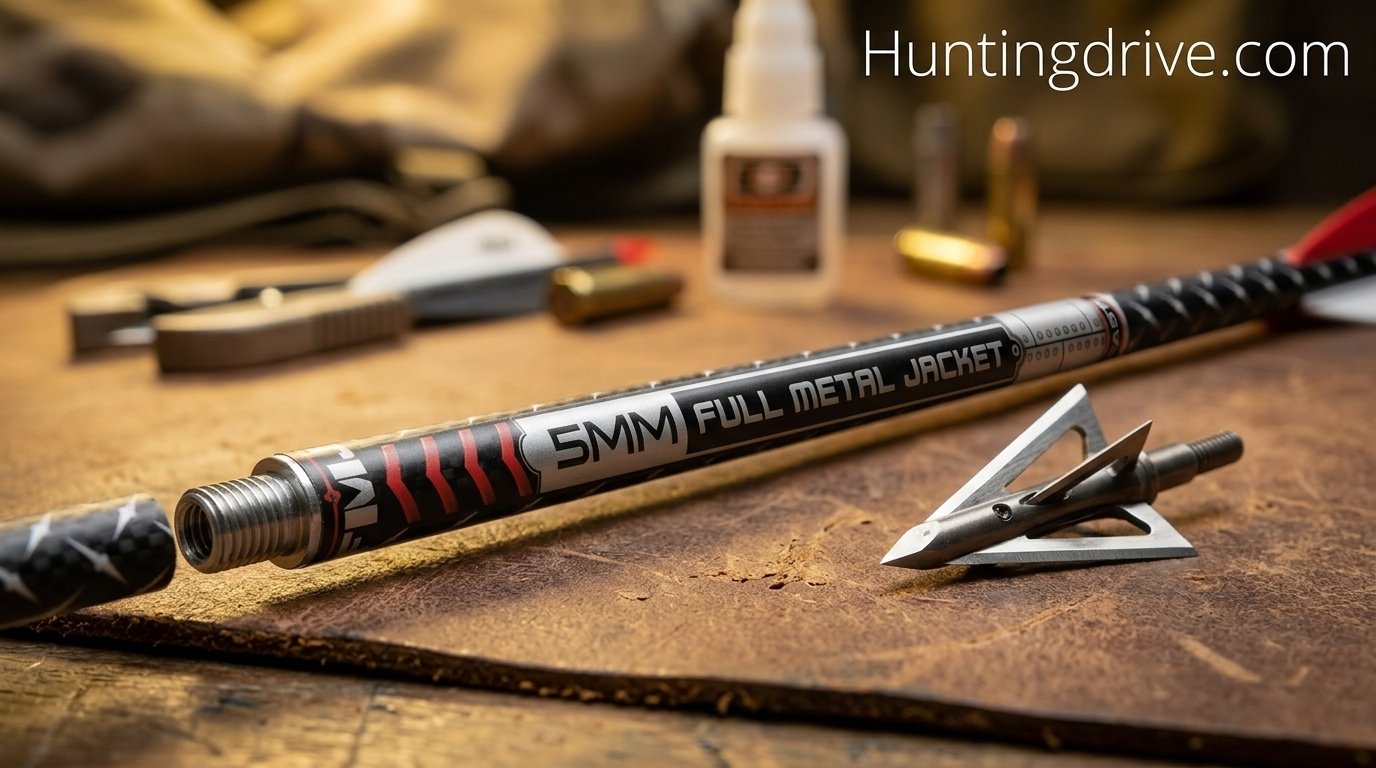
Shaft quality is the quiet half of every clean deer harvest. The arrow is what actually delivers the shot.
Ask a room full of bowhunters what wins a deer season and you will hear about bows, releases, broadheads, and optics. Almost nobody brags about their shafts. And yet the arrow is the only piece of equipment that physically touches the animal, which makes it the last place you want to cut corners.
A great deer hunting arrow does three unglamorous jobs at once: it flies the same way every time, it holds together through bone and hide, and it keeps doing both after being stuffed in a quiver, dragged through the woods, and shot into a target hundreds of times. Get those three right and your expensive rest, your carefully tuned cam timing, and your practiced form finally have a chance to show up in the field. Get them wrong and no amount of dialing will save the shot.
That is the frame for this guide. We compared a dozen carbon hunting arrows that cover almost every buying situation we see: dozens you can shoot hard at the range without flinching, premium shafts built for tight groups and clean penetration, and ready-to-hunt bundles that come with broadheads so a first-time deer hunter can walk out to the range and start shooting the same afternoon. Whether you are building your first setup ahead of deer hunting season, or replacing a battered set of shafts before the rut, there is something here worth your money.
Two things shaped how we ranked these arrows. First, consistency beats flash. An arrow that groups well at forty yards and still groups well after a season of practice is worth more than one that looks exotic and shoots differently every other day. Second, value is about fit, not price. A budget dozen that matches your draw weight and spine will outperform a premium shaft that is wrong for your bow. Pair the right arrows with disciplined practice at the best deer hunting times, hang a trail camera for deer hunting to learn the local movement, and suddenly the whole system starts to click.
Let’s start with what actually matters on a hunting shaft before we start ranking specific arrows.
Quick Comparison: Our Top Picks
Every arrow in this roundup is listed below, ranked by how well it balances accuracy, durability, and real-world value for deer hunting. Use the table to shortlist, then read the full review blocks further down for the details that matter to your specific setup.
Swipe to see more →
| # | Image | Product / Best For | Key Specs at a Glance | Verdict | Price |
|---|---|---|---|---|---|
| 1 | |
Gold Tip Hunter Arrows Top PickBest Overall | Premium carbon shaft Hunter-grade durability Consistent flight Broadhead ready |
The do-everything deer shaft. Tough, repeatable, and trusted across countless seasons. | Check Price on Amazon |
| 2 |  |
Easton Full Metal JacketBest for Penetration | Metal-jacket construction Hard-hitting momentum Smooth release Rugged outer skin |
Heavy-hitter built for deep drive-through performance on hard-hit angles. | Check Price on Amazon |
| 3 |  |
Victory VAP V1 Hunting ArrowsBest Small-Diameter Precision | Micro-diameter design Deep-penetration intent Low wind drift Precision build |
For hunters who want a slim, slick shaft that cuts through air and hide alike. | Check Price on Amazon |
| 4 |  |
BOWSOUL 30″ Carbon Hunting ArrowsBest Ready-to-Shoot Spine 400 | Carbon shaft 30-inch length Spine 400 variant Hunt-ready build |
A straightforward spine 400 carbon option for mid-weight compound setups. | Check Price on Amazon |
| 5 |  |
TIGER ARCHERY 30″ Carbon Arrows (12-Pack)Best Budget Dozen | Carbon shaft 30-inch length 12-pack quantity Practice + hunt use |
Volume without guilt. Shoot them hard at the range and keep spares in the quiver. | Check Price on Amazon |
| 6 |  |
Luoyer 30″ Hunting Arrows (12-Pack)Best Value Starter Dozen | Carbon construction 30-inch length 12-pack quantity Beginner friendly |
A full dozen to learn on, tune with, and replace without heartbreak. | Check Price on Amazon |
| 7 |  |
KEAUP 31″ Carbon Hunting Arrows with BroadheadsBest Beginner Bundle | Carbon shaft 31-inch length Broadheads included Hunt-ready package |
Arrows plus broadheads in one box — the fastest path from unboxing to the stand. | Check Price on Amazon |
| 8 |  |
DEEPOWER 31″ Carbon Arrows with Mechanical BroadheadsBest Mechanical Broadhead Combo | Carbon shaft 31-inch length Mechanical broadheads Wide-cut intent |
For hunters who prefer expandable heads and want a matched arrow package. | Check Price on Amazon |
| 9 |  |
LEANPRO 31″ Carbon Hunting Arrows (6-Pack)Best Half-Dozen for Tuning | Carbon shaft 31-inch length 6-pack quantity Matched set size |
Six arrows is plenty when you want every shaft tuned and numbered. | Check Price on Amazon |
| 10 |  |
SHARROW Carbon Hunting ArrowsBest Everyday Practice-to-Hunt | Carbon construction Hunt-capable build Practice friendly Straightforward setup |
The arrow you shoot all week and still trust when a deer walks in. | Check Price on Amazon |
| 11 |  |
Pinals Carbon Hunting ArrowsBest Entry-Level Carbon | Carbon shaft Entry-level pricing Light on the wallet Good first upgrade |
An easy first step up from starter arrows without overspending. | Check Price on Amazon |
| 12 |  |
Huntingdoor Carbon ArrowsBest Budget Bulk Option | Carbon construction Bulk-friendly value Range workhorse Simple and spare |
Buy in bulk, shoot without worry, and always have a backup shaft ready. | Check Price on Amazon |
Ready to upgrade your quiver?
Browse the full range of carbon hunting arrows and compare current pricing before you commit.
1. What Makes a Great Deer Hunting Arrow
Strip away the marketing language on an arrow box and you are left with a short list of traits that genuinely decide whether a shaft belongs in a deer hunting quiver. Everything else — the fancy wrap, the glossy photos, the buzzwords — is decoration.
Consistency is the whole game
An arrow that lands in the same spot shot after shot is doing more for your success than any single accessory you can bolt onto your bow. Consistency comes from tight manufacturing tolerances: straight shafts, evenly installed inserts, properly aligned nocks, and fletching that sits the same way on every arrow in the set. When hunters talk about an arrow “tuning easily,” this is what they mean. A consistent shaft reveals small tuning problems instead of hiding them, which sounds like a downside until you realize that a bow tuned to a consistent arrow is a bow that puts broadheads where your field points go.
Durability you can trust after the shot
Deer hunting arrows take abuse that target arrows never see. They get rained on, shoved into tight quivers, pulled from dense targets, and — if you do your job — driven through an animal at an angle. A hunting shaft needs a resin system and wall construction that shrug off that punishment. The practical test is simple: after a full season of practice, do your arrows still fly like a set, or have a few quietly bent and started scattering? Quality carbon earns its price here.
Enough weight to do real work
A deer is not a foam target. Arrows built for hunting generally carry enough total weight to punch through hide, ribs, and vitals while holding momentum downrange. That does not mean you need the heaviest shaft ever made, but it does mean the featherweight speed-at-all-costs approach belongs on the 3D course, not in the timber. We dig into weight and momentum in a dedicated section below.
Broadhead compatibility without drama
Whatever broadhead style you shoot — fixed, replaceable-blade, or mechanical — the arrow needs to accept it cleanly and spin true with it installed. The insert fit matters here more than most hunters expect. A slightly loose or crooked insert turns a tuned setup into a mystery flyer the moment you screw on a hunting head.
Fit to your bow, not the trend
The “best” arrow in the world is the wrong arrow if its spine does not match your draw weight, draw length, and point weight. A shaft that is too weak flexes excessively and drifts; one that is too stiff recovers less predictably out of certain rests. Matching spine is the single most important decision in this entire guide, which is why we dedicated a full section to it. If you are just getting started with archery and building your first setup, our guide on how to get into hunting walks through the whole process in order.
Field note
Buy more arrows than you think you need. Losing one in tall grass on a walk-back, or retiring one after hitting a hidden rock, is normal. Hunters who keep a matched reserve shoot with more confidence because they are not rationing their last few shafts.
Building your first deer setup?
Start with arrows matched to your bow, then work outward to the rest of your gear.
2. Arrow Specs Explained: Spine, Straightness, GPI, and FOC
Arrow spec sheets read like a physics exam, but only four numbers really shape how a shaft behaves. Understand these and every product page in this roundup suddenly makes sense.
Spine: how much the shaft flexes
Spine describes an arrow’s stiffness, and it is the master variable. Static spine is measured by how much a shaft bends under a standardized load; dynamic spine is how it flexes coming out of your specific bow with your specific point weight. Manufacturers label carbon shafts with a spine number — the BOWSOUL arrows in this roundup are advertised in a spine 400 variant, for example — and lower numbers mean stiffer shafts. Your goal is a spine that recovers cleanly and consistently with your setup, not simply the stiffest or weakest number on the shelf.
Straightness: the tolerance nobody brags about at camp
Straightness tolerance is usually expressed as a plus-or-minus figure in thousandths of an inch. Tighter tolerances cost more because they take more sorting at the factory. For most deer hunters, a mid-tier tolerance shot out of a properly tuned bow will absolutely kill deer at ethical ranges; where tighter tolerances pay off is in longer shots, smaller groups, and confidence that every shaft in the set behaves like every other one.
GPI: grains per inch
GPI is the shaft’s weight per inch of length and it determines how heavy your finished arrow will be once you add inserts, nocks, fletching, and a broadhead. Heavier GPI shafts build momentum-friendly hunting arrows; lighter GPI shafts build speed. Most deer hunters end up happiest in the middle, with a finished arrow heavy enough to hit hard and light enough to shoot a flat, forgiving trajectory at realistic hunting distances.
FOC: front of center
FOC is how far forward of the arrow’s midpoint its balance sits, expressed as a percentage. More weight up front generally means better flight stability with broadheads and stronger penetration, but pushing it too far can make the arrow behave sluggishly and exaggerate any tuning imperfection. Many hunters find a moderate FOC and then fine-tune with insert weight rather than chasing an extreme number from a forum thread.
Diameter: standard versus micro
Standard-diameter shafts are forgiving, easy to fletch, and widely supported. Micro-diameter shafts like the Victory VAP V1 design cut through the air with less drift and slip through tissue with less resistance, at the cost of specialized inserts and slightly less forgiveness if your tuning is sloppy. Both philosophies kill deer every season; the right choice depends on your priorities and how much tuning you enjoy.
Length and cut
Most hunting arrows ship at a nominal length — several in this guide are sold as 30-inch or 31-inch shafts — and many hunters cut them shorter to match their draw. Always verify that a shaft arrives at a length that works for you or that it is long enough to cut to your needs. If you plan to shoot lighter heads or a shorter draw, factor that in before you buy.
Spec shorthand
If you remember nothing else: match spine first, choose a sensible GPI for your draw weight, keep FOC moderate, and then worry about straightness tolerances and finishes. In that order.
Compare shaft specs side by side
Filter carbon arrows by spine, length, and pack size to find your match.
3. Best Budget & Value Arrows for High-Volume Shooting
Not every arrow in a deer hunting quiver needs to be a showpiece. Some exist to be shot hundreds of times at the range, some exist as backup shafts for opening morning, and some exist to replace the ones you lose in the brush. The arrows in this group deliver honest carbon performance at prices that let you shoot without doing arithmetic in your head every time one leaves the bow.
Swipe to see more →
| # | Image | Product / Best For | Key Specs | Verdict | Price |
|---|---|---|---|---|---|
| 1 | |
TIGER ARCHERY 30″ Carbon ArrowsBest Budget Dozen | Carbon · 30 in · 12-pack | Volume shooting without worry. | Check Price |
| 2 | |
Luoyer 30″ Hunting ArrowsBest Value Starter Dozen | Carbon · 30 in · 12-pack | Learn, tune, and repeat cheaply. | Check Price |
| 3 | |
Pinals Carbon Hunting ArrowsBest Entry-Level Carbon | Carbon · Entry level | An easy first real upgrade. | Check Price |
| 4 | |
SHARROW Carbon Hunting ArrowsBest Everyday Practice-to-Hunt | Carbon · Hunt capable | Shoot all week, hunt with the same set. | Check Price |
| 5 | |
Huntingdoor Carbon ArrowsBest Budget Bulk Option | Carbon · Bulk friendly | Always have a spare shaft. | Check Price |
Review · Budget Dozen
TIGER ARCHERY 30″ Carbon Arrows (12-Pack)
The TIGER ARCHERY dozen is the arrow set we point to when someone asks how to shoot more and worry less. You get twelve carbon shafts at a hunting-friendly 30-inch length, which means a lost arrow on a walk-in or a cracked shaft after a rock encounter is an inconvenience rather than a crisis. For deer hunters building muscle memory through hundreds of repetitions, that quantity advantage is worth more than any single feature on the box.
- Carbon construction that keeps the shafts light enough to shoot comfortably all afternoon
- 30-inch nominal length that suits a wide range of compound setups and can be trimmed to fit
- Sold as a full dozen so one bad break never ends your range session or your season
- Balanced for both practice work and hunting use — the same arrow you train with is the arrow you carry
- Practical choice for families or shared range setups where arrows walk away
What we like
- Twelve-arrow quantity keeps cost per shot very low
- Long enough for many draw lengths right out of the package
- Good gateway from starter arrows into proper carbon shafts
- Easy to designate as practice arrows while keeping a few as hunt-ready spares
Worth knowing
- Expect to check nock fit and straightness before the first session, as with any value shaft
- Hunters chasing tight tolerances will eventually want a premium set for match shooting
Best for: high-volume shooters, new bowhunters building form, and anyone who wants a healthy reserve of carbon arrows without overspending.
Check Price on Amazon
Review · Value Starter
Luoyer 30″ Hunting Arrows (12-Pack)
The Luoyer dozen earns its place the same way a good first truck does: it does the work, it does not complain, and it teaches you what you actually want in your next one. Twelve carbon arrows at a 30-inch length give a beginner room to make beginner mistakes — tuning experiments, misplaced shots, the occasional arrow sacrificed to a hidden stone — without turning every trip to the range into a financial decision.
- Carbon shafts sized at 30 inches for broad compatibility with hunting setups
- Full dozen packaging that supports real practice volume through the season
- Friendly entry point for hunters moving up from whatever came with their first bow package
- Useful for building a tuning baseline before stepping into a precision-matched set
- Enough spares to number and rotate arrows so wear spreads evenly
What we like
- Quantity that encourages frequent practice instead of occasional practice
- Cost per arrow is gentle enough to replace freely
- Good length for trimming to fit individual draw setups
Worth knowing
- Inspect and sort before hunting use — a habit that applies to every arrow at this price
- Not intended to compete with premium match-grade shafts on tolerances
Best for: first-season deer hunters, families sharing gear, and anyone who wants a dozen arrows they can practice with hard.
Check Price on Amazon
Review · Entry-Level Carbon
Pinals Carbon Hunting Arrows
Pinals sits at the intersection of price and seriousness. These are not the arrows you buy to display; they are the arrows you buy when you have decided that the plastic-fletched starter shafts that came with your bow are holding you back. The carbon construction gives you a genuine step up in consistency and durability, and the pricing leaves room in the budget for the broadheads and targets you will need to actually get ready.
- Carbon construction with hunting use in mind rather than purely recreational shooting
- Sensible cost of entry for hunters assembling a setup piece by piece
- Good platform for learning to install inserts, tune nocks, and fletch your own arrows
- Practical as a travel or backup set alongside a premium primary set
What we like
- Real carbon performance at a genuinely accessible price
- Low enough risk to experiment with tuning and configuration
- Useful spare set for camp or truck
Worth knowing
- Quality control expectations should match the price point — inspect before hunting
- Serious long-range shooters will eventually want tighter tolerances
Best for: hunters buying their first proper set of carbon arrows and anyone assembling a backup quiver on a budget.
Check Price on Amazon
Review · Everyday Workhorse
SHARROW Carbon Hunting Arrows
There is a specific kind of arrow that earns quiet respect at the range: the one everybody shoots because it simply works. SHARROW aims at that role. These carbon hunting arrows are the practice-all-week, hunt-on-Saturday type — rugged enough for volume shooting, serious enough to carry into the stand. For hunters who dislike the ritual of switching between practice arrows and hunting arrows, that dual identity is the whole appeal.
- Carbon build intended for repeat shooting and hunting use alike
- Straightforward design that makes inspection and maintenance quick
- Good candidate for a single-arrow philosophy: train with what you hunt with
- Easy to keep in rotation with numbered shafts and shared wear
What we like
- One set of arrows for practice and hunting simplifies your kit
- Durable enough to survive a hard season of range sessions
- No-fuss ownership experience
Worth knowing
- Not marketed around exotic tolerances — it is a workhorse, not a race shaft
- You will still want to verify spine against your specific bow before hunting
Best for: the hunter who wants one dependable set of arrows for everything from July practice to November hunts.
Check Price on Amazon
Review · Budget Bulk
Huntingdoor Carbon Arrows
Huntingdoor arrows fill the least glamorous job in archery: being available. Every archer eventually reaches into the quiver and finds an arrow missing — the one that buried itself in a stump, vanished in tall grass, or split against a forgotten bolt head in a target. Arrows like these keep that from ruining a weekend. They are inexpensive carbon shafts you can buy in quantity and shoot without ceremony.
- Carbon construction at a bulk-friendly price
- Designed for range work, backyard practice, and backup duty
- Simple enough to outfit quickly for group or family use
- Useful as a dedicated practice set while preserving a premium set for hunts
What we like
- Low cost per arrow encourages generous practice volume
- Great for casual shooting days and teaching new archers
- Takes the sting out of losing an arrow in the field
Worth knowing
- Best treated as practice and backup arrows rather than match-grade hunting shafts
- Always inspect straightness and nock fit before trusting any arrow in the field
Best for: shooters who burn through arrows at the range and always want spares within reach.
Check Price on AmazonWant more range time for less money?
Stock up on value carbon arrows and spend your budget on practice instead of replacements.
4. Best Premium Performance Arrows for Serious Deer Hunting
This is the group for hunters who have already done the fundamentals and want the equipment to keep up. Premium shafts justify their cost through tighter tolerances, smarter materials, and the kind of repeatable flight that turns practice into prediction. If you shoot year-round, hunt hard, and care about what happens at the longer end of your effective range, start here.
Swipe to see more →
| # | Image | Product / Best For | Key Specs | Verdict | Price |
|---|---|---|---|---|---|
| 1 | |
Gold Tip Hunter Arrows Top PickBest Overall | Premium carbon · Durable · Consistent | The arrow most deer hunters should own. | Check Price |
| 2 | |
Easton Full Metal JacketBest for Penetration | Metal jacket · Momentum · Rugged | Built for drive-through performance. | Check Price |
| 3 | |
Victory VAP V1 Hunting ArrowsBest Small-Diameter Precision | Micro diameter · Low drift · Precision | Slim, slick, and serious. | Check Price |
Review · Best Overall
Gold Tip Hunter Arrows Top Pick
Gold Tip’s Hunter line has spent years as the default answer to the question “what arrows should I shoot?” and that kind of reputation is rarely accidental. These shafts sit in the sweet spot that most deer hunters actually need: tough enough to survive real hunting conditions, consistent enough to tune cleanly, and available in configurations that suit most compound setups. It is the arrow you buy once and then stop thinking about.
- Premium carbon construction with a reputation for durability in hard field use
- Consistent flight characteristics that make broadhead tuning far less painful
- Hunter-focused design — this is a shaft built for the woods, not the podium
- Strong ecosystem of compatible components for inserts, nocks, and broadheads
- A proven all-rounder that performs across a wide range of draw weights and styles
What we like
- Excellent balance of toughness and accuracy for real-world deer hunting
- Easy to tune with both fixed and mechanical broadheads
- Holds up across seasons rather than just one
- Widely supported with parts and matching components
Worth knowing
- Premium performance carries a premium price compared with budget dozens
- Buy enough for a full tuned set plus spares — losing one hurts more at this tier
Best for: the vast majority of deer hunters who want one high-quality arrow that does everything well. If you do not want to overthink this decision, this is the one to make.
Check Price on Amazon
Review · Penetration
Easton Full Metal Jacket
The name says it: this is an arrow wrapped in a metal jacket, and the whole design philosophy follows from that. Easton built the Full Metal Jacket for hunters who want an arrow that carries momentum through the animal and keeps its structural integrity while doing it. The result is a shaft with a tough outer skin and a hard-hitting character that appeals to anyone who has watched a lighter arrow lose steam on a quartering shot.
- Full metal jacket construction for a rugged, damage-resistant outer surface
- Designed around penetration and momentum rather than pure speed
- Smooth, consistent release characteristics that help with clean tuning
- Serious build quality that shrugs off the rough handling hunting arrows endure
- Strong choice for hunters who want confidence on less-than-perfect shot angles
What we like
- Excellent penetration character for a hunting arrow
- Durable jacket stands up to abuse better than bare carbon in tough conditions
- Feels substantial in flight and instills confidence in the setup
Worth knowing
- Heavier character means flatter trajectory is not the main goal here
- Priced like a premium shaft — treat it accordingly
Best for: hunters prioritizing hard-hitting momentum and structural toughness over raw arrow speed.
Check Price on Amazon
Review · Small-Diameter Precision
Victory VAP V1 Hunting Arrows
Victory built the VAP V1 line around a simple idea: a slimmer arrow is a better arrow in crosswinds and a slicker arrow in tissue. Micro-diameter shafts have a devoted following among deer and elk hunters for exactly that reason, and the V1 is one of the clearest expressions of the concept. Less surface area in the air means less drift; less surface area in the animal means less resistance on the way through.
- Micro-diameter shaft design aimed at reduced wind drift and improved penetration
- Precision-oriented build with a focus on consistent, repeatable flight
- Pairs naturally with broadheads and high-FOC hunting setups
- Clean, purpose-built look that matches the engineering intent
- Strong option for hunters who shoot in open country where wind matters
What we like
- Slim profile performs well in wind and on long setups
- Excellent penetration characteristics
- Feels like precision equipment rather than a general-purpose shaft
Worth knowing
- Micro-diameter components should be kept on hand — spares matter more here
- Benefits show up best when your bow is properly tuned
Best for: hunters who value a slim, drift-resistant arrow and are willing to maintain a dedicated component setup.
Check Price on AmazonStep up to premium carbon
Compare current pricing on performance hunting shafts built for accuracy and penetration.
5. Ready-to-Hunt Bundles & Combos
There is a particular moment every new bowhunter knows: the bow is tuned, the range is booked, and you still cannot shoot because the arrows and broadheads you assumed were included are not. Bundles solve that moment. The arrows in this section either come configured to shoot quickly or include the broadheads you would otherwise buy separately, which makes them the fastest route from “I bought a bow” to “I am ready to hunt.”
Swipe to see more →
| # | Image | Product / Best For | Key Specs | Verdict | Price |
|---|---|---|---|---|---|
| 1 | |
BOWSOUL 30″ Carbon (Spine 400) Top PickBest Ready-to-Shoot Spine 400 | Carbon · 30 in · Spine 400 | Know your spine? Buy these and go. | Check Price |
| 2 | |
KEAUP 31″ Carbon with BroadheadsBest Beginner Bundle | Carbon · 31 in · Broadheads | One box, whole first setup. | Check Price |
| 3 | |
DEEPOWER 31″ Carbon with Mechanical BroadheadsBest Mechanical Combo | Carbon · 31 in · Mechanicals | For expandable-head fans. | Check Price |
| 4 | |
LEANPRO 31″ Carbon (6-Pack)Best Half-Dozen for Tuning | Carbon · 31 in · 6-pack | Small set, fully tuned. | Check Price |
Review · Spine 400 Ready
BOWSOUL 30″ Carbon Hunting Arrows (Spine 400)
What makes the BOWSOUL set appealing is how specific it is. The listing centers on a spine 400 variant of a 30-inch carbon hunting arrow, which is one of the most common configurations for mid-weight compound setups. If your spine chart points you toward 400 and your draw works with a 30-inch shaft, this is a ready-made answer that skips the guesswork. For hunters who have already done the math on their setup, that certainty is worth a lot.
- Carbon hunting arrows in a 30-inch length for broad compound compatibility
- Advertised in a spine 400 configuration, matching one of the most popular setups
- Hunt-ready build intended for use with field points and broadheads alike
- Straightforward choice for archers who already know their required spine
- Sensible platform for tuning rest, nocking point, and broadhead flight
What we like
- Clear spine labeling removes one of the biggest beginner stumbling blocks
- Practical length for many draw lengths and tuning configurations
- Good value in the ready-to-shoot category
Worth knowing
- Confirm spine 400 is correct for your specific draw weight and point weight
- Keep spare nocks and inserts on hand for long seasons
Best for: hunters who know they need a spine 400 carbon arrow at 30 inches and want a clean, no-drama purchase.
Check Price on Amazon
Review · Matched Half-Dozen
LEANPRO 31″ Carbon Hunting Arrows (6-Pack)
Six arrows is a surprisingly useful number. It is enough for a full hunting quiver if you tune each one carefully, and small enough that most hunters will actually inspect and rotate every shaft instead of losing track of a dozen. The LEANPRO 31-inch carbon set leans into that idea, offering a compact matched group for hunters who would rather run a tight, tuned six than a chaotic twelve.
- Carbon shafts at 31 inches, giving extra length for longer draws or trimming to fit
- Six-arrow quantity ideal for building a fully tuned, numbered hunting set
- Compact purchase size that keeps budget focused on quality over quantity
- Works well as a dedicated hunting set alongside a separate practice stack
What we like
- Six arrows is the right size for careful tuning and rotation
- 31-inch length accommodates a wide range of draw configurations
- Encourages the good habit of knowing every arrow by number
Worth knowing
- You will want separate practice arrows if you shoot high volume
- Losing an arrow stings more when the set is small
Best for: methodical hunters who want a small, matched, fully tuned hunting set rather than a big pile of arrows.
Check Price on Amazon
Review · Beginner Bundle
KEAUP 31″ Carbon Hunting Arrows with Broadheads
The KEAUP bundle removes the two-purchase problem that stalls so many first hunts. Carbon arrows at a hunting-length 31 inches arrive with broadheads, which means a new hunter can start practicing with field points and switch to a hunting head without placing another order. For someone preparing for their first season and trying to keep track of a dozen different gear decisions at once, that simplicity has real value.
- 31-inch carbon hunting arrows sized for a wide range of setups
- Broadheads included, so the package covers both practice and hunting configuration
- Convenient single purchase for first-time deer hunters
- Good starting point for learning to practice with field points and hunt with broadheads
What we like
- Arrows and broadheads together saves time and second-guessing
- Generous 31-inch length works for many draws and can be cut to fit
- Removes the biggest barrier between buying a bow and shooting it
Worth knowing
- As with any bundle, verify that the included broadheads match your regulations and needs
- Experienced hunters may prefer choosing their broadhead separately
Best for: new deer hunters who want arrows and broadheads sorted in one purchase and a clear starting point for tuning.
Check Price on Amazon
Review · Mechanical Combo
DEEPOWER 31″ Carbon Arrows with Mechanical Broadheads
Mechanical broadheads have a loyal following among deer hunters because expandable blades fly closer to field points and open wide on impact. The DEEPOWER package leans directly into that preference, pairing 31-inch carbon arrows with mechanical heads in a single purchase. It is a practical shortcut for hunters who have already decided on the mechanical route and want the whole system to arrive together.
- 31-inch carbon arrows built for hunting use
- Mechanical broadheads included for a matched, expandable-blade setup
- Convenient for hunters who prefer mechanical heads and want an all-in-one start
- Useful as both a practice baseline and a hunting-ready package
What we like
- One purchase covers arrows and expandable broadheads
- 31-inch length is versatile across draw configurations
- Suits hunters who like field-point-like broadhead flight
Worth knowing
- Mechanical heads require enough arrow energy to open reliably — match your setup accordingly
- Check local regulations for broadhead types before hunting
Best for: hunters committed to mechanical broadheads who want arrows and heads to arrive as one matched package.
Check Price on AmazonSkip the guesswork
Browse ready-to-hunt arrow bundles with broadheads included and get shooting faster.
6. Arrow Weight & Momentum: Why Heavier Often Hits Harder
The eternal arrow debate is speed versus weight, and deer hunting has a clear answer even if nobody wants to hear it: momentum wins. A faster arrow flattens trajectory and forgives yardage-estimation errors, which is genuinely useful. But a heavier arrow carries more momentum into the animal, and momentum is what drives a broadhead through hide, ribs, and vitals — especially on less-than-perfect angles.
The physics in plain language
Think of two shopping carts: one empty and sprinting, one loaded and rolling. The loaded cart is slower but much harder to stop. Arrows behave the same way. Kinetic energy scales with the square of velocity, so speed does matter, but momentum scales linearly with weight and velocity together, and it is momentum that determines how well the arrow keeps pushing after contact. For deer-sized game at realistic bowhunting distances, a moderate-to-heavy arrow with sensible speed is the more reliable formula.
What “heavy enough” looks like
There is no single magic number because draw weight, draw length, and broadhead choice all interact. As a general direction, hunters shooting lower draw weights should resist the urge to build ultra-light arrows chasing speed, because the resulting arrow may lack the punch to do its job reliably. Hunters with heavier draws have more freedom to go lighter for flatter trajectory. Either way, the goal is a finished arrow — with nock, fletching, insert, and broadhead installed — that both flies well and hits hard.
Where inserts change the equation
Inserts are the easiest place to tune total weight and FOC. Swapping to a heavier insert adds weight up front, increases momentum, and shifts balance forward, often improving broadhead flight at the same time. This is why experienced hunters keep a small collection of inserts on hand instead of treating the factory configuration as final. The arrows in this guide take inserts like any serious hunting shaft, so the tuning space is there if you want it.
The trap of chasing speed
Speed is seductive on the range because you can see it in a flat trajectory. What you cannot see is how much penetration you gave up to get it. Broadhead-tuned heavy arrows also tend to be quieter and produce less hand shock, both of which matter in a deer stand where a twitch at the wrong moment is the difference between a clean pass-through and a long tracking job.
Rule of thumb
Build the heaviest arrow that still gives you a flat enough trajectory for your realistic shooting distance. For most deer hunters, that balance arrives sooner than the marketing suggests.
Tune your arrow weight
Shop inserts, nocks, and components to dial in total weight and front-of-center balance.
7. Matching Spine & Length to Your Bow
This is the section that saves readers the most money and the most frustration. You can buy a premium shaft like the Gold Tip Hunter or the Victory VAP V1, and it will still shoot poorly if the spine does not match your bow. Conversely, a value shaft in the correct spine will often outshoot an expensive mismatch. Spine matching is the great equalizer.
Start with the manufacturer’s chart
Every serious arrow maker publishes a spine chart that maps draw weight and draw length to a recommended spine number. Use it as your starting point. If your setup calls for a spine 400, products like the BOWSOUL 30-inch carbon arrows in that configuration become an obvious candidate. If the chart calls for a stiffer shaft, do not let a low price tempt you into the wrong number.
Account for point weight
Spine recommendations assume a typical point weight, and adding a heavy insert or a heavy broadhead weakens the dynamic spine of the arrow. A setup that shoots perfectly with light field points can behave very differently with a heavy fixed-blade head. This is one of the most common sources of the classic complaint: “my field points and my broadheads hit in different spots.” If you plan to hunt with heavier heads, factor that in before choosing spine, or be prepared to re-tune with the hunting configuration installed.
Length changes stiffness too
A longer arrow is effectively weaker in dynamic spine terms because there is more shaft to flex. The 30-inch and 31-inch arrows in this guide give you room to work: shoot them long for forgiveness and clearance, or cut them shorter for stiffness and a slightly more aggressive setup. Just remember that cutting arrows is permanent, so measure twice and cut once.
Verify with paper tuning and bare-shaft work
The chart gets you close; the range tells the truth. Paper tuning reveals how the arrow leaves the rest, and bare-shaft tuning shows how the shaft itself is behaving without fletching corrections. Both are worth learning, and both are far more reliable than forum arguments. If you want to read the wind and distance more precisely while you tune, a quality hunting rangefinder turns guesswork into repeatable data.
When in doubt, consult a pro shop
An archery pro shop with a tuning range can match spine to your bow in minutes and save you from buying three sets of wrong arrows. If you have no local shop, buy one set first, tune it, verify the configuration, and then buy your season’s supply in that exact spec. That sequence has rescued more deer seasons than any single gadget.
Find your spine match
Filter arrows by spine and length to lock in the right shaft for your draw weight.
8. Broadheads, Inserts & FOC Tuning
Your arrow does not fly alone in the field. It flies with an insert, a broadhead, and a fletching configuration attached, and the hunting version of your setup must be tuned as a complete system. Too many hunters sight in with field points in August and never verify broadhead flight until a deer is at twenty-five yards in November.
Fixed blades: the penetration purists
Fixed-blade broadheads are simple, reliable, and famous for punching straight through. They also demand more from your arrow’s flight, because any tuning weakness shows up immediately in point-of-impact shifts. Fixed blades reward a well-matched spine and a clean tune, which is exactly why serious archers spend time on the details we covered in the previous section.
Mechanicals: field-point flight with big cuts
Mechanical broadheads fly remarkably close to field points and open wide blades on contact, which makes them forgiving to tune and devastating when everything works. They do require enough arrow energy to deploy reliably, so heavier builds and moderate draw weights need honest evaluation. Packages like the DEEPOWER mechanical broadhead combo exist precisely because hunters like the matched approach.
Insert weight and FOC
Adding weight to the insert is the most direct way to increase FOC and total arrow weight simultaneously. Many hunters start with a modest increase and then verify broadhead flight before going further. Small changes here produce noticeable differences, and that is the point: you want a tuning system with fine adjustment, not a fixed configuration you cannot change.
Fletching choices for hunting
Larger fletchings steer broadheads more aggressively but add drag; smaller fletchings fly faster with less steering authority. Fixed-blade shooters often prefer more steering; mechanical shooters can usually get away with less. Whichever route you choose, make sure every arrow in your set is fletched identically, because nothing wrecks a matched set faster than mixed configurations.
Spin test before every hunt
A quick spin test on a flat surface reveals bent inserts, crooked broadheads, and damaged shafts in seconds. Make it a habit: spin each hunting arrow with its broadhead installed before opening day and again at mid-season. The arrows in this roundup respond well to that kind of routine care, and the practice costs nothing but a minute of attention.
The one-minute check
Spin the arrow. Look for wobble at the head. If it wobbles, find out why before it costs you an animal. That single habit prevents more lost deer than any accessory on the market.
Match your broadheads to your build
Compare fixed-blade and mechanical broadheads for deer hunting and complete your setup.
9. Shooting In: Practice, Tuning & Range Discipline
Arrows are only half of an accuracy system. The other half is the habits you build with them. The hunters who fill tags consistently are rarely the ones with the most expensive gear; they are the ones whose practice looks suspiciously like their hunting.
Practice with your hunting configuration
Shooting field points at close range all summer and then switching to broadheads and longer shots in the fall is a recipe for surprise. Keep at least three arrows in your set configured exactly as they will be hunted — same insert, same broadhead weight, same fletching — and shoot them regularly. The Gold Tip Hunter and similar premium shafts make this easy because they tune predictably across configurations.
Shoot from awkward positions
Deer do not present broadside on flat ground at exactly twenty yards while you stand comfortably at full draw. Practice from kneeling, from a steep uphill or downhill angle, with your bow arm elevated, and after holding at full draw longer than is comfortable. Situational practice is where real confidence comes from, and it costs nothing but honesty with yourself.
Build a yardage ritual
Estimating distance badly is one of the most common causes of poor hits. A disciplined routine — know your effective range, verify distance when possible, and refuse shots beyond your practiced limit — outperforms any equipment upgrade. If you hunt from a fixed spot, ranging key landmarks before the season turns a frantic guess into a calm, known number.
Use a release you trust
Accuracy is a chain, and the release is a major link. Archers who struggle with target panic or inconsistent anchor often improve dramatically after switching to a well-suited aid. If that sounds like you, our guide to the best thumb release for hunting covers the options that help build a crisp, repeatable shot.
Track your arrows
Number your arrows and keep a simple log of which ones shoot where. Over time, patterns emerge: one shaft that always lands slightly left, one that lost its tune after a hard impact. Rotating arrows through practice and retiring damaged ones keeps the whole set consistent and turns your quiver into a known quantity instead of a mystery bag.
Practice standard
If you cannot put three hunting-configured arrows into a vital-sized group at your maximum hunting distance, your maximum hunting distance is shorter than you think. Adjust the range, not the expectation.
Build a range that builds confidence
Shop archery targets and practice gear so your arrows get the reps they deserve.
10. Arrow Care, Inspection & Safety
Carbon arrows are remarkably strong along their length and remarkably vulnerable to the kind of damage that hides. A hairline crack can fail violently at full draw, which makes inspection a safety routine rather than an optional chore. The good news is that caring for arrows takes minutes and extends their working life dramatically.
Inspect before every session
Flex each shaft gently and listen for creaking or cracking sounds. Run your fingers along the surface looking for nicks, splinters, or raised fibers. Check that nocks seat firmly and are not chipped. Any arrow that fails this check goes in the trash immediately — there is no repairing carbon safely, and no arrow is worth an injury to your bow hand.
Store arrows properly
Arrows left loose in a truck bed, leaned against a wall, or buried under gear will bend, chip, and collect damage you will not notice until it costs you a shot. A simple case or a dedicated spot in the gear bag keeps them straight and protected. Hunters who travel to camp, or who carry a light kit for long walks in lightweight hunting boots, benefit from compact, protective arrow storage more than they expect.
Rotate and retire
Arrows wear unevenly. Fletchings fray, inserts loosen, and nocks fatigue. Rotating arrows through your practice order spreads the wear, and retiring shafts on a schedule — rather than waiting for visible failure — keeps your groups honest. Most hunters mark a retirement date on their arrows or simply rebuild a set once per season.
Protect your hands and body
Working on arrows involves sharp blades, small tools, and carbon dust. Wear proper hunting gloves or light work gloves when cutting shafts or handling damaged arrows, and clean up carbon dust rather than brushing it off your lap. Small habits, big difference.
Never shoot a damaged arrow
This rule is absolute. If you suspect internal damage — a hard impact with a rock, a pass-through into a hidden object, an arrow hit by another arrow — retire the shaft. Carbon failures are not gradual; they are sudden. The cost of replacing an arrow is trivial compared with the cost of a hand injury that ends a season.
Safety checklist
Flex test, visual check, nock check, spin test with broadhead. Four steps, one minute, every time. Treat it like checking a safety harness.
Keep your arrows safe and organized
Browse arrow cases, tubes, and storage solutions built for the road and the field.
11. Common Mistakes When Buying Hunting Arrows
After watching plenty of hunters build their setups over the years, the same errors show up with remarkable consistency. None of them are about intelligence; they are about the way arrow marketing is designed to make you focus on everything except the two or three variables that decide your results.
Buying on price alone
Cheap arrows are not automatically bad and expensive arrows are not automatically right. The question is always fit. A budget dozen like the TIGER ARCHERY or Luoyer set in the correct spine will serve a hunter far better than a premium shaft in the wrong one. Spend your money where it changes performance: on correct spine, sensible weight, and enough quantity to practice properly.
Ignoring spine for “close enough”
“Close enough” spine is where broadhead tuning nightmares begin. The chart exists for a reason. If your draw weight sits near a boundary between two spine values, consider your point weight and broadhead choice before deciding, and be ready to test rather than assume.
Buying one set for everything
Practice arrows and hunting arrows do not have to be different products, but they do have to be managed. If you shoot thousands of arrows a year, having a dedicated practice stack plus a carefully maintained hunting set saves money in the long run and keeps your hunting arrows fresh.
Forgetting the cost of components
An arrow is a system: shafts, inserts, nocks, fletchings, and broadheads. Micro-diameter shafts and specialty inserts can carry component costs that surprise first-time buyers. Factor the whole system into your budget before falling in love with a specific shaft design.
Not buying spares
Every arrow set loses members over time. Buying exactly enough for one quiver guarantees a scramble when one breaks in October. Buy spares in the same lot and configuration so your set stays matched, and store them with your gear.
Chasing trends instead of results
Ultra-heavy builds, ultra-light builds, extreme FOC, exotic materials — all have their place, none are universal solutions. The unglamorous middle of the road, executed well, has filled more deer tags than every trend cycle combined. Hunters who spend quiet mornings in a stand practicing still hunting techniques know that consistency and patience beat novelty every time.
Buy once, buy right
Compare arrow bundles and singles side by side and get your configuration correct the first time.
12. Where to Buy & How to Spot Real Value
The final piece of the puzzle is knowing when a price actually represents value. Arrow pricing varies wildly across sellers, and the difference between a good purchase and a regrettable one usually comes down to timing, bundle contents, and buying the right quantity.
Buy in matched lots
Arrows from the same production lot tend to be more consistent with one another. When you find a shaft that shoots well for you, buy your season’s supply in one purchase rather than trickling in replacements from different runs. This applies to value dozens like the Luoyer or Huntingdoor sets just as much as it does to premium shafts.
Watch what is actually included
Some packages include nocks, inserts, fletching, or broadheads; others ship shafts only. Bundles like the KEAUP and DEEPOWER sets exist because many hunters want arrows and heads handled in one decision. Read the listing carefully so you are comparing complete systems rather than incomplete ones.
Compare cost per usable arrow
The number that matters is not the box price; it is the price per arrow you will actually shoot. A twelve-pack that gives you twelve usable arrows after sorting can beat a cheaper six-pack that requires discarding two. Value dozens like the TIGER ARCHERY twelve-pack score well on this measure precisely because quantity absorbs the losses that are inevitable in real practice.
Time your purchases
Archery gear pricing moves with the seasons, and hunters who buy arrows well before opening day have the luxury of testing, tuning, and replacing problem shafts without panic. Last-minute purchases force compromises. Build your arrow inventory the same way you build your scouting knowledge: early, calmly, and on purpose.
Read listings for fit, not hype
Ignore the adjectives and find the specifics: length, spine options, pack quantity, what is included. The listings for the arrows in this guide vary exactly this way — some sell themselves on a specific spine like 400, others on a specific length like 30 or 31 inches, others on quantity. Those details determine fit; everything else is marketing.
Value summary
Right spine, sensible weight, complete system, matched lot, bought early. Those five criteria will outperform any brand loyalty or trend chasing you can do.
Ready to stock your quiver?
Compare current prices on deer hunting arrows across every category in this guide.
Frequently Asked Questions
What spine arrow do I need for deer hunting?
It depends on your draw weight, draw length, and point weight rather than on the animal you are hunting. Start with the arrow manufacturer’s spine chart, then verify on the range with the exact broadhead and insert configuration you plan to hunt with. If you are between two spine values, remember that heavier inserts weaken dynamic spine and longer shafts do the same, while shorter shafts and lighter points stiffen it.
Are carbon arrows better than aluminum for deer hunting?
Carbon is the dominant choice for hunting today because it is light for its strength, resistant to bending in normal use, and available in a huge range of spines and diameters. Aluminum still has fans for its straightness consistency and easy repairability, but most deer hunters find carbon better suited to the abuse of real hunting conditions.
How many arrows should I buy for a deer season?
Enough for a full tuned hunting set, a practice set, and spares. In practice that often means a dozen or more if you shoot frequently, or a half-dozen carefully selected hunting arrows plus a separate stack of budget practice arrows like the TIGER ARCHERY or Huntingdoor options. Losing and retiring arrows is normal, so plan for it.
Do I need different arrows for practice and hunting?
You do not have to, but many hunters prefer it. If you shoot high volume, keeping budget arrows for practice and preserving a tuned hunting set saves money and keeps your hunting configuration fresh. If you shoot modestly, one good set of arrows like the SHARROW carbon hunting arrows can serve both roles as long as you inspect them regularly.
What is the difference between a 30-inch and a 31-inch arrow?
Length affects both fit and stiffness. A 31-inch shaft gives more room for longer draws and can be trimmed to size, while a shorter cut stiffens the arrow’s dynamic spine. Choose a length that safely clears your rest at full draw and then adjust stiffness through length, insert weight, and spine selection.
Should I shoot heavier or lighter arrows for deer?
Most experienced deer hunters lean toward moderate or heavier builds because momentum aids penetration on real animals. Lighter arrows shoot flatter and faster, which helps with distance estimation errors, but they can lose steam on quartering angles. The balanced approach is the heaviest arrow you can shoot with a flat, forgiving trajectory at your realistic hunting distances.
Can I use the same arrows for fixed-blade and mechanical broadheads?
Yes, but tune with the head you intend to hunt with. Fixed blades expose tuning weaknesses more than mechanicals, so switching heads often requires a new round of verification. Arrows like the bundle packages that include broadheads are convenient starting points, but the final tuning still happens on your specific bow.
How do I know if my arrow is damaged?
Flex it gently and listen for cracking, look for surface splinters or nicks, check that nocks and inserts are tight, and spin-test with a broadhead installed. Any suspicion of internal damage means retirement. Carbon can fail suddenly, and no arrow is worth risking injury.
Why do my broadheads hit in a different spot than my field points?
Usually because of spine mismatch, fletching steering that is insufficient for the broadhead, or a tuning issue that field points were hiding. Verify spine, shoot the exact hunting configuration, and paper tune until the arrow leaves the rest clean. Often a small increase in insert weight or a change in fletching solves the problem.
Are cheap arrows good enough for deer hunting?
Some are, especially if the spine is correct and you inspect each shaft before hunting. Value dozens give beginners room to practice and learn. The trade-off is usually in tolerances and long-term consistency, so many hunters use budget arrows for practice and reserve premium shafts like the Gold Tip Hunter for the set that enters the field.
How important is FOC for a hunting arrow?
It matters, but it is not the only thing that matters. A moderate front-of-center balance generally improves broadhead flight and penetration, while extremes can create their own tuning challenges. Most hunters adjust FOC gradually with insert weight and stop when broadhead flight is consistent rather than chasing a number.
When should I replace my hunting arrows?
Replace any arrow with visible damage immediately, and consider refreshing your hunting set each season or every other season depending on use. Fletchings, nocks, and inserts are consumables and can be replaced; cracked shafts cannot be safely repaired. Retiring arrows on schedule keeps your groups honest and your equipment safe.
Still deciding?
Browse the full category and compare arrow configurations side by side before you commit.
Final Verdict: Which Arrows Should You Buy?
After working through all twelve arrows, the pattern is clear. There is no single “best” arrow for every deer hunter, but there is a best arrow for each kind of hunter, and the differences are easier to see once you sort by use case.
If you want one recommendation that covers almost every situation, the Gold Tip Hunter earns it. Durable, consistent, and built specifically for hunting rather than for the display case, it is the shaft most deer hunters will never regret owning. For hunters who want maximum penetration character, the Easton Full Metal Jacket brings that metal-jacket toughness and hard-hitting momentum, while the Victory VAP V1 serves anyone who wants a slim, drift-resistant micro-diameter design.
Value hunters have strong options too. The TIGER ARCHERY and Luoyer dozens give you quantity and carbon performance at prices that let you practice hard, and the Pinals and Huntingdoor sets cover entry-level and bulk-duty roles honestly. For first-time buyers who want the whole package sorted, the KEAUP and DEEPOWER bundles remove the second purchase entirely, while BOWSOUL and LEANPRO serve hunters who already know their spine and want a clean matched set.
Whatever you choose, remember the fundamentals: match spine to your bow, build a sensible weight, verify broadhead flight before the season, inspect your arrows constantly, and buy spares. Do those things and almost any arrow in this guide will do its job beautifully. Skip them and the fanciest shaft in the world will not save the shot.
Our top pick for most deer hunters
The Gold Tip Hunter balances durability, consistency, and hunting-focused design better than anything else in this lineup.