
Scouting Gear Guide
Best Trail Cameras for Deer Hunting
From cellular cams that send photos straight to your phone to budget two-packs you can hang across every food plot — a field guide to the trail cameras worth trusting with your season.

Why This Guide Exists
A trail camera is the closest thing a deer hunter has to a time machine. Hang it in the right spot, leave it alone, and weeks later you know exactly which buck is using the ridge, what hour he moves, and which trail he prefers when the wind shifts. The trick is buying a camera that matches your ground, your habits, and your patience — not the one with the loudest box.
— Field notes from the HuntingDrive scouting deskAsk a dozen longtime deer hunters what changed their success the most, and trail cameras will surface in most of the answers. A generation ago, scouting meant walking ridges, reading rubs and scrapes, and making your best guess about when deer moved. Today, a single well-placed camera quietly collects more honest information in a fortnight than most hunters could gather on foot in a season.
That is the good news. The complicated news is that the trail camera market has exploded into a thicket of options: cellular models that text photos to your pocket, solar-assisted rigs designed to hang for months at a time, ultra-budget two-packs, and premium cameras built to survive a decade of freezing rain. Sorting signal from noise takes real field context — and that is exactly what this guide is built to give you.
We organized everything around the questions deer hunters actually ask. Which cameras deliver usable intel without constant trips to check them? Which ones make sense for a small back forty versus a thousand-acre lease? Where should you spend up, and where does a budget camera do the job perfectly well? Along the way, you will find honest pros and cons for every model, because no camera is right for every hunter.
One quick housekeeping note before we dig in: everything here is about scouting, and scouting works best when the rest of your setup is dialed too. If your season planning is still taking shape, start with our breakdown of when deer hunting season opens in your area and how the rut shifts movement patterns. Once the intel is flowing, the shooting side matters — whether that means tuning a bow with the best thumb release for hunting or confirming your arrow build with our guide to the best arrows for deer hunting.
Quick Comparison: Our Top Picks
Here is the full field in one view. Cellular models cluster at the top because remote delivery genuinely changes how hunters scout, but there are excellent reasons to buy a standard camera too — and the budget tier has never been stronger. Use the shortlist as a launch point, then read the full review for whichever cameras fit your ground.
Swipe to see more →
| # | Image | Product | Key Specs | Verdict | Deal |
|---|---|---|---|---|---|
| 01 |  |
TACTACAM Reveal X 3.0 Cellular Best Overall Top Pick |
|
Remote scouting that feels genuinely effortless — the camera we would hang first. | Check Price on Amazon |
| 02 | |
SPYPOINT Flex-M Twin Pack Cellular Best Twin Pack |
|
Cover two entry points for the effort of one purchase — smart multi-cam strategy. | Check Price on Amazon |
| 03 |  |
Moultrie Edge 3 Pro Cellular Best for Easy Setup |
|
A polished, no-drama cellular cam you can hand to a first-time hunter. | Check Price on Amazon |
| 04 |  |
Browning Strike Force Trail Camera Best Compact Classic |
|
A pocketable workhorse from a name hunters have trusted for years. | Check Price on Amazon |
| 05 |  |
Reconyx HyperFire 2 Best Premium |
|
Buy once, hang for years — the no-compromise choice for critical stands. | Check Price on Amazon |
| 06 |  |
MAXDONE Solar Trail Camera Best Solar |
|
For the spots where a battery swap means a two-mile hike. | Check Price on Amazon |
| 07 |  |
Meidase P70 Best Value Standard |
|
No subscriptions, no fuss — just honest photos every time deer walk by. | Check Price on Amazon |
| 08 |  |
GardePro A3S Best All-Rounder |
|
The dependable do-everything camera that never asks for attention. | Check Price on Amazon |
| 09 |  |
WOSPORTS G600 64MP 4K Best Spec Value |
|
A spec-sheet standout for hunters who want maximum resolution per dollar. | Check Price on Amazon |
| 10 |  |
DEATTI 48MP 4K Trail Camera Best for Beginners |
|
A low-risk way to cover your first food plot and learn the scouting game. | Check Price on Amazon |
| 11 |  |
WOSODA G200 Two-Pack Best Budget Two-Pack |
|
Two hangs for roughly the price of one — ideal for wide, quiet ground. | Check Price on Amazon |
If you only read one review in this guide, make it this one. Cellular scouting changes everything.
How to Choose a Trail Camera for Deer Hunting
Before you compare models, it pays to understand the handful of features that genuinely affect what ends up on your memory card. Trail camera marketing loves big numbers and splashy acronyms, but a deer hunter’s needs are surprisingly specific. Here is what actually matters, stripped of the noise.
Detection range and trigger response
A camera is only useful if it wakes up before the deer has already walked past. Detection range describes how far out the sensor notices movement, while trigger response is how quickly the camera captures once something is detected. The best cameras in this guide balance both: they notice movement early enough to frame the animal properly, and they fire fast enough to catch a walking deer rather than an empty trail.
Think about your setup honestly. Over a long, open lane, a wider detection zone helps. On a tight, pinch-point trail where deer pass close to the camera, you can get away with a narrower zone and still fill the card with clean images. This is also why placement matters more than most buyers expect — a modest camera in a great spot beats a premium camera aimed at a bad one.
Image and video quality in low light
Deer are creatures of the edges — dawn, dusk, and deep night. That means a huge share of your best scouting photos will be captured in low light, and this is where cameras separate dramatically. Infrared flash lets the camera photograph at night without a visible white burst that startles wildlife and draws attention to your gear. Strong performers keep subjects recognizable at night: you can count points, see the tine length, and tell one buck from another.
Resolution claims deserve a grain of salt across the category. A high megapixel number can be inflated through interpolation, so treat it as one signal among several. What you want is clean, usable detail — an image sharp enough to identify the deer, not just a photo with a giant pixel count in the filename. If you also do nighttime predator work, our guide to the best night vision scope for coyote hunting covers optics built for that very different kind of after-dark activity.
Battery life and power options
Nothing ruins a scouting plan like a dead camera during the week the target buck finally shows up. Battery economy depends on temperature, trigger frequency, cellular data use, and how often the camera records video rather than stills. Cameras with efficient power management stretch a set of batteries much further, and solar-assisted models can extend hang time dramatically in the right locations.
As a rule of thumb from the field: cold weather saps batteries, video clips drain them faster than photos, and cellular transmission uses more power than simply writing to an SD card. Build your camera strategy with those realities in mind, and always carry spares.
Cellular delivery versus SD-card simplicity
Cellular cameras push photos to an app so you can scout from the truck, the office, or the couch. Standard cameras store everything on an SD card that you swap in person. Neither approach is universally better — the right choice depends on how far your cameras sit from your truck, how often you can visit, and whether the intrusion of checking cameras is worth the information.
We dig into this trade-off properly in the next section, but the short version is this: if checking a camera requires a meaningful hike across bedding ground, cellular earns its keep immediately. If your cameras hang twenty yards behind the barn, a standard camera may be the smarter buy.
Storage, apps, and the workflow around the camera
Great hardware with a clunky workflow still leads to frustration. Look for cameras with straightforward menus, sensible file organization, and — for cellular models — an app that makes sorting photos fast. The goal is to spend your time patterning deer, not fighting technology.
Consider how the camera fits into your wider scouting kit, too. Hunters who obsess over camera intel usually obsess over the rest of the puzzle as well — a good rangefinder for confirming distances (see our picks for the best hunting rangefinder), a tuned bow, and a plan for the days the intel says to be in the tree.
Mounting, concealment, and security
A trail camera is only as good as its hang. Straps, mounting brackets, angle adjustment, and a body that disappears against bark all matter. So does security: cameras get stolen, bumped by livestock, and chewed on by curious raccoons. A locking security box and a thoughtful hang height solve most of those problems before they start.
Keep the broader arc in mind as well. Many hunters begin their journey with a single camera and a lot of enthusiasm — if that is you, our guide on how to get into hunting covers the foundational habits that make scouting data pay off in the field.
From budget two-packs to cellular flagships — see current options, bundles, and availability.
Cellular vs. Standard Trail Cameras: Which Do You Actually Need?
This is the single biggest decision in the category, and it shapes everything else — budget, hang strategy, and how often you set foot on the property. Both technologies have matured into genuinely excellent tools, so the question is not “which is better” but “which matches how you hunt.”
Where cellular cameras win
A cellular trail camera sends images to your phone through a mobile network, usually through a manufacturer’s app. For deer hunters, the benefit is enormous: you learn what is crossing the ridge without ever walking in and spreading scent. That single advantage is why so many serious hunters have moved the majority of their scouting to cellular units, especially on properties where the best spots are deep in bedding cover or a long walk from the truck.
Cellular cams also let you react in real time. If a mature buck starts showing on a food plot in daylight on Tuesday, you know on Tuesday — not three weeks later when you finally swap cards. Remote settings adjustments are another underrated perk: change the upload schedule, tweak detection sensitivity, or check battery status from the app instead of a return hike.
The trade-offs are real, though. Cellular models cost more up front, and they typically require a data plan or subscription to transmit photos. They also use more power than a standard camera, and they only work where there is usable cell coverage. If your hunting ground sits in a dead zone, cellular delivery simply will not happen, no matter how good the camera is.
Where standard cameras win
Standard SD-card cameras are beautifully simple. No subscription, no signal worries, no app notifications at midnight. You hang it, it records, and you swap the card when the time is right. For hunters on a budget, covering many locations, or working ground with zero cell service, this is still the smartest play.
They are also the ideal training ground. A first season with a basic camera teaches you more about deer movement than a month of reading forums — where they enter food plots, how they use terrain, what the trail looks like when a big buck is finally on it. Many hunters keep a fleet of affordable standard cameras permanently, even after adding cellular units to the rotation.
A quick look at the cellular standouts
Three cameras in this guide represent the cellular category particularly well, each with a distinct personality. Here is how they line up before we review each one in depth.
Swipe to see more →
| Camera | Strength | Best For | Deal |
|---|---|---|---|
| TACTACAM Reveal X 3.0 | App-first remote scouting and remote management | Hunters who want the most complete cellular experience | Check Price |
| SPYPOINT Flex-M Twin Pack | Two-camera coverage in one purchase | Multi-point scouting across a property | Check Price |
| Moultrie Edge 3 Pro | Polished, beginner-friendly setup and app | New cellular users who want zero headaches | Check Price |
Our honest recommendation
If you hunt ground that is hard to reach quietly, start with one good cellular camera and hang it on your single most important location — a field edge, a creek crossing, a saddle leading to bedding. Then fill out the rest of the property with affordable standard cameras. That hybrid approach gives you remote eyes where it counts and broad coverage everywhere else, without a stack of data plans.
Hunters who work smaller properties close to home can do extremely well with standard cameras alone. The information is the same; only the delivery changes. Spend the savings on more cameras, better mounts, or a solid security box for each hang.
Compare current cellular models, bundles, and plan options before you commit.
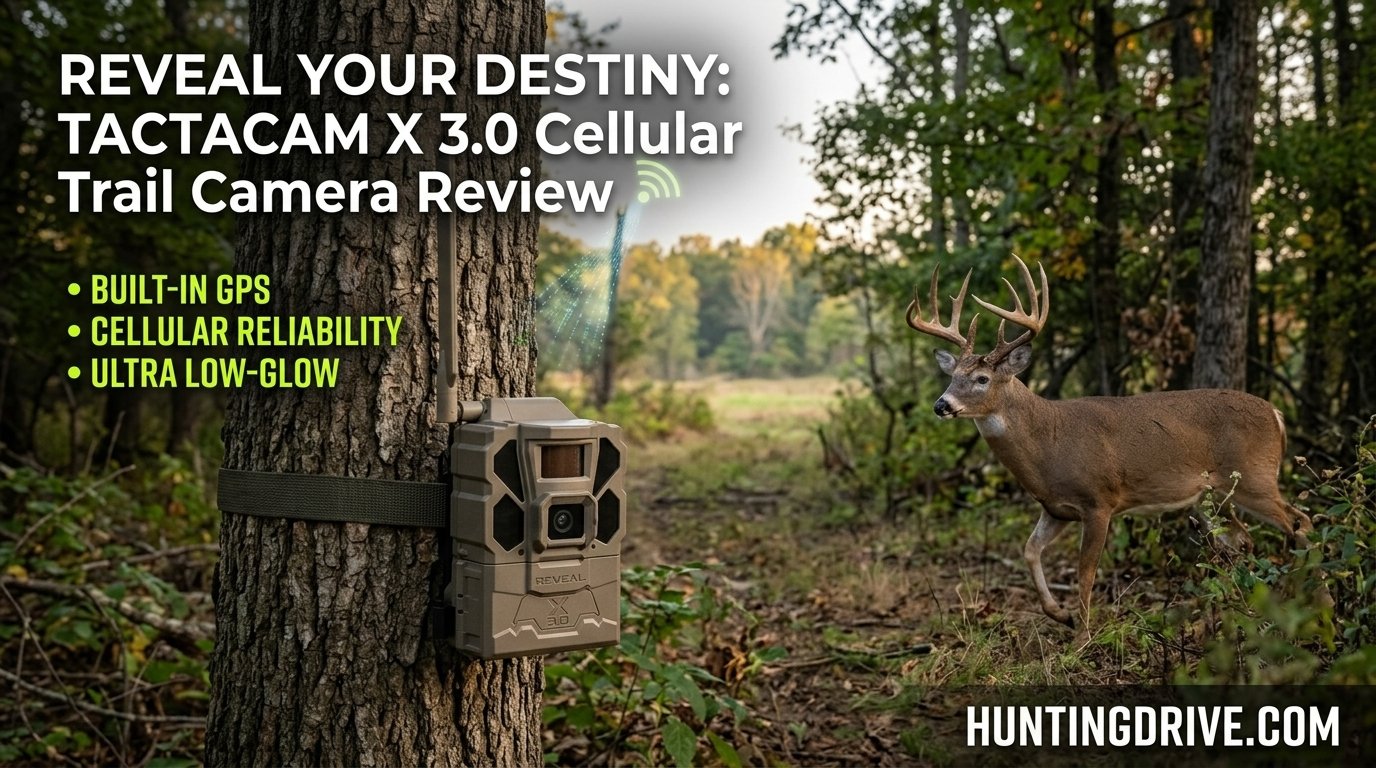
Best Overall: TACTACAM Reveal X 3.0 Cellular
TACTACAM Reveal X 3.0 Cellular
A refined cellular camera built around the idea that scouting should interrupt your life as little as possible.
The Reveal line has earned a devoted following among deer hunters for a simple reason: it treats the camera and the app as one connected system rather than two separate products. The X 3.0 continues that philosophy with a compact, concealable body, straightforward remote management, and the kind of quiet reliability you want from gear that has to work for months without supervision.
What makes it our top pick is the overall experience. You hang it, connect it, and from that point on, information comes to you. Photos arrive in the app, settings can be adjusted remotely, and the camera’s behavior in the field feels predictable — which matters far more than any single headline spec. When a piece of gear fades into the background and just delivers, that is the highest compliment a scouting tool can earn.
Key features
- Cellular photo delivery straight to a smartphone app
- Remote configuration without visiting the camera
- Infrared night imaging for after-dark identification
- Weather-resistant housing built for all-season hangs
- Compact, low-profile body that blends into cover
- Designed for extended unattended deployment
What we like
- Genuinely simple app-driven scouting workflow
- Remote settings changes save long walks
- Concealable body that disappears on a tree
- Strong choice for both new and experienced cellular users
Worth knowing
- Cellular delivery depends on usable coverage at the hang
- Remote features work best with an active data plan
- Overkill for a backyard setup a few steps from the house
The hunter who wants one camera to run the most important spot on the property — and who values being able to check, adjust, and manage it from anywhere. If you only buy one serious scouting tool this season, this is the one to build around.
Our overall winner for remote deer scouting. Check current pricing and bundle options.
Best Twin Pack: SPYPOINT Flex-M Twin Pack Cellular
SPYPOINT Flex-M Twin Pack Cellular
Two cellular cameras in one box — an efficient way to cover a property instead of a single spot.
Deer movement is rarely a one-camera story. A buck might use one trail when the wind is out of the north and a completely different crossing when it swings south. The Flex-M Twin Pack leans into that reality by giving you two cellular units at once, which immediately doubles the ground you can watch without doubling your research time.
The Flex-M platform is designed for straightforward deployment: compact bodies that hang unobtrusively, app-based photo management, and the kind of sensible, no-drama operation that matters when you are hanging cameras in the dark the night before opening morning. Managing multiple cameras from one place is the quiet superpower here — you see the whole property’s story rather than a single chapter.
Key features
- Two-camera bundle for multi-point coverage
- Cellular photo delivery to a mobile app
- Compact bodies that are easy to conceal
- Centralized photo management across cameras
- Designed for fast, repeatable hanging
- Practical choice for mixed terrain and multiple access points
What we like
- Two cameras for a smarter scouting spread
- Great value compared with buying units separately
- Light, packable bodies for long walks in
- One app to monitor the whole rotation
Worth knowing
- Each camera needs its own connectivity to deliver photos
- More cameras mean more batteries and cards to manage
- Sized for practicality over luxury features
The hunter with a property that has two or three obvious deer travel corridors — a field edge and a creek bottom, or a saddle and a food plot. If you have been running one camera and wondering what you are missing elsewhere, this is the upgrade path.
Two cameras, one purchase, twice the scouting reach across your property.
Best for Easy Setup: Moultrie Edge 3 Pro Cellular
Moultrie Edge 3 Pro Cellular
A polished cellular camera that removes nearly every excuse for not running one.
Moultrie is one of those names that has been part of the deer hunting conversation for decades, and the Edge 3 Pro shows why the brand has staying power: it makes the complicated parts feel routine. Setup is approachable, the app is friendly, and the camera itself carries the rugged, weather-ready character you expect from gear designed to live outside.
For hunters moving into cellular scouting for the first time, this is arguably the most comfortable entry point in the guide. There is less fiddling, fewer “what does this menu mean” moments, and a general sense that the camera was designed by people who actually hang cameras on trees in bad weather. That counts for a lot when you are setting up in the dark with cold hands.
Key features
- Cellular connectivity with app-based photo access
- Beginner-friendly setup and menu navigation
- Remote access to camera settings and status
- Rugged, weather-resistant field housing
- Reliable night-time imaging for identification
- Backed by an established trail camera ecosystem
What we like
- One of the smoothest first-time cellular experiences
- App workflow that makes sorting photos quick
- Build quality that inspires confidence in the field
- Easy to hand off to a hunting partner or family member
Worth knowing
- Premium ease of use comes at a higher price than budget units
- Still needs coverage where you hang it
- Power users may want deeper manual controls
The hunter who wants cellular scouting without a learning curve — first-time cellular buyers, families sharing a property, or anyone who simply values gear that works the way the manual says it will.
Cellular scouting without the headache — ideal for first-timers and shared properties.
Best Budget Trail Cameras: Cover More Ground for Less
Here is a truth that gets lost in the gear arms race: for many scouting jobs, an affordable camera is the correct answer. If you are hanging three or four cameras across a property, watching a seasonal food plot, or teaching a young hunter how deer use the land, budget cameras deliver information that is more than good enough — and they do it without the anxiety of leaving expensive gear hanging in public woods.
The three cameras in this group each take a slightly different angle on value. One pushes maximum imaging specs for the money, one gives you two cameras for the price most brands charge for one, and one is simply a friendly, capable starter cam. Here is how they compare at a glance.
Swipe to see more →
| Camera | Signature Strength | Ideal Use | Deal |
|---|---|---|---|
| WOSPORTS G600 64MP 4K | High-resolution stills and 4K video at a budget price | Hunters who want maximum imaging per dollar | Check Price |
| WOSODA G200 Two-Pack | Two cameras in the box at an entry-level price | Wide properties, spare hangs, and low-risk locations | Check Price |
| DEATTI 48MP 4K | Approachable setup with strong imaging claims | First cameras and learning the scouting rhythm | Check Price |
WOSPORTS G600 64MP 4K
A spec-forward budget camera for hunters who want big imaging numbers without a big invoice.
The G600 takes the road most traveled by value brands: pack in as much imaging capability as possible and price it where a hunter can buy without wincing. The headline is the pairing of a high-resolution still mode with 4K video capture, which makes it a fun camera to run. You get crisp daytime shots, night capture via infrared, and the flexibility to record short clips when you want to see behavior rather than a frozen moment.
Where it fits in a scouting plan is simple: this is an excellent “coverage” camera. Hang it on a secondary trail, a mineral site, or a plot you want monitored without risking premium gear. The images give you real information — what crossed, roughly when, and how big the frame was — and that is what scouting is fundamentally about.
Key features
- 64MP still imaging mode
- 4K video recording capability
- Infrared night capture
- Photo and video flexibility in one body
- Compact, hang-anywhere form factor
- Priced for multi-camera coverage strategies
What we like
- Impressive imaging features for the money
- 4K video is a genuine bonus at this tier
- Cheap enough to deploy several across a property
- Good option for daytime-rich setups
Worth knowing
- Real-world detail depends on placement and conditions
- Budget builds trade some refinement in menus and app polish
- Best treated as coverage gear rather than your one critical camera
The hunter who wants to blanket a property with eyes — three or four hangs covering trails, plots, and field edges — without spending premium money on every position.
WOSODA G200 Two-Pack
Two compact cameras, one small outlay — the smartest way to start scouting a new property.
Every hunting property has two questions that matter most in early scouting: what is using the food, and what is using the timber between bedding and food. Answering both requires two cameras. The G200 Two-Pack exists precisely for that job, and it does so at a price that makes buying two feel like a rounding error rather than a decision.
These are simple, light, easy-to-hang units with night photo capability and a footprint that disappears against bark. Are they refined luxury instruments? No. They are workaday scouts, and they are honest ones. For a first season, a lease you are still learning, or a set of hangs where theft risk is real, this is exactly the kind of camera you want in the tree.
Key features
- Two complete cameras in one purchase
- Compact, lightweight bodies for easy hanging
- Infrared night photo capture
- Straightforward setup routine
- Low-risk investment for public-adjacent hangs
- Great for teaching new hunters scouting habits
What we like
- Unbeatable coverage-per-dollar in this guide
- Light enough to pack in without complaint
- Perfect for learning a property before spending more
- Spares mean a failure is never a scouting outage
Worth knowing
- Basic feature set compared with premium brands
- You manage two sets of batteries and cards
- Not the pick for your single most critical hang
New hunters, lease holders in their first season, and anyone who wants to put eyes on two key spots without making it a financial event.
DEATTI 48MP 4K Trail Camera
A friendly first camera that makes the learning curve feel like a hobby rather than homework.
There is a specific joy to your first trail camera season: hanging it, forgetting about it, and coming back to a card full of deer you never knew were there. The DEATTI 48MP 4K is built for that experience. It pairs strong imaging specs on paper with a simple setup that will not leave a beginner stuck in a menu tree at dusk.
It records stills and video, works at night with infrared illumination, and covers the fundamentals so thoroughly that most first-year buyers never feel like they outgrew it. Once you know how deer use your ground and which spots deserve better hardware, this camera happily slides into a secondary role — which is exactly the kind of purchase that ages well.
Key features
- 48MP still imaging mode
- 4K video capture
- Infrared night operation
- Simple, beginner-oriented setup
- Photo and video modes for flexible scouting
- Approachable price for first-time buyers
What we like
- Low barrier to entry for brand-new scouts
- Strong feature set for the price bracket
- Handles both stills and video comfortably
- Easy to expand into a multi-camera setup later
Worth knowing
- Entry-level build means entry-level refinement
- No remote delivery — you swap cards in person
- Plan on learning placement to get the most from it
The first-time trail camera buyer, the young hunter learning to read deer sign, and anyone who wants a capable camera without a serious commitment.
Stretch a scouting budget across more hangs — see current bundles and value bundles.
Best Value All-Rounders: Set-and-Forget Scouting
Between the bargain bin and the flagship tier sits a sweet spot most hunters actually live in: cameras that are affordable enough to deploy in numbers, yet dependable enough that you forget about them for months. This trio covers three different routes to that same destination — solar-assisted power, no-fuss value, and a do-everything workhorse.
If your ideal scouting season involves hanging cameras early and thinking about batteries as little as possible, start here.
Swipe to see more →
| Camera | Signature Strength | Ideal Use | Deal |
|---|---|---|---|
| MAXDONE Solar Trail Camera | Solar-assisted charging for remote hangs | Hard-to-reach spots where battery swaps are a chore | Check Price |
| Meidase P70 | Straightforward, reliable SD-card performance | Hunters who want zero subscriptions and no drama | Check Price |
| GardePro A3S | Balanced features and easy setup | The one-camera-does-it-all scouting role | Check Price |
MAXDONE Solar Trail Camera
Solar-assisted power for the hangs that are simply too far to babysit.
Every property has one spot that is perfect for a camera and terrible for maintenance: the far ridge, the back corner of the lease, the crossing two miles from the truck. That is where a solar-assisted camera earns its keep. The MAXDONE Solar pairs a rechargeable-style power approach with a solar panel that keeps topping things off, meaning fewer trips to swap batteries and less scent spread across your best ground.
Beyond the power story, it is a practical, weather-resistant unit designed to sit outside and do its job quietly. Solar charging works best with reasonable sun exposure, so plan the hang with light in mind — a break in the canopy above the panel makes a real difference over a long deployment.
Key features
- Solar-assisted charging to extend hang time
- Rechargeable power setup for fewer battery purchases
- Weather-resistant construction for all-season use
- Well suited to remote, hard-to-service locations
- Reduces the frequency of intrusive camera checks
- Practical choice for long scouting campaigns
What we like
- Dramatically fewer battery runs to remote spots
- Less scent disturbance around key travel corridors
- Environment of “hang it and forget it” suits busy hunters
- Smart economics over multiple seasons
Worth knowing
- Solar performance depends on sun exposure at the hang
- Panel positioning deserves extra planning
- Deep-shade bedding hangs may still need periodic checks
Hunters managing large or remote properties who want scouting data without turning every camera check into an expedition. Also a smart pick for anyone tired of buying batteries by the brick.
Meidase P70
The refreshing simplicity of a camera that just records what walks by.
Some hunters want an ecosystem. Others want a camera, a memory card, and peace. The Meidase P70 belongs firmly in the second camp: a compact standard camera with clean night imaging, sensible menus, and zero interest in adding another subscription to your life.
What makes it a value standout is consistency. It does the fundamentals well — detection, capture, night visibility, storage — and stays out of your way. For hunters running several cameras on a mix of public and private ground, a fleet of straightforward units like this one is often more effective than a single premium camera watching one trail.
Key features
- SD-card workflow with no subscription required
- Strong infrared night imaging
- Simple, intuitive setup and menus
- Compact body that hangs unobtrusively
- Efficient operation for long deployments
- Excellent cost-to-coverage ratio
What we like
- Completely subscription-free scouting
- Reliable night photos for identification
- Quick to set up and rotate between locations
- Easy to own several without pain
Worth knowing
- No remote delivery — you visit to collect photos
- Basic feature set compared with cellular flagships
- Requires a disciplined check schedule
The purist who values simplicity and wants multiple cameras covering multiple trails — and anyone allergic to monthly fees.
GardePro A3S
The dependable middle-of-the-road camera that quietly earns a permanent spot in the rotation.
Most hunters do not need the fanciest camera in the woods. They need one that hangs easily, wakes up reliably, captures clear day and night media, and survives a season of weather without complaint. The GardePro A3S is exactly that kind of camera — a balanced, friendly tool that covers photo and video duty without demanding attention.
It is the camera you grab when you are hanging a new spot on a whim, or when a friend asks what they should buy to start scouting. Setup is approachable, the body is compact, and the overall experience feels designed by people who understand that trail cameras are supposed to make hunting simpler, not more complicated.
Key features
- Fast, tool-free hanging and setup
- Photo and video capture modes
- Reliable infrared night performance
- Compact, easily concealed body
- Friendly menus and file management
- Budget-friendly without feeling cheap
What we like
- Genuinely balanced performance across the board
- Great choice for mixed day/night scouting
- Low-stress ownership experience
- Strong value for a do-everything camera
Worth knowing
- Specialists will outperform it in their niche
- Card-based workflow requires in-person checks
- Buy a good strap or mount for the best hang angle
The hunter who wants one camera that does everything reasonably well — and the buyer who dislikes agonizing over research before every purchase.
Find the set-and-forget camera that fits your ground and your battery budget.
Best Compact Classic: Browning Strike Force Trail Camera
Browning Strike Force Trail Camera
Small, discreet, and from a brand that has been part of deer camps for a very long time.
There is real value in trust, and Browning has built a lot of it over the years among hunters who run trail cameras hard. The Strike Force embodies the classic Browning approach: a compact body that vanishes against a tree, quick response when something steps into the detection zone, and a rugged shell that shrugs off the kind of weather that ruins lesser gear.
The small footprint deserves special emphasis. A camera that is easy to hide is a camera that gets stolen less often and disturbs deer less often. Hanging a compact unit at chest height on a rub-line tree, angled slightly downward, is one of the oldest and most effective tricks in scouting — and the Strike Force is built for exactly that style of deployment.
It also fits beautifully into mixed fleets. Many seasoned hunters pair a cellular camera on their prime location with several compact, trusted standard cameras like this one filling in the supporting details. The Browning becomes the reliable second set of eyes on travel corridors, scrapes, and field corners.
Key features
- Compact, highly concealable body design
- Quick detection and capture response
- Infrared night imaging for after-dark scouting
- Rugged, weather-resistant field housing
- Trusted brand with deep hunting heritage
- Ideal size for tight hangs and brushy cover
What we like
- Disappears on a tree — low profile, low disturbance
- Strong reputation among serious deer hunters
- Excellent choice for scrape and trail monitoring
- Easy to integrate into a multi-camera strategy
Worth knowing
- Standard camera — photos require an in-person visit
- Compact size means a compact battery compartment
- Buyers wanting app delivery should look at cellular models
The hunter who values proven, no-nonsense gear and wants a camera that can be tucked into tight, brushy hangs where bigger units would stand out like a lantern.
Compact, discreet, and built to be forgotten on the tree until you need it.
Best Premium: Reconyx HyperFire 2
Reconyx HyperFire 2
The camera you buy when a specific tree absolutely, positively has to produce.
Some cameras are purchases. The HyperFire 2 is an investment. Reconyx has spent years building a reputation among wildlife professionals, researchers, and the most demanding segment of the hunting world — people who need cameras to fire quickly, capture reliably, and keep doing both season after season without drama. It is made in the USA, and it feels like it, from the moment you pick it up.
The emphasis here is rapid capture and durability. This is a camera designed around the idea that missing the moment is unacceptable — that when a mature buck steps into the frame during his thirty seconds of daylight movement, the camera records it. For hunters who have spent years patterning a single animal, that reliability is worth considerably more than the price difference against entry-level gear.
It is also a buy-once proposition. Where budget cameras may be rotated out every couple of seasons, a HyperFire 2 tends to become a permanent piece of kit, moving from tree to tree as your scouting plan evolves. Cost per season, spread across years of service, suddenly looks a great deal more reasonable.
Key features
- Pro-grade build quality and materials
- Focus on rapid trigger-to-capture performance
- Built for multi-season, long-service life
- Trusted by researchers and serious hunters alike
- Excellent reliability in demanding conditions
- Designed and manufactured in the USA
What we like
- Confidence-inspiring reliability at critical hangs
- Rapid capture suited to fast-moving trails
- Built to last far beyond typical ownership cycles
- Strong resale and long-term value story
Worth knowing
- Significant investment versus budget alternatives
- Overbuilt for casual or backyard use
- Best paired with a security box in high-traffic areas
The dedicated hunter managing a mature property, running cameras year-round, and tracking specific bucks over multiple seasons. If one tree matters more than all the others, this is the camera for it.
Pro-grade reliability for the hangs where missing a photo is not an option.
Placement & Timing: Getting the Most From Every Camera
Buying the right camera is half the equation. The other half — the half that separates hunters who “have trail cameras” from hunters who actually pattern deer — is where, when, and how you hang them. The good news is that placement knowledge is free, and it pays dividends on every camera you will ever own.
Think like a deer, not like a photographer
The most common placement mistake is aiming at where you want to see a deer rather than where deer actually travel. Focus on travel corridors and decision points: saddles between ridges, creek crossings, field corners, inside turns of benches, funnels created by terrain or fencing, and the edges where food meets cover. A camera watching a decision point produces far more information than one pointed at a pretty open field.
Height and angle matter enormously. Hanging a camera slightly higher than chest level and angling it down along the trail reduces false triggers from swaying vegetation and frames animals better as they approach. Keep the lens clear of tall grass directly in front of the unit — a single weed blowing in the wind can fill your card with empty frames.
Respect the sun and the wind
Pointing a camera due east into the sunrise creates glare and washed-out morning images; the same applies to the west in the evening. A slight northerly or southerly orientation usually keeps images clean across the day. And remember that deer live by their noses — every trip to a camera is a scent event. Approach from downwind of where you expect deer to travel, keep visits quick, and consider wearing scent-conscious clothing on camera runs. When conditions get cold, quality layers help you move quietly and comfortably; we cover options in our guide to the best hunting gloves and the best hunting socks for long sits and cold walks.
Match your checks to the season
Early scouting season is for learning — check cameras every couple of weeks, move underperformers, and experiment freely. As the season nears, tighten up. In the weeks around the rut, reduce intrusion drastically; that is when the biggest bucks are on their feet during daylight, and it is exactly when you want to be least visible. Our breakdown of the best deer hunting times pairs perfectly with camera intel, helping you turn “he crossed at dawn” into a specific sit.
Seasonal timing also changes what you are looking for. Post-season is a wonderful time to run cameras for inventory and even shed hunting intel — see our guide to what shed hunting involves if you want to make the most of late-winter photos.
Turn information into stands
Camera data is only worth what you do with it. When a pattern emerges — a buck using a specific trail in a specific wind — the next step is choosing how to hunt him. Some hunters prefer an aggressive mobile approach, slipping in tight to the action; our look at what still hunting is covers that method. Others move a hang-on or saddle setup into the travel corridor itself; if that sounds appealing, read our explainer on what saddle hunting is and why so many mobile hunters swear by it.
And because walking long loops to service a camera network is part of the job, comfortable footwear matters more than most gear lists admit. Our picks for the best lightweight hunting boots focus on exactly the kind of quiet, low-fatigue miles that scouting demands.
A simple placement routine that works
- Scout the sign first. Walk the ground, find trails, droppings, rubs, and scrapes before you ever unbox a camera. Cameras confirm sign — they do not replace it.
- Pick the decision point. Choose where deer must commit: a crossing, a funnel, a field entry. These spots produce repeat traffic.
- Set height and angle. Slightly above eye level, angled along the trail, with a clear detection zone free of blowing grass.
- Check the sun. Avoid direct sunrise or sunset glare in the frame. A slight angle fixes most issues.
- Test before you leave. Walk the trail through the detection zone yourself and confirm the camera triggers where you expect.
- Leave it alone. The hardest part. Once a camera is hung well, time is the ingredient that fills the card.
The right mount means better angles, fewer failures, and less time fussing in the dark.
Power, Storage & Maintenance: Keep Every Camera Alive
Trail cameras are gloriously low-maintenance right up until the moment they are not. A little routine care prevents almost every common failure, and none of it takes long. Think of this section as the habits that keep your scouting network dependable from the first summer hang through the last cold morning of the season.
Battery strategy that actually works
Not all batteries are equal in a trail camera. Quality lithium cells handle cold weather far better than standard alkalines, which is no small thing during late-season sits and frosty mornings. Cold is the quiet battery killer — a camera that ran beautifully in September can stumble in a hard freeze if it is powered by the wrong cells.
Video mode also changes the math. Recording clips is fantastic for studying behavior, but it drains power noticeably faster than stills. Many experienced scouts run stills by default and switch to video selectively on trails where behavior matters more than simple detection. If you hate battery management entirely, a solar-assisted camera like the MAXDONE in this guide removes most of the chore.
Memory cards and file hygiene
Use cards from reputable brands, keep spares in your pack, and format cards in the camera before each deployment rather than on a computer. That simple habit prevents the vast majority of file errors and write failures. It also helps to swap cards on a rhythm instead of only when something goes wrong — a card that fills up mid-deploy is a scouting blackout.
Develop a tiny organization ritual as well: label cards by location, and clear or archive photos after each check. Ten minutes at the tailgate saves hours of confusion later when you are trying to remember which camera watched the creek crossing.
Physical care and security
Wipe the lens and the sensor window with a soft cloth on every visit; dust, pollen, and spider silk degrade image quality long before they are obvious. Check the strap tension — trees grow, and a strap that was snug in summer can loosen by the rut. And always look at the battery compartment seal for debris or damage, since moisture intrusion is the fastest route to a dead camera.
Security deserves blunt treatment: cameras get stolen. A locking security box bolted or strapped to the tree is inexpensive insurance, and hanging cameras slightly out of casual sight discourages opportunistic theft. On public ground or well-traveled properties, cheaper cameras in security boxes are often smarter than premium units hanging bare. If you walk long routes to service cameras, comfortable footwear and warm hands make the job less of a chore — our guides to the best hunting gloves and the best hunting socks cover the details that make cold-morning maintenance bearable.
Managing cellular data and app workflow
For cellular units, a small amount of management goes a long way. Set sensible upload schedules rather than pushing every photo instantly, use the app’s filtering tools to sort interesting from routine, and check battery status remotely before making a trip. The goal is to let the camera and the app do the boring work while you focus on interpretation.
It also helps to keep expectations realistic during heavy movement. When the rut heats up, photo volume can spike dramatically. That is a feature, not a problem — but it is worth knowing so you can adjust your plan, your expectations, and your data plan accordingly.
Keep every hang powered, recorded, and ready for the moment that matters.
Common Trail Camera Mistakes (and How to Dodge Them)
Nearly every disappointing trail camera story traces back to one of a handful of avoidable errors. The encouraging part? Once you know them, they are easy to sidestep — and your scouting quality jumps almost immediately.
Checking cameras too often
It feels productive to check cameras weekly. It is usually the opposite. Every visit spreads scent and teaches deer that something human is happening at that spot. Most cameras gather perfectly good information over two- to three-week intervals, and cellular units eliminate the dilemma entirely on key locations. If you must visit, go in midday, in weather that helps cover your intrusion, and leave quickly.
Hanging cameras too high or too low
Too low and you get extreme close-ups of noses and shoulder blades, plus more theft exposure. Too high and the detection zone fights you. Aim for a comfortable middle height, angled slightly downward along the trail, and walk the detection path before leaving to confirm framing.
Ignoring vegetation in the detection zone
That innocent-looking clump of grass in front of the lens becomes a photo factory on windy days. Clear a small corridor in front of the camera before you leave. It takes thirty seconds and saves gigabytes of empty frames.
Chasing specs instead of placement
An entry-level camera on a proven travel corridor will out-perform a premium camera aimed at nowhere. Spend your energy on reading sign and understanding terrain; the camera only records the location you choose for it.
Forgetting that batteries hate the cold
Many late-season camera failures are simply power failures. Use quality cells appropriate for cold conditions, carry spares, and consider solar-assisted options for hard-to-reach hangs.
Pointing straight into sunrise or sunset
Glare ruins morning and evening photos — exactly the hours you care about most. Rotate the camera slightly so the sun crosses the frame rather than driving into the lens.
Giving up on a spot too soon
Deer movement shifts with pressure, food sources, weather, and the rut. A camera that produced nothing in early fall can become your most valuable hang in late October when the landscape changes. Move cameras based on evidence and season, not boredom.
Neglecting security until it is too late
By the time you notice a camera is gone, so is the data. Locking boxes, discreet hangs, and sensible positioning protect both your investment and your season’s worth of scouting information.
Buying too many cameras before learning one
It is tempting to blanket a property with ten cameras on day one. A better approach: start with two or three well-placed units, learn how deer use the ground, then expand with purpose. Coverage without interpretation is just noise.
Small insurance policy, big peace of mind — especially on public-access and high-traffic ground.
Trail Camera FAQs for Deer Hunters
How many trail cameras do I need for deer hunting?
For most hunters, two to four cameras cover the essentials: one on the primary food source, one on a major travel corridor, and one or two on secondary trails or bedding transitions. Start small and expand based on what you learn. A handful of well-placed cameras will always beat a dozen scattered randomly.
Are cellular trail cameras worth it?
If your cameras hang far from the truck, across bedding ground, or in spots where every visit risks educating deer — absolutely. Cellular delivery removes the intrusion of constant checks and lets you react to movement in real time. On small properties close to home, a standard camera delivers the same information for less money.
What is the best height to hang a trail camera?
Slightly above chest height, angled gently downward along the trail, works beautifully for most deer scouting. It frames animals well, reduces false triggers from ground vegetation, and keeps the unit out of casual sight. Always walk through the detection zone before leaving to confirm framing.
How often should I check my trail cameras?
Every two to three weeks is a healthy rhythm for standard cameras during most of the season. Check less often as hunting approaches to minimize disturbance. Cellular cameras can be monitored daily from your phone without stepping on the property at all — one of their greatest strengths.
Do trail cameras scare deer?
Generally, no — provided you use infrared night capture rather than a bright white flash, keep your own visits quiet, and hang cameras sensibly. Deer quickly grow accustomed to a camera that sits still and makes no visible commotion. Human scent and frequent visits disturb them far more than the camera does.
What kind of batteries last longest in trail cameras?
Quality lithium cells are the go-to for cold-weather reliability and long deployments. Standard alkalines can work in mild conditions but fade quickly in freezing temperatures. Solar-assisted cameras reduce battery worries dramatically in locations with reasonable sun exposure.
Do I need a large memory card for my trail camera?
A moderately sized card from a reputable brand is plenty for most scouting, especially if you run stills as the default and use video selectively. Bigger cards help if you record lots of video or leave cameras undisturbed for long stretches. Always format the card in the camera before deployment.
When should I put trail cameras out for deer season?
Many hunters hang cameras well before the season opens to establish baseline patterns, then adjust as movement shifts. Late summer is popular for inventorying which bucks are around, while early fall helps you learn travel routes. Timing pairs with local seasons — our guide to when deer hunting season starts helps you plan backwards from opening day.
Do cellular trail cameras work without cell service?
They will still take photos and record them locally, but they cannot deliver images to your app without usable coverage at the camera’s location. Before committing to a cellular network of cameras, confirm coverage on the exact spots where you plan to hang them.
How do I keep my trail camera from being stolen?
Use a locking security box, hang cameras slightly out of obvious sight, and favor less conspicuous locations. On public-access ground, consider deploying budget cameras in secure boxes rather than premium hardware hanging bare. A little discretion discourages most opportunistic theft.
Can I use trail cameras for animals other than deer?
Absolutely. Trail cameras are fantastic for turkeys, predators, hogs, bears, and general wildlife observation. Many hunters run them year-round to understand everything that uses their property — and the same intel helps with other pursuits, whether that is a turkey season plan or simply knowing what is moving through after dark.
What should a beginner buy first?
Start with one or two affordable standard cameras, learn placement and deer movement, then add a cellular unit for your most important location. And if you are brand new to the entire pursuit, our guide on how to get into hunting lays out the foundations that make all this scouting data actually useful.
Compare today’s top-rated options, bundles, and accessories in one place.
Which Trail Camera Should You Buy?
After working through the entire field, the choices sort themselves out by how and where you hunt rather than by any single headline feature. The camera you carry into the season should match your property, your schedule, and your tolerance for maintenance — that is the whole game.
- Best overall: the TACTACAM Reveal X 3.0 Cellular, for hunters who want scouting information to come to them instead of the other way around.
- Best coverage strategy: the SPYPOINT Flex-M Twin Pack, which puts eyes on two travel corridors in one purchase.
- Best for easy living: the Moultrie Edge 3 Pro, a cellular camera that removes every ounce of setup friction.
- Best value spread: the budget trio — WOSPORTS G600, WOSODA G200 Two-Pack, and DEATTI 48MP 4K — for hunters who want more hangs for less money.
- Best set-and-forget options: the MAXDONE Solar, Meidase P70, and GardePro A3S for dependable, low-hassle deployments.
- Best premium: the Reconyx HyperFire 2 for the one tree that matters most, and the Browning Strike Force for tight, discreet hangs.
Whichever route you choose, remember the rule that governs all of this: the best camera is the one that gets hung in the right spot and then left alone long enough to tell you the truth. Buy the tool, learn the ground, and let time do the rest.
You May Also Like
Scouting is one piece of a much bigger puzzle. These guides from the HuntingDrive library pair naturally with a solid trail camera strategy.
What Is Snipe Hunting?
Separating the campfire legend from the real bird, the real gear, and the real tradition behind the phrase.
WaterfowlWhat Choke for Duck Hunting?
How choke selection shapes your pattern at the distances ducks actually present themselves.
Field SportsWhat Is Upland Hunting?
Walking, pointing dogs, and wild birds over cover — an introduction to one of hunting’s oldest styles.
Gear GuidesWhat to Wear Dove Hunting
Heat, sun, and fast-moving birds — the clothing choices that make early-season shoots more comfortable.
Season TimingWhen Is Turkey Hunting Season?
Plan your spring and fall pursuits around the seasons, and use trail cameras to learn the birds too.
PerspectivesWhat Is Trophy Hunting?
A clear look at what the term actually means, how it is practiced, and where ethics fit into the conversation.
Affiliate disclosure: some links in this article are affiliate links, which means we may earn a commission if you make a purchase through them, at no extra cost to you. Product details, availability, and pricing can change at any time — always verify the current listing before buying. This guide is for general informational purposes and reflects general product positioning rather than laboratory testing data.