What Is Spot and Stalk Hunting? The Most Engaging Way to Chase Game
Spot and stalk hunting is the purest test of a hunter’s eyes, patience, and footwork. You find the animal first, work out a plan, then close the distance without being seen. Here is exactly how it works, where it shines, and how to do it well.
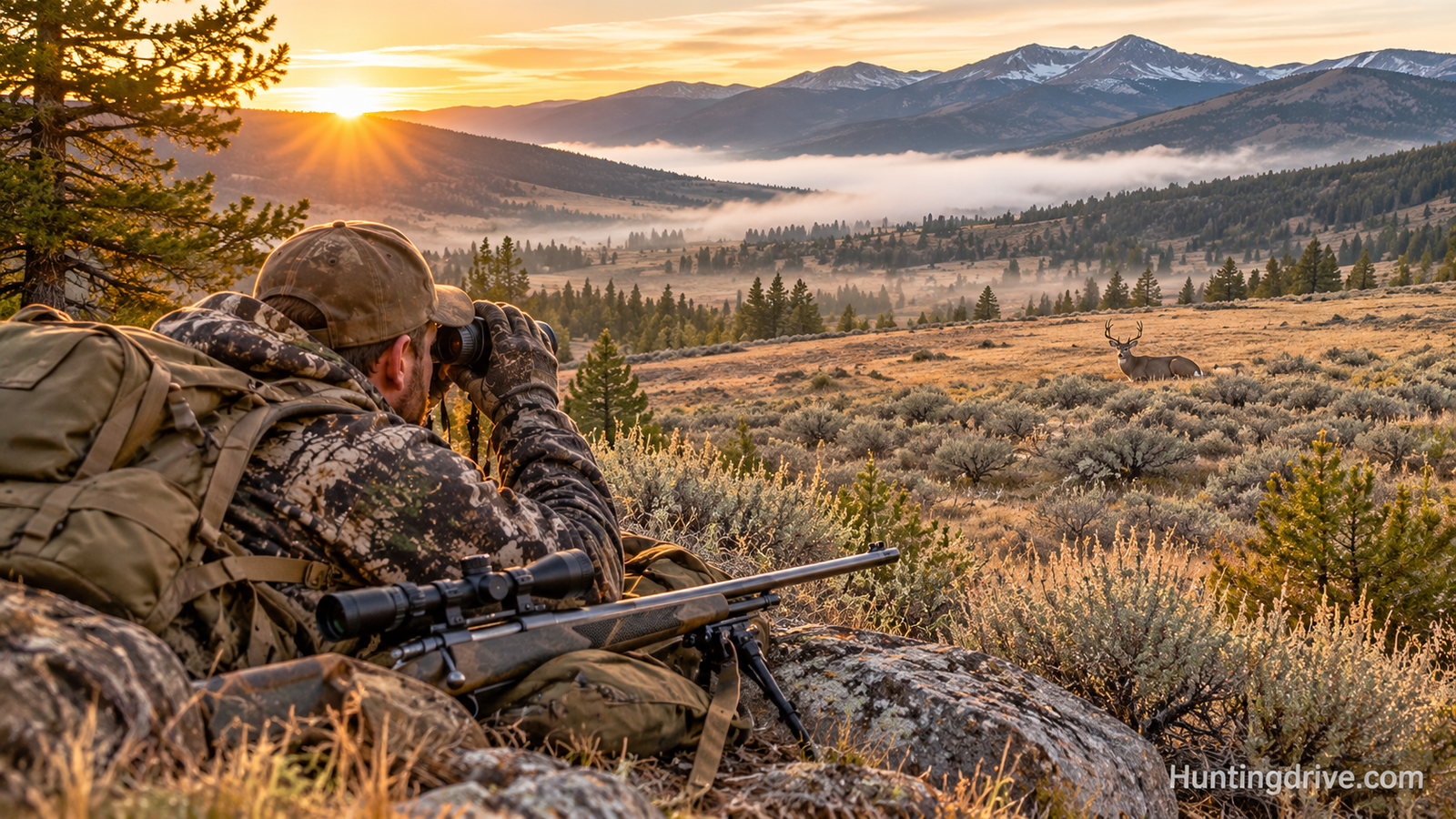
Table of Contents
- Why Stalking Is Worth Learning
- 1. What Is Spot and Stalk Hunting?
- 2. How It Compares to Other Hunting Styles
- 3. Best Terrain, Species, and Seasons
- 4. The Spot Phase: Finding Game
- 5. Building a Stalk Plan
- 6. Wind, Thermals, and Scent Control
- 7. Movement and Stealth
- 8. Closing the Distance
- 9. The Shot: Setup and Execution
- 10. Gear That Matters Most
- 11. Fitness and Endurance
- 12. Common Mistakes and Recovery
- Frequently Asked Questions
- Final Verdict
Why Stalking Is Worth Learning
Most hunting advice starts with where to sit. Spot and stalk hunting starts with a different question entirely: where is the animal, and how do I get to it without it knowing I exist?
That single shift in thinking changes everything. Instead of waiting for game to travel past a fixed location, you become the one who moves. You study terrain with binoculars, locate a living animal, work out where it is going and what the wind is doing, and then creep, crawl, or circle until you are within range. When it works, it is the most satisfying moment in hunting — not because the shot was easy, but because nothing about getting there was.
It is also the most demanding style there is. Spot and stalk hunting asks you to read wind, judge distance, move silently over unforgiving ground, control your breathing when an animal is looking right at you, and make a clean shot after an approach that left your heart rate well above normal. There is no hiding behind a blind and no climbing into a fixed position. There is only you, the terrain, and an animal with senses sharpened by constant pressure.
This guide covers the method from the ground up: what spot and stalk hunting actually is, how it differs from still hunting, stand hunting, and saddle hunting, where it works best, and how each phase — glassing, planning, moving, closing, and shooting — fits together. We also cover the gear that makes it easier, the fitness it demands, and the mistakes that blow most stalks before they begin.
If you have never tried it, treat this as your starting point. If you already stalk but keep getting busted at the last moment, the middle sections are where your answers live.
What Is Spot and Stalk Hunting?
Spot and stalk hunting is a method in which the hunter locates game from a distance, then deliberately closes the gap while using terrain, wind, and cover to remain undetected until a shot is possible. The name describes the entire process: you spot the animal first, and you stalk it second.
What separates this style from everything else is sequence. In most hunting methods, the animal comes to you and your job is to remain undetected in one place. In spot and stalk, you identify a specific living animal and then engineer a way to get close to it. Every decision — which ridge to drop over, how low to crawl, when to freeze, when to back out — is made in real time based on what that animal does.
The Two Phases, and Why Order Matters
The spot phase is about information. You are glassing terrain, reading wind, evaluating cover, and deciding whether an animal is even worth approaching. This phase is unhurried and analytical. Most successful stalks are won here, long before the first step is taken, because the hunter has identified a workable angle of approach.
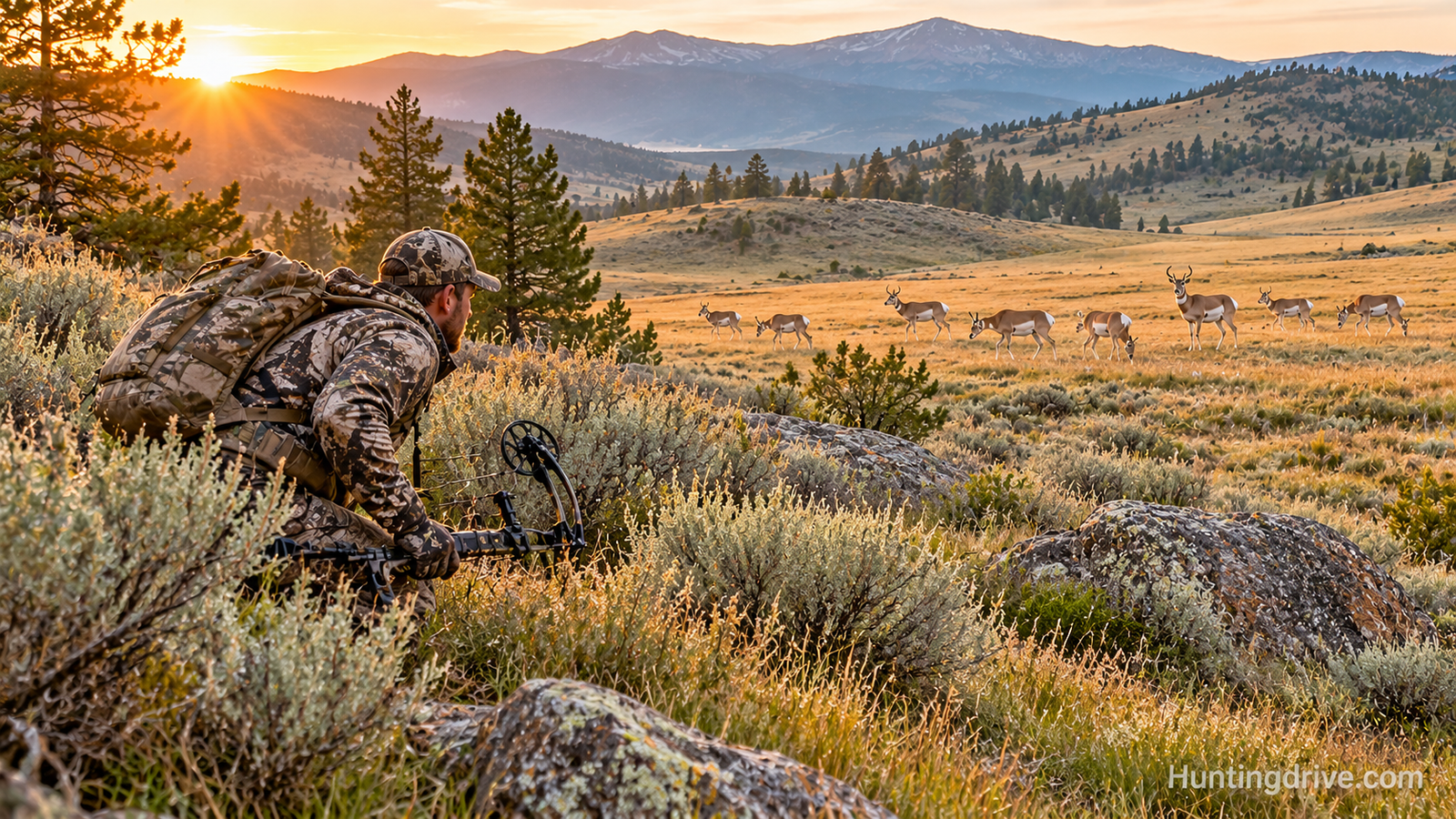
The stalk phase is about execution. Movement becomes slow, deliberate, and quiet. You use every fold of ground, every rock and bush, and every shadow to break up your outline. You stop frequently to check the animal’s behavior, and you are willing to abandon the approach the moment conditions change.
What Spot and Stalk Is Not
It is not simply walking around until you bump into an animal. That is closer to still hunting, which we cover separately in our guide to still hunting. Stalking starts with a known animal and a deliberate plan. It is also not aggressive pursuit — the best stalkers are famously patient, often spending more time waiting and watching than moving.
Why Hunters Love It
- Every hunt is different. No two stalks use the same route, because no two animals stand in the same place.
- It is active. You cover ground, read country, and stay engaged for the entire hunt rather than waiting for a travel corridor to produce.
- It builds complete hunters. Stalking develops glassing, wind reading, distance judging, and shooting skills simultaneously.
- It works across species. Deer, elk, antelope, bear, sheep, and mountain goats are all hunted this way.
- It rewards condition and craft over equipment. A fit, patient hunter with modest gear will outperform an unfit hunter with premium optics.
The One Sentence Version
Spot and stalk hunting means finding an animal first, then closing the distance on it without being detected. Everything else in this guide is detail on that one idea.
Learn the Fundamentals Faster
Pick up a hunting field guide and start building your knowledge.
Check Price on AmazonHow Spot and Stalk Compares to Other Hunting Styles
Understanding where spot and stalk sits among the major hunting methods makes its strengths and demands much clearer. Each style has conditions where it excels — and conditions where it struggles badly.
Spot and Stalk vs. Stand and Blind Hunting
Stand and blind hunting is an ambush strategy. You position yourself along a travel route and wait for game to move past. It is highly effective where animal patterns are predictable, and it lets hunters of any physical ability hunt hard. The trade-off is that your success depends on animals being in the right place at the right time.
Spot and stalk reverses that dependency. If you can see an animal, you can hunt it. But it demands far more from you physically and mentally, and it produces a lot of busted stalks along the way. Hunters who enjoy movement, terrain, and problem-solving tend to prefer stalking; hunters who enjoy patience and pattern-reading tend to prefer stands.
Spot and Stalk vs. Still Hunting
Still hunting is slow movement through likely habitat, glassing and listening as you go, hoping to spot game before it spots you. It shares spot and stalk’s emphasis on stealth and terrain reading, but it begins without a known target. Many experienced hunters blend the two: still-hunting until an animal appears, then shifting into a deliberate stalk.
Spot and Stalk vs. Mobile Hang-On and Saddle Hunting
Mobile hunting systems — hang-on stands and saddle setups — let hunters move their ambush position based on wind, sign, and season. It is a flexible ambush approach rather than a pursuit approach. For a full breakdown, see our guide to saddle hunting. Many hunters use both styles: stands for tight timber and bedding areas, stalking for open country and post-season scouting situations.
Spot and Stalk vs. Blind or Bait Situations
Some hunts involve stationary concealment at a specific location, sometimes with attractants where legal. Our guide to baiting in hunting covers how those strategies work and where they are permitted. Stalking is the opposite philosophy: you go to the animal instead of asking the animal to come to you.
| Style | Strengths | Challenges | Best Suited For |
|---|---|---|---|
| Spot and stalk |
|
|
Open and broken country, glassable terrain |
| Stand / blind hunting |
|
|
Timber, field edges, travel corridors |
| Still hunting |
|
|
Dense timber, fresh snow, rutting deer |
| Mobile / saddle hunting |
|
|
Timber and bedding areas with strong sign |
Pros of Spot and Stalk
- You hunt the animal you can actually see
- Constant engagement and decision-making
- Develops optics, wind, and shooting skills
- Works across many species and seasons
- Minimal fixed gear required
Cons of Spot and Stalk
- Physically demanding over long days
- Shot opportunities come after high exertion
- Requires open or broken terrain to work well
- Success rate per stalk is naturally low
- Weather and wind can cancel plans instantly
Gear Up for an Active Hunt
Compare lightweight hunting equipment built for moving hunters.
Check Price on AmazonBest Terrain, Species, and Conditions for Stalking
Spot and stalk is a terrain-dependent method. In the right country it is devastatingly effective; in the wrong country it is an exercise in frustration. Reading terrain before you commit to a stalk is one of the earliest skills a developing hunter learns.
Terrain That Rewards Stalking
Broken country is ideal — rolling hills, benches, sage flats, canyon rims, and open timber with scattered cover. The key ingredient is visibility from a distance combined with concealment during the approach. You need to be able to see an animal from hundreds of yards away and still find a route that keeps you hidden on the way in.
Sage and open grassland work exceptionally well because animals are visible and the low cover allows a crawling approach. Timber with open parks and meadows is excellent for deer. Steep canyon country offers routes and ridgelines that let you approach from unexpected angles.
Terrain That Works Against You
Flat, dense timber with no glassing opportunities is tough, because you cannot spot an animal before you are already close to it. Extremely steep, noisy ground — dry leaves, loose rock, crunchy snow — makes silent movement nearly impossible. Heavily farmed private land with wide open fields and no cover can also be difficult, since an animal will see you long before you reach shooting range.
Species and Seasons
- Antelope: The classic spot and stalk animal — open country, long sight lines, and a challenge in staying hidden on bare ground.
- Elk: Excellent in open basins and on steep slopes; also demanding at altitude. Our guide to caliber selection for elk pairs well with a long-range stalking setup.
- Deer: Highly effective in open and broken country, especially in the rut when movement increases.
- Sheep and goats: The ultimate terrain challenge — long glassing sessions and technical approaches.
- Bear: Spotting on open hillsides and berry patches, then stalking in close.
Season timing matters too. Movement, weather, and animal behavior shift dramatically through the season, and planning around those shifts improves any stalk. Our guides to deer season timing and the best times of day to hunt explain when animals are most active.
| Terrain | Glassing Quality | Concealment on Approach | Stalking Difficulty |
|---|---|---|---|
| Sage flats / open grassland | Excellent | Low — crawling often required | High |
| Rolling hills / benches | Very good | Good — folds and depressions | Moderate |
| Open timber and parks | Good | Very good — trees and shadows | Moderate |
| Steep canyon country | Excellent | Good — ridgelines and rock | High (physically) |
| Dense flat timber | Poor | Excellent | Very high (no visibility) |
Scout Before You Stalk
Check out trail cameras and scouting tools for locating game.
Check Price on AmazonThe Spot Phase: Finding Game Before It Finds You
Everything about spot and stalk hunting depends on finding the animal first. This is the phase where patience pays the biggest dividends, and where most hunters either set up a great stalk or waste the day on ground that held nothing.
Glassing Technique
Effective glassing is slow and systematic. Divide the terrain into zones and work each one thoroughly before moving to the next. Keep the binocular braced and let your eyes scan within the image rather than constantly panning the optic. Look for shapes and contrasts rather than color — a bedded animal is deliberately hard to see, but the line of a back, the dark shadow of an ear, or an antler against sky breaks the terrain pattern.
When and Where to Glass
Early morning and late evening are prime, when animals feed in the open and move between bedding and feeding areas. Side light is your friend: low sun angle creates shadows around bedded game that flat overhead light erases. Glass from a position that keeps you hidden and gives you a wide view — a shaded ridge, a rock outcrop, or the timber edge of a park.
Optics: The Stalker’s Most-Used Tool
Binoculars are used constantly in this style, far more than any rifle or bow. A wide, bright 10×42 or 8×42 is ideal for scanning, and quality glass pays off in the flat light where animals hide. Our guide to the best hunting binoculars covers what to look for. A rangefinder is equally valuable for confirming distances before you commit to a route — see our picks for the best hunting rangefinders.
Preseason Scouting Shortcuts
You do not have to find every animal from scratch. Trail cameras reveal travel patterns and timings that tell you exactly where to glass. Our guide to trail cameras for deer hunting covers setup and placement, and early-season glassing combined with camera data is a powerful pairing. Shed antlers found in spring also reveal late-season travel routes — our shed hunting guide explains what they tell you.
Deciding Whether to Stalk
Not every animal you see is worth approaching. Before committing, ask four questions:
- Is the wind right? If not, no amount of stealth will save the stalk.
- Is there a concealed route? If the approach is bare ground with no cover, consider waiting for the animal to move.
- Where will the animal be when I arrive? Plan for where it is going, not where it is now.
- Is the terrain physically within my ability? An approach that leaves you exhausted and shaking is not a good shot opportunity.
Patience Beats Ambition
Some of the best spot and stalk decisions involve not moving at all. Glassing longer often reveals a second animal, a better route, or a wind shift that turns a bad stalk into a great one.
See More, Get Closer
Compare hunting binoculars and rangefinders for glassing game.
Check Price on AmazonBuilding a Stalk Plan Before You Move
The difference between a hunter who gets close consistently and one who keeps getting busted is usually planning. A stalk planned in detail before the first step is far more likely to work than one improvised in the middle of open ground.
Map the Approach in Your Head
Before moving, identify your route from start to finish: where you drop over the ridge, which fold of ground you use, where you pause to reassess, and where your final shooting position will be. A good route uses terrain that hides you from the animal’s eyes while keeping the wind out of its nose. Ideally, you approach from below or from the side, using depressions, rocks, and vegetation as visual cover.
Plan for Where the Animal Will Be
Animals move. A bedded buck may stand at any moment; a feeding elk herd drifts slowly. Build in a margin: approach toward where the animal is likely to be in twenty minutes rather than where it is right now. Many blown stalks happen because the hunter stalked perfectly to the animal’s old location.
Set a Decision Point
Good stalkers set a mental marker where they reassess everything — wind, animal behavior, remaining cover, and their own physical state. If conditions have changed, they back out. This discipline is what separates experienced stalkers from beginners, who tend to press forward regardless of warning signs.
Plan the Exit Too
If the stalk fails, where will you go? Animals that bust a hunter often circle downwind to confirm what they scented. Having a planned withdrawal route keeps you from leaving a trail of scent directly through their bedding area, and it preserves the option to hunt the same animal again later.
Plan the Shot Before You Need It
- Know your comfortable range with your rifle or bow under field conditions, not bench conditions.
- Identify likely shooting positions along the route — a rock for a rest, a bush for a kneeling position.
- Confirm distance with a rangefinder rather than guessing.
- Choose your equipment accordingly. Bowhunters need much closer final positions than rifle hunters — see our guide to arrows for deer hunting if you hunt with archery gear.
| Planning Step | Question to Answer | If the Answer Is “No” |
|---|---|---|
| Wind check | Is the wind in my favor the whole way? | Abandon or wait for a shift |
| Route | Is there continuous cover to within range? | Reposition and glass again |
| Animal location | Will it still be there when I arrive? | Aim ahead of its movement |
| Shot position | Is there a stable rest at the end? | Carry a shooting support |
| Exit | Do I have a way out that avoids their nose? | Rethink the entire approach |
Get Range-Ready Equipment
Compare rangefinders and shooting supports for field accuracy.
Check Price on AmazonWind, Thermals, and Scent Control
If there is one rule that governs spot and stalk hunting, this is it: the wind decides. More stalks fail because of scent than because of noise or visibility. Animals can forgive a strange shape on a hillside; they cannot forgive a nose full of human odor.
Understanding Wind at Ground Level
Wind on a hillside rarely behaves like wind on open flat ground. Air moves in currents — rising as it warms and sinking as it cools — which means your scent may travel uphill in the morning and downhill in the evening regardless of the general wind direction. This is thermal activity, and it is the number one reason stalks fail in mountain and canyon country.
Practical Wind Rules
- Approach from the side or behind, keeping the wind blowing across or away from the animal.
- Check wind constantly with powder, a tuft of grass, or fine dust — not just once at the truck.
- Expect thermals to shift with slope and time of day, especially in early morning and late evening.
- Never stalk straight to an animal when the wind is quartering toward it, no matter how tempting the route looks.
- Be willing to abandon the moment the wind turns against you. Live to hunt that animal another day.
Scent Control as Backup
No scent product replaces good wind discipline, but scent reduction is a sensible layer of insurance for marginal conditions. Clothing storage, minimizing sweat on the approach, and using scent control products all help. Our guide to scent control sprays covers what works and what is marketing.
Clothing, Sweat, and Odor
Stalking is physical work, and sweating heavily in your base layers creates odor before the stalk even begins. Experienced hunters often travel in light, breathable layers and switch into their hunting outer layers once they reach the glassing point. Footwear matters here too — our guide to lightweight hunting boots covers options that balance stealth, support, and quiet tread.
The Most Common Fatal Error
Blowing your scent into an animal’s face ends the stalk instantly and often educates the animal for days afterward. If the wind is wrong, there is no technique, product, or gear that fixes it.
Movement and Stealth: How to Actually Get Close
Once the plan is set and the wind is right, execution comes down to how you move. Silent, undetectable movement is a learnable skill, and it has almost nothing to do with how slowly you walk.
The Pace Principle
Slow is smooth, but steady is better than crawling at a snail’s pace for two hours and arriving exhausted. The right pace is one at which you can stop instantly if the animal looks up, and at which your feet make no sound. Most experienced stalkers move in short bursts: a few steps, freeze, watch, listen, then move again.
Foot Placement
- Test each step before committing weight. Roll the foot from outside edge to sole rather than planting heel-first.
- Watch the ground for dry twigs, gravel, and crackling vegetation. A quiet boot with soft tread makes a real difference.
- Step over obstacles rather than shuffling through them.
- Move when the animal’s head is down or turned away. Its movement covers yours.
Using Cover and Silhouette
Breaking up your outline matters more than camouflage patterns. Stay low relative to the terrain — a hunter’s head moving above a ridge line is visible from enormous distances. Use bushes, rocks, and shadows as visual cover, and keep the sun in the animal’s eyes where possible.
When the animal looks directly at you, freeze. Movement is what triggers alarm; a motionless human shape often reads as harmless terrain. Many close encounters happen because a hunter held still at exactly the right moment.
Crawling and Final Approach
The last fifty yards are usually the hardest. This is where crawling, using shooting sticks, and patience with cover all matter. Plan the crawl to bring you to a position with a clear shooting lane and a stable rest. Nothing is more frustrating than reaching the perfect spot and having a bush in the way.
Clothing and Gloves for Quiet Movement
Noisy outer layers ruin stalks. Soft, quiet fabrics and well-fitted gloves that let you operate a trigger or release cleanly are essential. Our guides to hunting gloves and hunting socks cover the details that keep you quiet and comfortable over long days.
Practice in the Off-Season
Walk your normal hunting routes and listen to your own footsteps. Most hunters hear their own noise constantly but assume the animal cannot. Once you start moving silently as a habit, stalks get noticeably longer.
Closing the Distance: When to Move and When to Wait
The final stage of a stalk is where instinct and discipline collide. You are close enough to see detail, the animal is alert, and every part of you wants to push for a few more yards. Knowing when to go and when to stop is the mark of an experienced stalker.
Reading Animal Behavior
An animal’s body language tells you everything. Relaxed feeding, casual movement, and intermittent grooming mean you are undetected. A lifted head, fixed stare, twitching ears, and stiff posture mean suspicion. Snort-wheezing, foot stomping, and looking in your direction mean the game is nearly up.
The window you are waiting for is simple: move when the animal cannot see you. When its head is behind a bush, when it is feeding with its head down, when it is turned away, or when it is walking out of sight — those are your moments.
Distances That Matter
Effective stalking ranges vary hugely with equipment and skill. Rifle hunters can often finalize a stalk at a few hundred yards with a solid rest. Bowhunters need to get far closer, which makes cover and movement discipline even more critical. Whatever your equipment, know your own realistic field range and plan around it rather than hoping to get closer later.
When the Animal Moves
Animals rarely stand still for long. If the animal relocates while you are stalking, stop and reassess rather than chasing. Often the new position is closer or offers better wind. If it beds, you may get a chance to close further — bedded animals watch less actively and are often easier to approach from the right angle.
Knowing When to Back Out
- The wind shifts and carries scent toward the animal.
- Multiple animals are watching your general direction with ears locked forward.
- The remaining approach offers no cover at all.
- You are physically spent and unable to shoot steadily.
- Light is fading below what you can ethically shoot in.
Backing out is not failure. Hunters who abandon marginal stalks consistently get more total opportunities across a season than hunters who push every approach to the bitter end.
| Behavior | What It Means | Your Response |
|---|---|---|
| Head down, feeding | Relaxed and unaware | Move steadily while covered |
| Head up, ears forward | Suspicious but unsure | Freeze completely, then wait |
| Staring directly at you | Detecting movement or shape | Stay motionless until it looks away |
| Foot stomp, head bob | High alarm, deciding whether to flee | Consider a shot if ethical, else freeze |
| Snort and bolt | Scent or sight confirmed | Stalk over — withdraw and regroup |
Be Ready at the Right Distance
Compare field shooting accessories for a stable final shot.
Check Price on AmazonThe Shot: Setup, Composure, and Ethics
You have spotted, planned, and closed. Now the entire hunt comes down to a few seconds that must be handled calmly. This is where preparation shows, because a shot taken after an exhausting approach is harder than a shot taken from a rested stand.
Control Your Breathing
An elevated heart rate from climbing and crawling is normal and unavoidable. The skill is managing it. Take several slow breaths, settle into your position, and shoot during a natural pause in breathing. Rushing this phase is the most common cause of poor shots in spot and stalk hunting.
Use a Rest Whenever Possible
A solid rest transforms field accuracy. A rock, a pack, a tree, or shooting sticks all work. If you know your final position will be prone, plan the crawl to end in a prone shooting lane. Practicing field positions in the off-season pays enormous dividends here.
Confirm the Range and the Angle
Guessing distance on broken terrain is unreliable. Use a rangefinder and remember that steep angles change the effective distance to the target. Bowhunters in particular need to account for this, and rifle hunters shooting across canyons should do the same.
Know Your Target and What Is Beyond
Every ethical shot requires a clear understanding of the animal’s position and what lies behind it. In mountain and open country, bullet trajectories can travel long distances after missing or passing through. Take only shots where the background is safe and the vitals are clearly presented.
Shot Selection and Patience
- Wait for a broadside or slight quartering angle rather than forcing a marginal shot.
- Do not shoot at an alert, tense animal if you can wait for it to relax.
- Pass on shots you cannot make confidently — the best stalkers pass far more shots than they take.
- Follow through after the shot rather than lifting your head to watch the reaction.
After the Shot
Mark the exact spot where the animal stood, note the time, and wait before tracking. Rushing after a shot pushes wounded animals farther and destroys the trail. Once you begin recovery, careful field work matters — our guide to field dressing a deer covers what comes next, and a dependable blade from our hunting knife guide is worth having in your pack.
Ethics First, Always
Spot and stalk puts you in challenging shooting positions. If the shot is not one you are confident in, let it go. Wounding an animal through impatience is the worst outcome in hunting.
Gear That Actually Matters for Spot and Stalk
Spot and stalk hunting rewards gear that is light, quiet, and reliable. Every item should earn its place in your pack, because you carry everything on every approach — and weight you carry uphill becomes weight that costs you steadiness at the shot.
Optics and Range Finding
Binoculars are the most-used tool in the entire style. You will glass for hours before a stalk begins, so comfort, brightness, and field of view matter enormously. A rangefinder is the second critical optic — see our guides to hunting binoculars and hunting rangefinders for specifics.
Footwear
Boots are the single most important piece of clothing. They must be quiet enough for slow stalking, supportive enough for steep country, and comfortable enough for long days. Heavy, stiff boots make silent foot placement difficult; overly soft boots destroy your feet on rocky ground. Our guide to lightweight hunting boots breaks down the trade-offs.
Packs and Carry Systems
A streamlined pack that carries water, layers, optics, and recovery gear without swaying or squeaking is essential. Look for quiet fabrics, compression straps, and a good hip belt. Our guide to hunting backpacks covers what to prioritize.
Clothing Layers
Stalking generates heat, then long stationary glassing sessions cool you down. Layering lets you manage both. Quiet outer layers matter most — an animal hears a nylon jacket long before it sees you. Gloves and socks that stay quiet and comfortable deserve attention too.
Shooting Support and Accessories
Shooting sticks, a bipod, or a pack-as-rest setup give you stability in the field. For archery hunters, release quality directly affects accuracy after exertion — our guide to the best thumb releases covers the details.
| Category | What Matters Most | Common Mistake |
|---|---|---|
| Optics | Brightness, wide field of view, comfort | Buying too much magnification |
| Boots | Quiet tread, support, all-day comfort | Choosing stiff, noisy mountaineering boots |
| Clothing | Quiet fabric, layering, fit | Loud outer layers that rustle with every step |
| Pack | Stable carry, quiet materials, capacity | Carrying more than the day requires |
| Shooting support | Fast deployment and stability | Practicing only from a bench rest |
Fitness and Endurance: The Hidden Variable
Spot and stalk hunting is physically harder than almost any other method. You may climb, descend, crawl, and then hold a shooting position after an approach that took an hour. Fitness is not a nice-to-have in this style — it directly determines the quality of your final shot.
What Kind of Fitness Matters
- Leg strength and endurance for steep climbs and descents with a loaded pack.
- Core stability for holding shooting positions and crawling over uneven ground.
- Cardiovascular capacity so your heart rate drops quickly once you are in position.
- Balance and mobility for quiet foot placement on rocks and slopes.
The “Shoot Tired” Problem
The defining challenge of stalk hunting is shooting accurately while physically elevated. An approach that leaves you gasping produces shaky aim and poor decisions. The solution is a combination of fitness, pacing, and rest — slow the approach, take recovery breaks in cover, and breathe deliberately before the shot.
Recovery Breathing
Once in position, take a full minute to breathe. Inhale slowly through the nose, exhale fully, and repeat until your pulse settles. Experienced hunters often wait much longer than beginners think is necessary before taking the shot. That patience is worth far more than a few extra yards of approach.
Hydration, Nutrition, and Altitude
Long stalks burn calories and fluid. Carry more water than you expect to need, eat before you are hungry, and be aware that altitude magnifies every physical demand. Arriving at your shooting position dehydrated and depleted costs you accuracy.
Footwear and layering choices influence fatigue more than most hunters expect. Blisters, cold feet, and overheating all drain energy — see our guides to hunting socks and lightweight boots for details that help over long days.
Training Approaches That Translate
- Hike with a loaded pack on varied terrain, ideally in your hunting boots.
- Practice shooting after exertion — a set of squats or a short sprint before shooting teaches your body to settle.
- Do core and stability work that supports prone, kneeling, and offhand positions.
- Walk daily during the season to stay conditioned for multi-day hunts.
Train Like You Hunt
The best preparation for a stalk is simulating one: hike to a vantage point, glass, then shoot after the effort. That sequence is exactly what the field will demand.
Common Mistakes and How to Recover From Them
Nearly every blown stalk comes down to a short list of avoidable errors. Recognizing them in advance is the fastest way to improve — and knowing how to recover when things go wrong turns failed stalks into future opportunities.
Mistake 1: Ignoring the Wind
The classic error. A perfect route with bad wind is a wasted stalk. Check wind constantly, plan the approach around it, and abandon the moment it turns against you.
Mistake 2: Rushing the Approach
Eagerness makes hunters move too fast, too straight, and without pausing to reassess. The cure is a simple rhythm: move, freeze, glass, move. Slower stalks reach farther.
Mistake 3: Skylining Yourself
A human silhouette on a ridge is visible from a mile away. Stay below the crest, use terrain breaks, and keep your profile low. This one habit dramatically extends your survival in the open.
Mistake 4: Stalking to Where the Animal Was
Animals move. Plan the final stage for where the animal will be, not where you first spotted it. Often this means aiming the stalk slightly ahead of its travel direction.
Mistake 5: Noisy Gear and Footfalls
Rustling jackets, clinking buckles, and crunchy boots end stalks silently and instantly. Reduce noise in your kit and practice quiet foot placement until it is automatic.
Mistake 6: Pushing Past Your Limits
Continuing when the wind is wrong, the cover has run out, or your body is exhausted almost always ends in a poor shot or no shot at all. Disciplined hunters back out and hunt again.
How to Recover From a Blown Stalk
- Withdraw quietly on a route that keeps your scent away from bedding areas.
- Give the area time. Pressured animals often return to normal within hours if the disturbance was brief.
- Re-glass from a distance and see whether the animal settles somewhere new.
- Adjust your approach angle for the next attempt — animals that bust a hunter often watch the same approach route.
- Learn from the failure. Note what caused the bust and change one thing next time.
| What Went Wrong | Likely Cause | Fix for Next Time |
|---|---|---|
| Animal spooked early | Scent carried to the animal | Approach from a different angle entirely |
| Animal saw movement | Moving when the animal was watching | Move only when its head is down or hidden |
| Animal had already moved | Stalked to the old location | Aim ahead of its direction of travel |
| No shot at the end | No shooting lane or stable rest | Plan the final position first, then the route |
| Missed shot | Shooting while winded or unsupported | Slow down, breathe, and use a rest |
Get Ready for Your Next Stalk
Compare hunting gear designed for active, mobile hunters.
Check Price on AmazonFrequently Asked Questions
What is spot and stalk hunting?
Spot and stalk hunting is a method where the hunter first locates an animal from a distance using optics, then closes the distance using terrain, wind, and cover to remain undetected until a shot is possible. It is an active hunting style that requires patience, stealth, and good field judgment.
What is the difference between spot and stalk and still hunting?
Spot and stalk begins with a known, visible animal and a planned approach. Still hunting involves moving slowly through likely habitat without a specific target, hoping to spot game before it spots you. Many hunters blend both — still-hunting until an animal appears, then shifting into a deliberate stalk.
What terrain is best for spot and stalk hunting?
Broken country works best: rolling hills, benches, sage flats, open timber with parks, and canyon rims. The ideal terrain lets you see game from a distance while providing concealment for the approach. Dense, flat timber with no visibility is very difficult to stalk effectively.
What animals can be hunted with a spot and stalk approach?
Many species respond well to this method, including deer, elk, antelope, bear, sheep, and mountain goats. Antelope are the classic stalk-hunting animal because of open country and long sight lines, while elk and mountain sheep offer more technically demanding approaches.
How close do you need to get when spot and stalk hunting?
It depends on your equipment and skill. Rifle hunters can often finalize a stalk at a few hundred yards with a stable rest, while bowhunters need to get much closer. Whatever your setup, know your realistic field range and plan the final approach around it rather than hoping to get closer later.
How important is wind in spot and stalk hunting?
Critical. More stalks fail from scent than from noise or visibility. Plan your route so the wind blows across or away from the animal, check wind constantly, and expect thermals on slopes to shift with time of day. If the wind turns against you, back out and hunt another time.
What gear do I need for spot and stalk hunting?
Quality binoculars are essential since you will glass for hours, along with a rangefinder for confirming distances. Quiet boots and clothing matter enormously for silent movement, and a stable shooting support improves field accuracy. A good pack, layers, water, and a sharp knife complete the essentials.
How fit do I need to be to spot and stalk hunt?
Reasonably fit. This style involves climbing, descending, crawling, and then shooting accurately while your heart rate is elevated. Leg endurance, cardiovascular capacity, and core stability all help. Practicing shooting after exertion is one of the best ways to prepare.
Should I crawl during a stalk?
Crawling is often necessary in open country during the final approach, but it is tiring and slow. Use it where cover is minimal and the animal is close. Where terrain allows, staying low and moving on your feet in short bursts is more efficient and less exhausting.
What do I do if the animal sees me?
Freeze. Movement is what triggers flight, so a motionless hunter often reads as harmless terrain. Wait for the animal to look away or lose interest, then either continue if it remains calm or withdraw quietly if it becomes alarmed.
Is spot and stalk hunting good for beginners?
Yes, with realistic expectations. It teaches glassing, wind reading, stealth, and shooting judgment all at once, which accelerates learning. Beginners should start in open terrain where game is easy to spot, keep stalks simple, and expect a lot of unsuccessful approaches before things click.
Can I use spot and stalk for turkey hunting?
It is less common than calling and ambush tactics, but hunters do use mobile approaches to close on feeding or loafing flocks, especially in open terrain. Season timing and behavior matter — see our guide to turkey hunting season timing to plan your approach.
Ready to Try It Yourself?
Compare starter gear for your first spot and stalk hunt.
Check Price on AmazonConclusion: The Most Rewarding Way to Hunt
Spot and stalk hunting is the purest form of the hunt. You find the animal, you work out how to reach it, and you get close without ever being detected. There is no hiding in place and no waiting for luck — every success is earned through observation, patience, and movement.
It is demanding. You will climb hills in the dark, glass for hours in the wind, crawl through rocks, and have animals blow out of range dozens of times before everything comes together. But when a plan finally works — when you close the distance, settle into a position, and make a clean shot on an animal that never knew you were there — there is nothing else in hunting quite like it.
Start with the fundamentals: learn to glass properly, respect the wind above all else, move slowly and deliberately, and know when to back out. Build your fitness, keep your gear quiet and light, and practice shooting after effort rather than from a bench. Those habits will carry you further than any single piece of equipment.
If you are new to hunting altogether, our guide to getting into hunting is a great companion to this one. And once you have the method down, the same skills translate directly to other pursuits — from close-cover whitetail work in a hunting blind to still hunting dense timber in the rut.
Get Out There and Start Stalking
Compare optics, boots, and gear for your first active hunt.
Check Price on AmazonYou May Also Like
More from our hunting library to broaden your skills and your season.
What Is Upland Hunting?
Cover-hunting for birds over dogs and open ground.
GearWhat Choke for Duck Hunting?
How choke choice shapes your pattern on the water.
GuideWhat Is Snipe Hunting?
The story behind the tall tale and the real tradition.
PerspectiveWhat Is Trophy Hunting?
A clear look at the practice, debate, and conservation role.
SeasonsWhen Is Turkey Hunting Season?
Timing spring and fall hunts around the seasons that matter.
GearWhat to Wear Dove Hunting
Staying cool, concealed, and comfortable in early-season heat.
GearBest Hunting Blinds
Concealment options for hunters who prefer to let game come to them.
GearBest Crossbows for Deer Hunting
Compact, powerful options for close-range archery hunts.
GearBest Night Vision Scopes for Coyote Hunting
Optics for predators that move after the sun goes down.
StrategyBest Times to Hunt Deer
When deer move, and how to plan your sits around it.